


French Serpentine Vitrine
A French serpentine vitrine brings together curving glass, rich timbers and gilt metal mounts to display prized possessions with continental elegance.
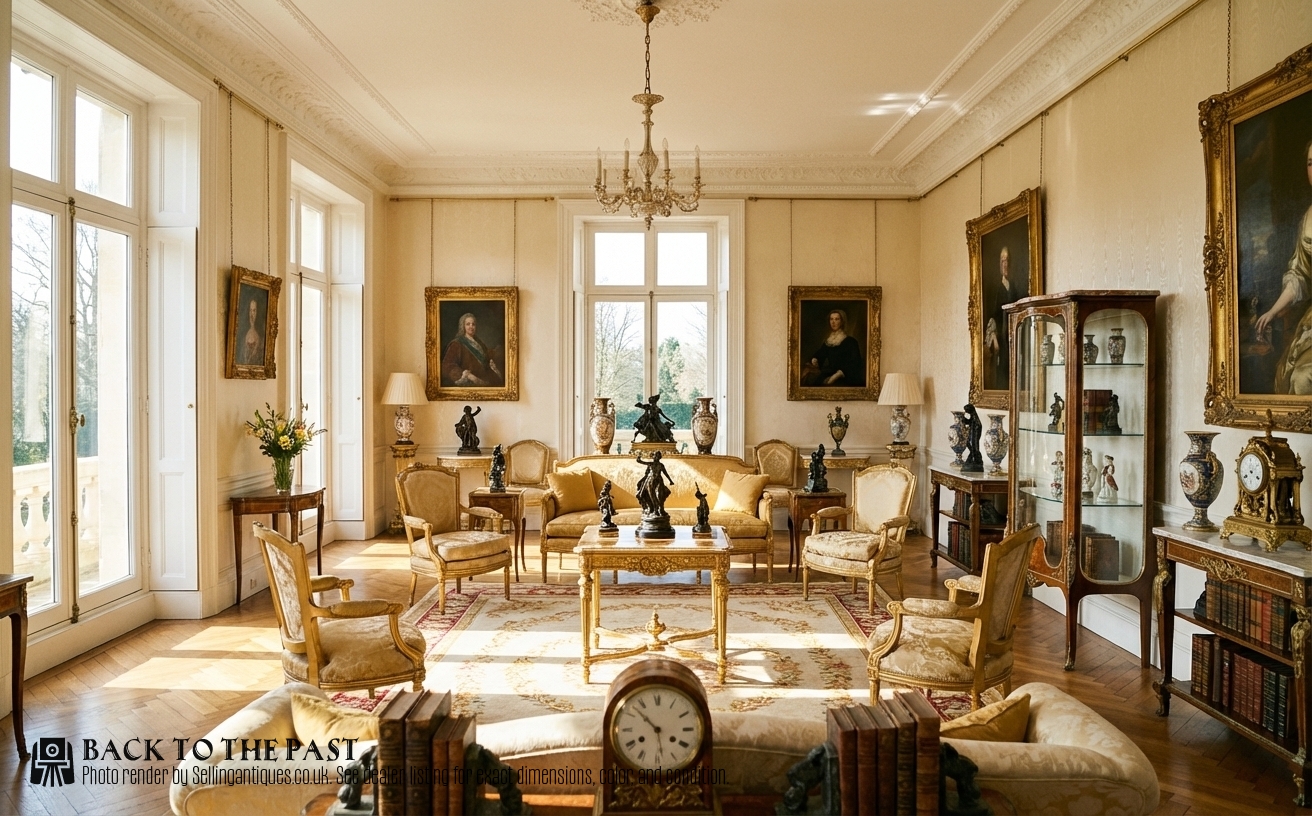
French Serpentine Vitrine
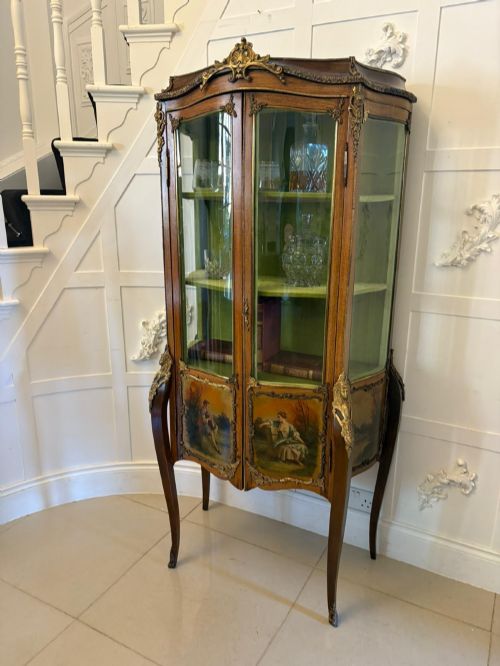
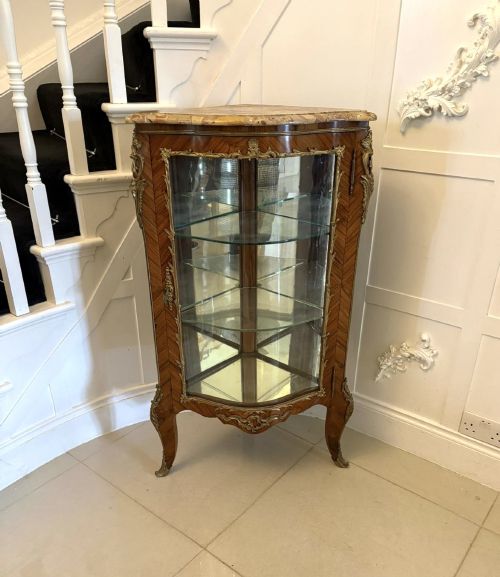
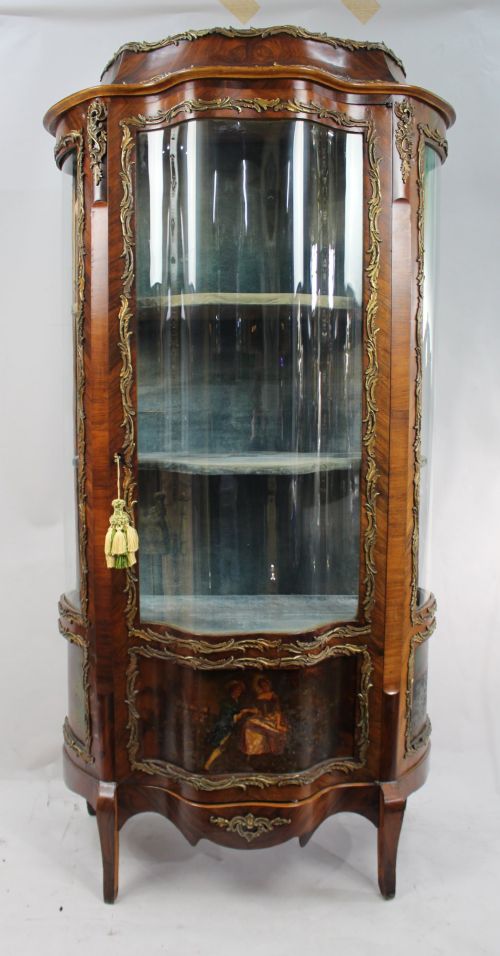
A French serpentine vitrine is a display cabinet characterised by its undulating, curving front and sides designed to showcase porcelain, glassware and small objects. These pieces emerge predominantly from the nineteenth century, spanning periods from eighteen sixty to nineteen ten under various revivals.
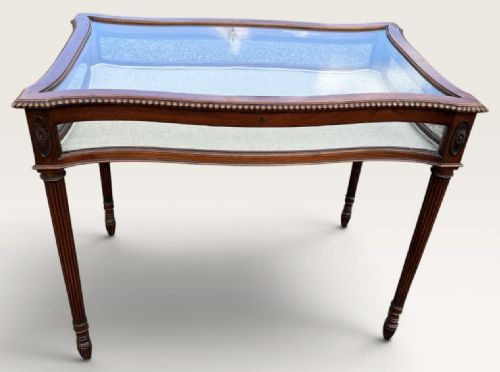
The dominant forms include freestanding display cabinets, corner cabinets, and lower bijouterie tables with glazed compartments. Makers frequently employ Louis XV and Louis XVI styles, incorporating bombe shapes and painted panels alongside traditional glass door enclosures.
Judging the standard of execution
Quality rests heavily upon the crispness of the cast ormolu mounts and the precision of the kingwood or walnut veneers following the complex serpentine curves. Finer examples display meticulous hand-chased bronze detailing and deeply figured timber selections.
The integration of the glazed panels, the smoothness of the door mechanisms, and the sophistication of painted Vernis Martin panels distinguish standard production from exhibition pieces. Structural integrity in the curved framing remains paramount.
The documented object types encompass display cabinets, bijouterie tables, and corner vitrines executed in Louis XV and Louis XVI styles.
Angela Kaufman·Thomas Justice And Sons
The French Serpentine Vitrine Glossary
- Serpentine
- A shape featuring a double-curved line that is convex in the middle and concave at the sides. This contour defines the characteristic front profile of these display cabinets.
- Ormolu
- Gilded bronze used for decorative mounts and fittings. It provides metallic contrast against the polished kingwood and walnut surfaces.
- Vernis Martin
- A simulated Japanese lacquer technique developed in eighteenth-century France. Cabinet makers revived this method on nineteenth-century panels to depict pastoral scenes.
- Kingwood
- A dense, heavy timber with rich dark violet and brown figuring. It serves as the primary veneering wood across numerous nineteenth-century examples.
- Bombe
- A swelling, bulging outward profile found on the sides and front of specific cabinets. This swelling enhances the three-dimensional presence of the piece.
French Serpentine Vitrine: Frequently Asked Questions
What is a French serpentine vitrine used for?
These cabinets were originally manufactured to display porcelain, miniatures, and curiosities behind protective glass doors. The transparent panels allowed owners to exhibit their collections while keeping dust away from delicate items.
Today, they serve the same function in domestic interiors, providing a refined focal point for curated objects. Their narrow proportions and reflective glass panels also help to brighten and open up reception rooms.
How do I identify the period of a vitrine?
Dating relies on examining the timber veneers, mounting hardware, and underlying construction styles. Pieces originating in the nineteenth century frequently draw upon Louis XV or Louis XVI revivals, utilising kingwood veneers and cast ormolu mounts.
Later examples from the late Victorian or Edwardian eras often incorporate distinct stylistic markers or specific maker attributions recorded in the framing. Checking the interior woodwork and hinge types further clarifies the manufacturing decade.
Where should I place a vitrine in my home?
These cabinets suit drawing rooms, dining spaces, or hallways where natural light can strike the glass panels and ormolu mounts. Because many feature finished backs or serpentine sides, they can stand flat against a wall or fit neatly into corners.
Consider positioning the piece away from direct sunlight to protect interior fabrics and polished timber surfaces from fading. Adequate clearance around the doors ensures easy access for arranging items inside.
How do I care for kingwood and ormolu?
Maintenance requires gentle dusting with a soft, dry cloth to prevent abrasive particles from accumulating on the polished veneer. Avoid using chemical polishes or modern sprays, which can damage the traditional finishes and delicate Vernis Martin panels.
Ormolu mounts should remain untouched by harsh cleaning agents to preserve their original gilt surface. Maintaining stable room humidity protects the underlying timbers from warping along the curved serpentine joints.