



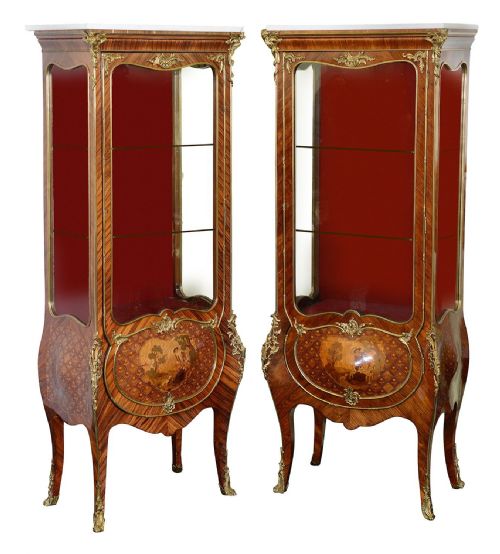


French Rococo Display Case
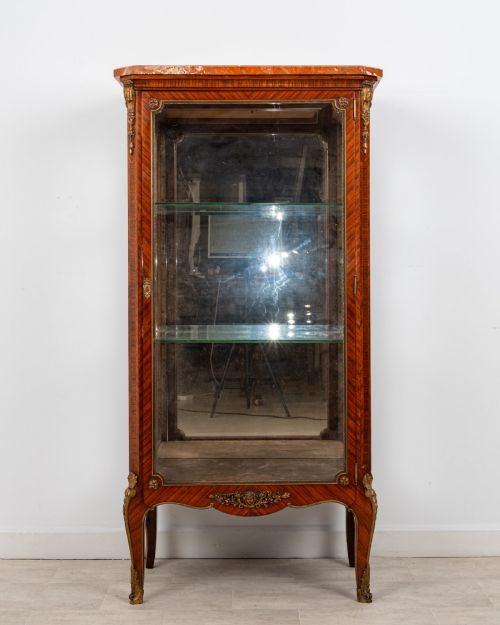
A french rococo display case brings together rich wood veneers, gilt bronze mounts and glass to frame treasured objects with serpentine elegance.
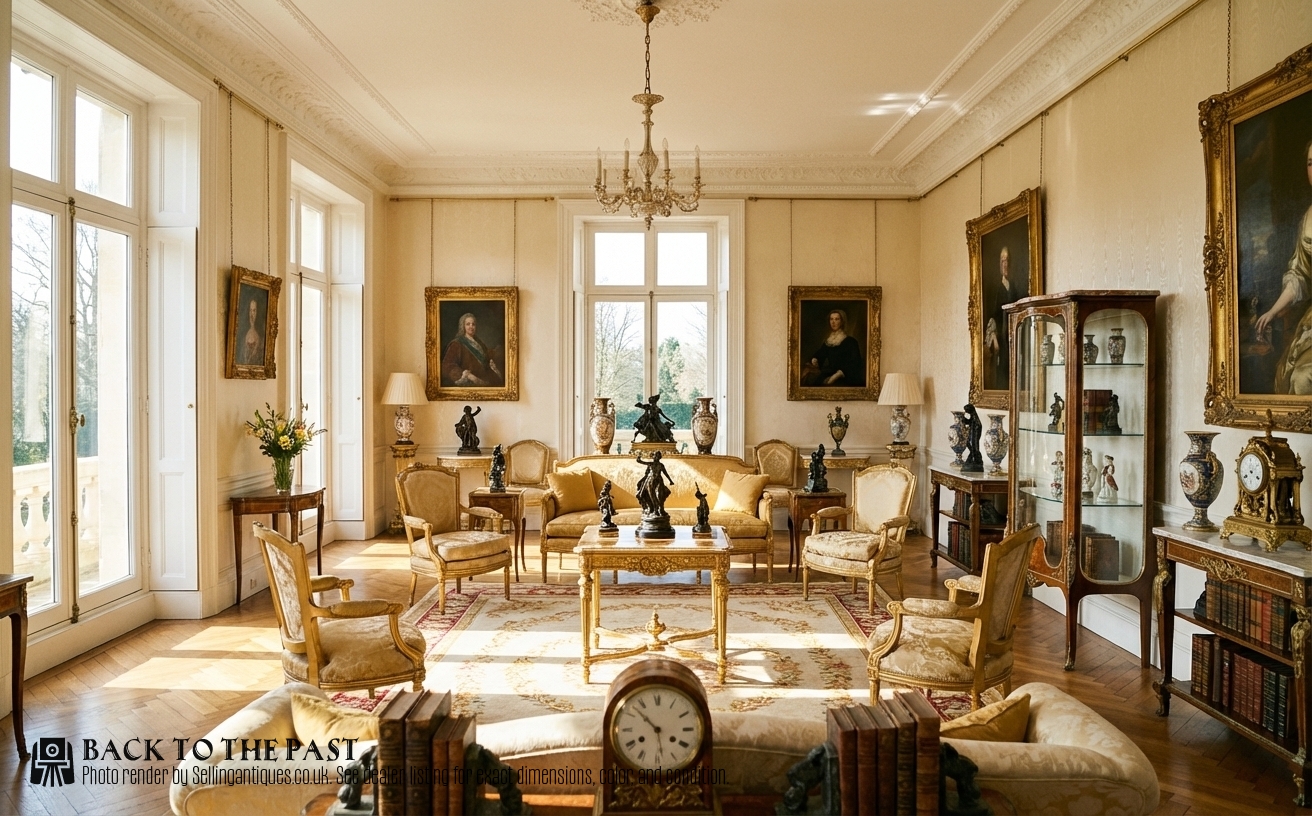
French Rococo Display Case
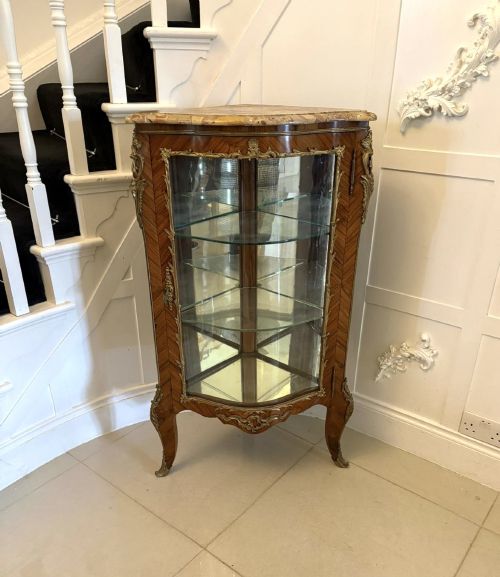
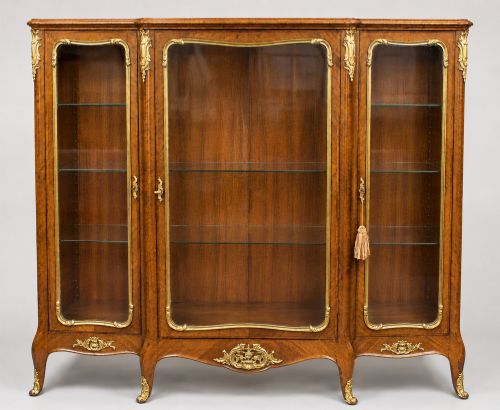
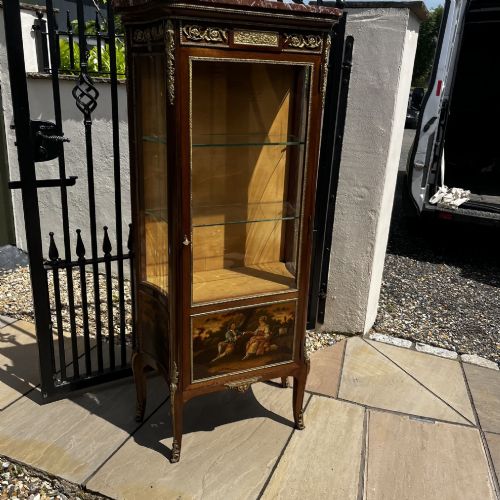
A french rococo display case is a cabinet or vitrine designed to showcase precious items behind glazed panels. These pieces draw on nineteenth-century revivals of Louis XV styles, appearing in forms such as serpentine corner cabinets, freestanding vitrines and bijouterie tables.
The materials recorded in these listings rely heavily on kingwood, mahogany and walnut, frequently accented with marble tops and velvet linings. Makers and workshops constructed these display pieces during periods spanning from the mid-nineteenth century into the Edwardian era.
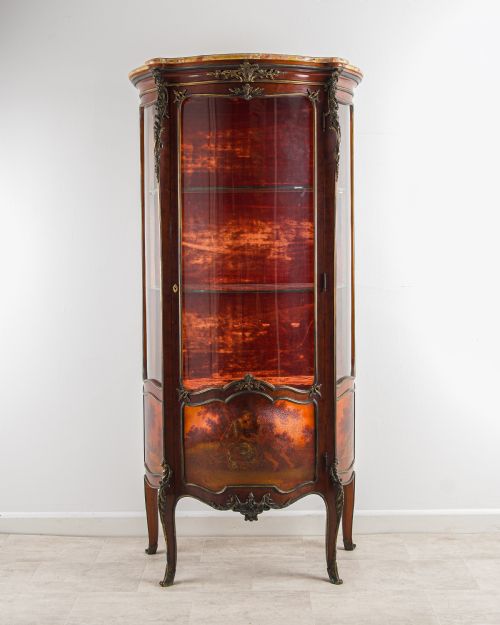
Buyers encounter variations ranging from compact corner units to large bombe-shaped cabinets with glazed sides. The overarching aesthetic embraces curved outlines, marquetry inlay and prominent gilt bronze or ormolu mounts.
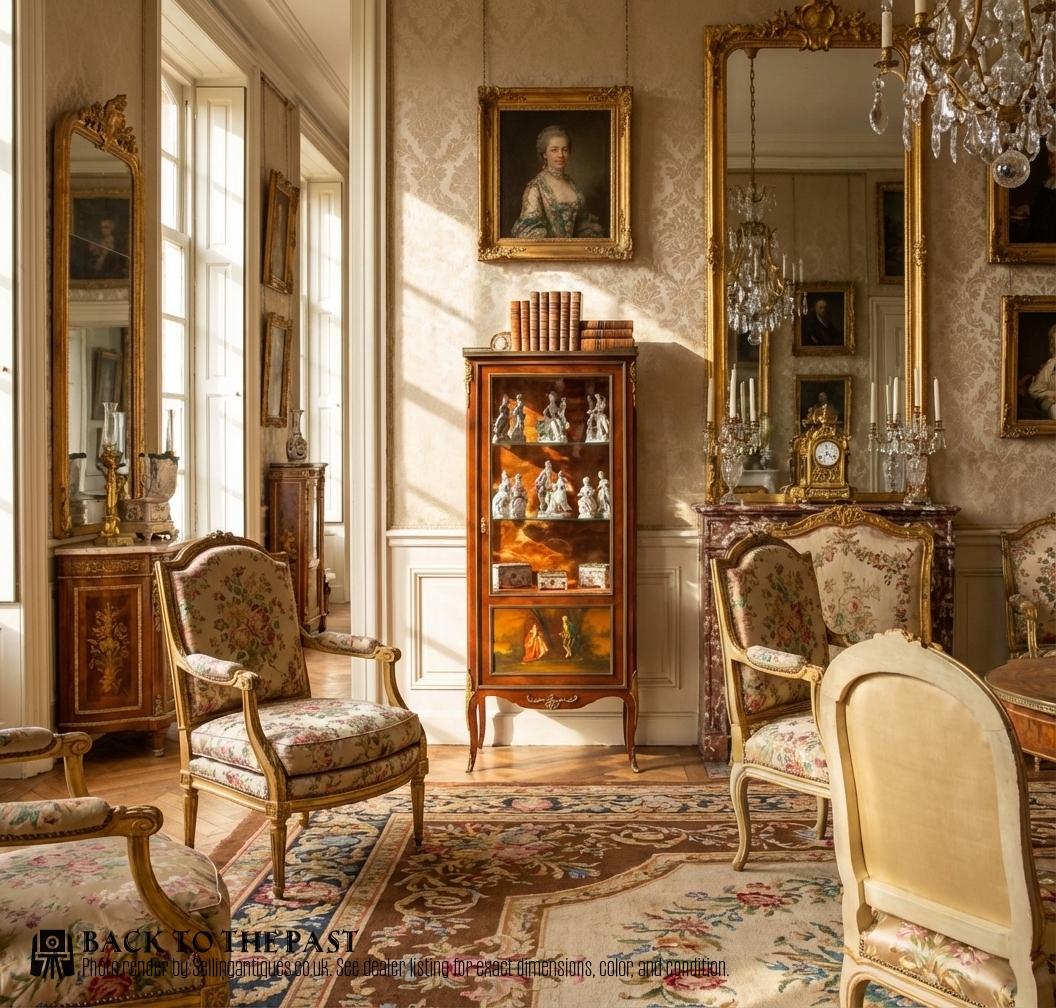
Assessing Quality and Execution
The standard of a french rococo display case rests on the precision of the cabinet work, particularly the alignment of serpentine drawers and the crispness of the parquetry inlay. Finer pieces demonstrate superior casting and chasing in the ormolu mounts, where hand-finishing defines the intricate foliage and scrolls.
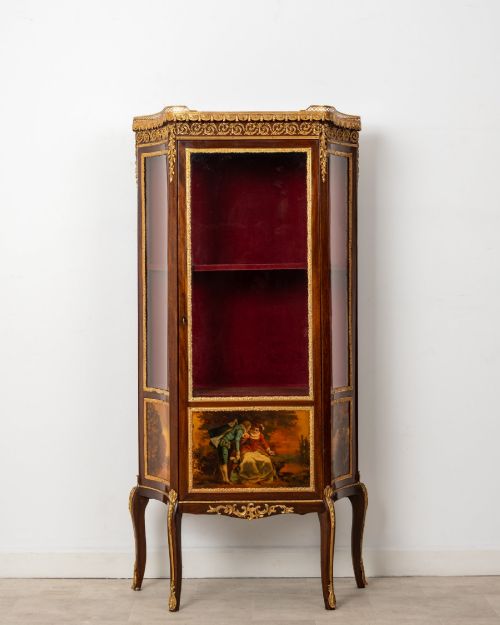
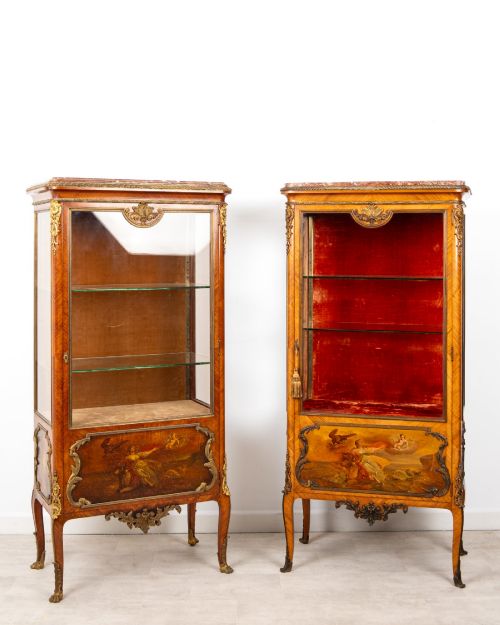
Makers identified with workshops like that of François Linke achieved heightened refinement through heavier gauge gilt bronze and sophisticated Vernis Martin panel painting. Lower-tier examples rely on simpler mahogany carcasses with minimal mounts and straightforward glass framing.
Listings feature pieces spanning the mid-nineteenth century through the Edwardian period, predominantly employing kingwood, mahogany and walnut.
François Linke·Gouffel
The French Rococo Display Case Glossary
- Ormolu
- Gilded bronze used for decorative mounts and accents on furniture. The technique involves applying a mercury and gold amalgam to cast bronze before heating.
- Vernis Martin
- A simulated Japanese lacquer finish developed in the eighteenth century by the Martin brothers. It creates translucent painted panels often featuring figures or landscapes.
- Marquetry
- The art of applying pieces of veneer to a structure to form decorative patterns. Craftsmen cut various wood types to create pictorial designs across cabinet doors and tops.
- Serpentine
- A curved shape featuring a convex centre flanked by concave curves. This contour is frequently seen on the fronts of display cabinets from this period.
- Vitrine
- A glass-fronted cabinet designed for displaying porcelain, curiosities or silver. These pieces often feature glazed sides to let light illuminate the interior.
- Bombe
- A swelling, outward-curving furniture shape that bulges on the sides and front. It requires advanced woodworking skill to veneer successfully.
French Rococo Display Case: Frequently Asked Questions
What items go inside a vitrine?
These cabinets were historically built to display fine porcelain, small sculptures, pocket watches and collected curiosities. The glass panels and velvet-lined shelves kept delicate objects visible while protecting them from dust.
Modern collectors use them in much the same way, arranging ceramics, glassware and small antiques where light can catch the interior surfaces.
How do I spot nineteenth-century revival pieces?
Nineteenth-century makers closely copied eighteenth-century Louis XV designs, utilising kiln-dried timbers, machine-cut veneers and specific casting methods standard to Victorian workshops. Examination of the interior secondary woods and backboards often reveals the true age of the construction.
Cabinet construction techniques changed significantly after the mid-nineteenth century, helping to separate revival items from earlier originals.
Where should I place a corner cabinet?
Corner display cases are designed to utilise empty room junctions, turning awkward angles into focal points for decorative objects. Their angled backs fit flush against adjoining walls while projecting a serpentine glass front into the room.
Positioning them away from direct sunlight protects both the polished kingwood veneers and the interior velvet linings from fading.
What is a bijouterie table?
A bijouterie table is a specialised display case featuring a glazed top and shallow compartment designed for holding jewellery, medals and miniature portraits. These tables often stand on slender cabriole legs with ormolu mounts.
They allowed owners to inspect small treasures at close range without removing them from protective glass enclosures.