


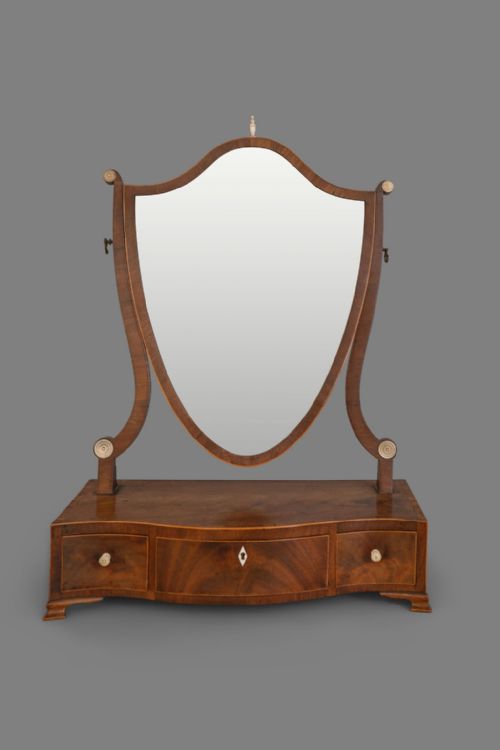


Serpentine Front Mirror
A serpentine front mirror is a tabletop or dressing glass shaped with a distinct undulating curve, offering practical elegance and historic charm for the home.
Serpentine Front Mirror
When you search for a serpentine front mirror, you encounter pieces designed to sit atop dressing tables, chests, or credenzas to aid with grooming and to reflect light into a room. These objects trace back through Georgian, Victorian, and Edwardian periods, bringing distinct craftsmanship into modern spaces.
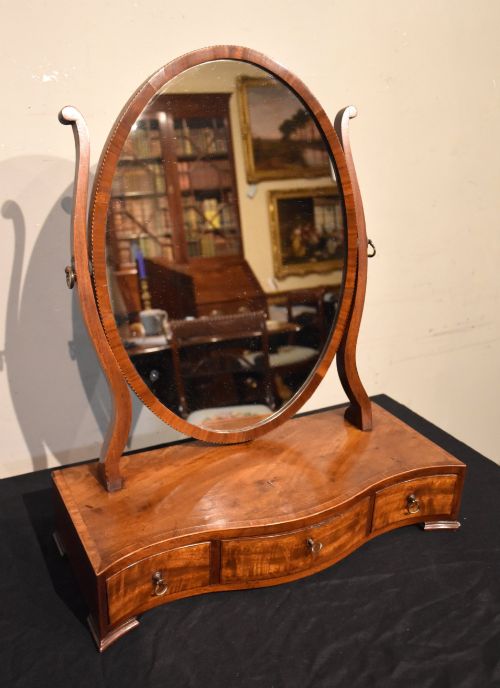
The version you are most likely to meet on this page is the freestanding mahogany or walnut dressing table mirror, often supported by a box base containing small drawers. These pieces range from restrained eighteenth-century designs to more elaborate nineteenth-century interpretations utilising burr walnut and flame mahogany.
How they were made
Cabinetmakers constructed these frames primarily using solid mahogany and walnut, frequently selecting decorative veneers such as burr walnut and flame mahogany to cover primary surfaces. The undulating serpentine profile required precise sawing and shaping of the timber, particularly around the box bases and drawer fronts.
Mirrors relied on glass plates set into rebated wooden frames, sometimes pivoting on brass screw pins or upright arms to adjust the angle of reflection. Additional detailing occasionally included bone inlay, brass hardware, and carved wooden supports.
The selection here demonstrates that serpentine front mirrors span the Georgian, Victorian, and Edwardian periods, executed primarily in mahogany and walnut.
What varies in quality
The standard of a serpentine front mirror rests heavily on the crispness of the curved woodwork and the choice of timber figure. Finer examples display carefully matched veneers and fluent, unbroken curves along the serpentine base rather than stiff or sluggish lines.
Proportion and original hardware also determine distinction, as superior pieces maintain a balanced relationship between the tilting glass frame and the lower box compartment. The integration of well-fitted drawers with fine dovetails points to competent workshop production rather than hurried assembly.
The Serpentine Front Mirror Glossary
- Serpentine front
- A furniture shape featuring a central convex curve flanked by two concave curves, creating an undulating silhouette. This design requires considerable skill from the woodworker to execute cleanly.
- Toilet mirror
- A smaller mirror designed to stand on a dressing table or chest, frequently equipped with small drawers in the base. These pieces were essential items of bedroom furniture in the eighteenth and nineteenth centuries.
- Box base
- The compartment beneath the mirror frame, often fitted with drawers for storing small personal items. It provides stability and weight to keep the tilting glass upright.
- Burr walnut
- A highly figured wood grain obtained from walnut tree growths, valued for its swirling patterns. Cabinetmakers used it as a veneer on high-status furniture.
- Flame mahogany
- A veneer cut from the fork of a mahogany tree where the grain resembles flickering flames. It creates a striking visual effect on period dressing mirrors and credenzas.
Serpentine Front Mirror: Frequently Asked Questions
Where should I place a serpentine front mirror?
These mirrors suit dressing tables, chest tops, or sideboards where their undulating bases can be appreciated at eye level. They add depth and reflected light to living rooms, hallways, and bedrooms.
Ensure the supporting surface is deep enough to accommodate the box base safely. Placing them away from direct moisture protects the wood and the silvering on the glass.
How do I adjust the mirror plate?
Most period examples use brass side screws or pivot pins that tighten by hand to hold the glass at the desired angle. Adjusting them gently prevents undue stress on the wooden upright arms.
If the mirror slips, check the tension of the fittings rather than forcing the frame. Proper adjustment preserves the original brass components.
How do I tell an 18th-century mirror from a later one?
Eighteenth-century mirrors often display simpler, restrained mahogany frames with hand-cut dovetails inside the box base drawers. The timber patination tends to show deeper warmth and softer wear.
Later nineteenth-century versions frequently employ burr walnut veneers, heavier mouldings, or more elaborate carving. Comparing the construction methods inside the drawers helps clarify the period.
How do I care for the wood and glass?
Clean the wood using a soft, dry cloth and apply occasional high-grade wax to nourish the antique polish. Avoid chemical sprays that can damage historic finishes.
Clean the glass with a damp cloth applied to the cloth rather than the mirror directly, preventing moisture from seeping behind the plate edge.