



Serpentine Front Box
A serpentine front box brings fluid, undulating curves to utilitarian forms, offering an elegant solution for storing cutlery, stationery, or cosmetics.
Serpentine Front Box
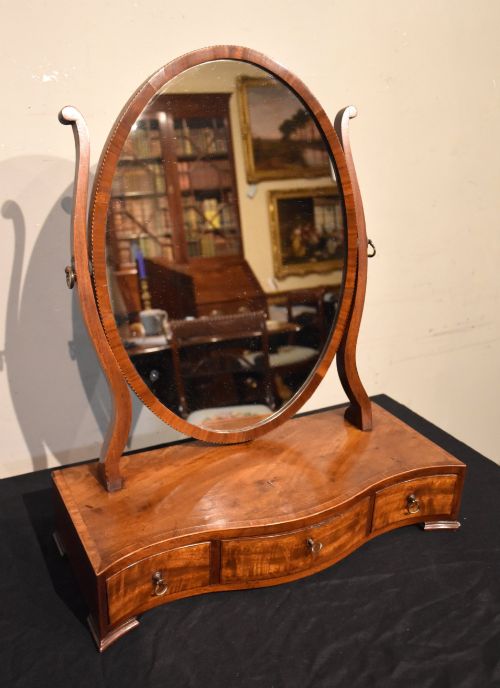
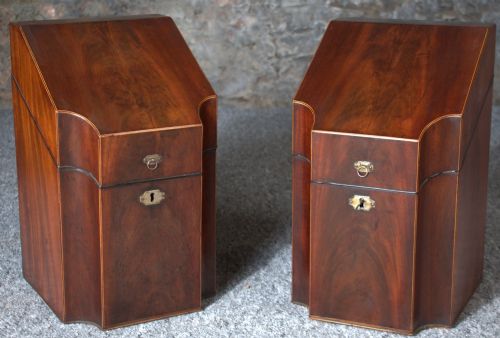
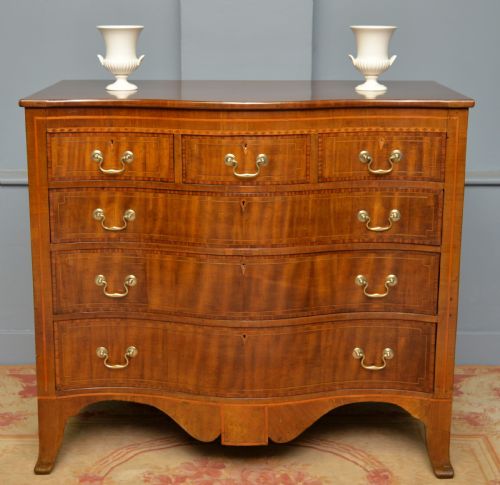
A serpentine front box encompasses a distinct group of Georgian and 19th Century containers defined by their signature convex-concave-convex sweeping facades. The examples seen on this page span several functional types, with knife boxes and dressing mirrors representing the primary forms.
Makers of the period adapted this curvaceous silhouette for practical storage, producing specialised cutlery boxes alongside toilet mirrors with box bases and occasional storage chests. Mahogany dominates these forms, often paired with contrasting stringing and brass furniture.
Buyers will encounter these pieces across distinct historical eras, ranging from early 18th Century walnut examples through to substantial George III mahogany iterations. The undulating profile remains the unifying characteristic across diverse object types.
Materials and construction
Cabinetmakers constructed these pieces primarily from solid and veneered mahogany, frequently selecting figured timber or fiddleback varieties to accentuate the undulating planes. Walnut and satinwood also appear, supported by secondary woods in internal compartments.
Craftsmen shaped the characteristic serpentine curves by carefully sawing and planing thick timber or by bending veneers over shaped carcases. Brass fittings, including carrying handles, escutcheons, and hinges, complete the construction of knife boxes and storage chests.
Listings feature Georgian and 19th Century periods, utilising mahogany, walnut, satinwood, and brass.
Assessing quality
Quality rests upon the crispness of the curved serpentine sweep and the selection of timber used for the exterior surfaces. Figured mahogany graining and balanced inlay patterns distinguish superior examples from plain alternatives.
The integration of original brass hardware and the retention of fitted interior compartments elevate a piece. Construction integrity, particularly the tight joinery required to maintain complex curved shapes, marks the division between ordinary production and finer craftsmanship.
The Serpentine Front Box Glossary
- Serpentine
- A curved furniture front characterised by a convex centre flanked by concave wings. This undulating line requires precise woodworking skill to execute properly.
- Knife box
- A specialised sloped-lid container designed to store cutlery upright on a sideboard during dining. Many examples from the 18th Century feature the characteristic serpentine facade.
- Toilet mirror
- A small looking glass mounted on a box base or miniature chest of drawers for use on a dressing table. The base compartments often follow a serpentine outline.
- Fiddleback
- A figured variety of mahogany displaying a ripple grain resembling the back of a violin. Cabinetmakers utilised this timber to catch the light on curved surfaces.
- Escutcheon
- A protective brass plate surrounding a keyhole. On these boxes, they are frequently pierced or engraved in period styles.
Serpentine Front Box: Frequently Asked Questions
What were serpentine knife boxes used for?
These lidded containers were designed to hold dining cutlery upright within slots inside the box, protecting steel blades from tarnishing. Placed upon sideboards during the 18th Century, they also served to display the wealth of the household through fine mahogany and brass fittings.
Over time, many of these containers transitioned into stationery boxes or general storage pieces as dining fashions changed. Their compact interior compartments make them suitable for organising modern desk accessories.
How do I date a serpentine box?
Dating relies upon examining the secondary woods, the style of the brass hardware, and the construction methods used inside the compartments. George III pieces from the late 18th Century typically show specific mahogany grain patterns and characteristic inlay techniques.
Earlier pieces from the Queen Anne or early Georgian periods often utilise walnut veneers and different joinery details. Comparing the contour of the serpentine front against dated examples helps narrow the period of manufacture.
Are these boxes fragile?
While solid mahogany and walnut provide robust carcases, the complex curved veneer and delicate brass hinges require sensible placement. Avoiding direct sunlight and extreme humidity changes protects the timber surfaces from splitting.
Regular handling of lids and internal partitions should remain gentle to preserve original hinges and joinery. Most pieces have survived centuries of use and remain stable for daily placement in a home.
Where should I place a dressing mirror box?
A box-base dressing mirror sits comfortably upon a chest of drawers, sideboard, or dedicated vanity table. The small drawers integrated into the base offer practical storage for small trinkets or modern jewellery.
Ensuring the supporting surface is level protects the mirror frame and prevents undue strain on the pivot pins. The compact footprint allows these mirrors to fit into both traditional and contemporary room settings.