


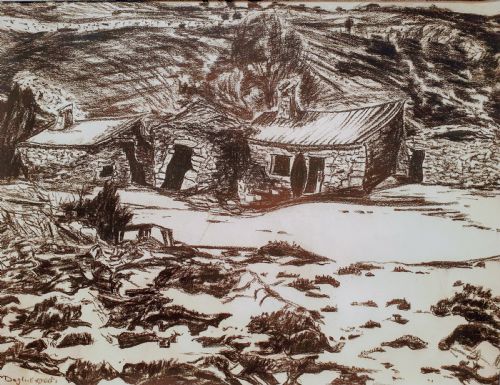

Sepia Charcoal Artwork
These sepia charcoal artwork pieces capture light and shadow across landscapes and figures, offering buyers atmospheric monochrome depth from past centuries.
Sepia Charcoal Artwork
When you search for sepia charcoal artwork, you encounter monochrome drawings and paintings executed in charcoal, chalk, graphite, and paper mounted on canvas stretchers. The pieces span periods from the early nineteenth century through to the mid-twentieth century, encompassing British, French, and Italian origins.
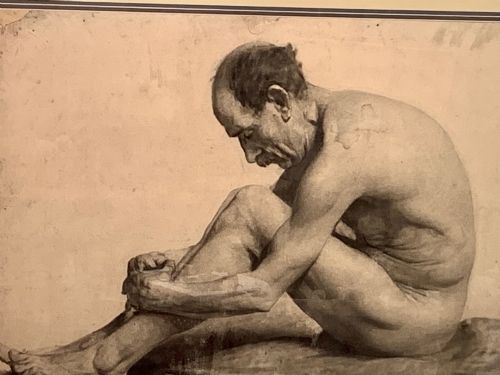
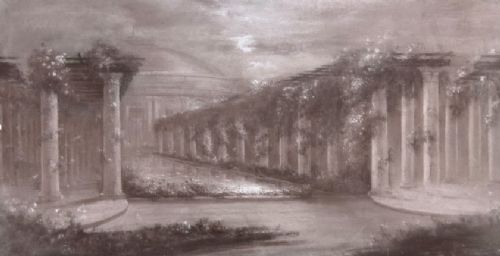
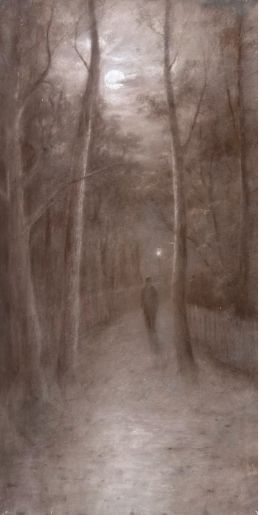
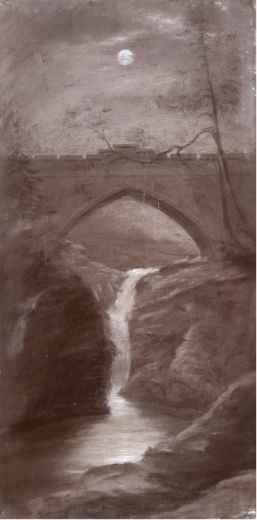
You are most likely to meet landscape studies, coastal scenes, and academic figure drawings on this page. These works frequently reflect nineteenth-century tonalism, Victorian nocturne styles, and academic realism.
The subjects range from Scottish highlands and English coastal walks to Orientalist narratives and portraiture. Each piece demonstrates the textured application of dark media to capture light, form, and shadow.
What varies in quality
Quality rests upon the artist's command of tone and perspective, separating standard academic exercises from masterly compositional studies. The integration of light and shadow defines the visual impact of each monochrome piece.
The condition of the paper surface, media stability, and framing integrity contribute to the overall standard of the artwork. Subtle handling of charcoal and chalk reveals the draughtsman's precision.
Listings feature works created using charcoal, chalk, and graphite on paper and canvas stretchers, spanning periods from eighteen-hundred to nineteen-sixty.
Theobald Chartran
The Sepia Charcoal Artwork Glossary
- Charcoal
- A dry drawing medium made from organic carbonaceous material used for sketching and finished works. It produces deep blacks and soft smudged gradients.
- Academic Realism
- A style of painting and drawing produced under the influence of European academies of art. It emphasises rigorous adherence to traditional techniques and anatomical accuracy.
- Tonalism
- An artistic style that emerged in the nineteenth century where artists painted landscapes with an overall dominant tone or atmosphere. Works in this style focus on shadow and darkness.
- Canvas Stretcher
- A wooden framework upon which canvas or paper is stretched tight for support. It provides a rigid backing for mixed media drawings.
- Graphite
- A crystalline form of carbon used as a drawing material for fine lines and detailed shading. It yields silvery grey tones distinct from charcoal.
Sepia Charcoal Artwork: Frequently Asked Questions
What is sepia charcoal artwork?
These works are historical drawings and paintings created primarily with charcoal, chalk, and graphite on paper or canvas supports. They include landscapes, portraits, and academic studies from the nineteenth and twentieth centuries.
Buyers choose them for their atmospheric monochrome palettes and historical connection to academic realism and tonalism.
How should I display these pieces?
Monochrome drawings require careful placement away from direct sunlight to protect fragile paper and charcoal media from fading. Framing them behind glass with conservation mount board helps preserve the surface.
Their neutral sepia and dark tones complement both traditional interiors and minimalist modern spaces.
How do I identify the period?
Dating relies on the paper type, framing materials, subject matter, and stylistic markers such as Victorian academic realism or mid-century modernist influences. Signatures and inscriptions often provide direct historical context.
Examining the reverse of the canvas stretcher or paper backing frequently reveals period labels or stamps.
What subjects are most common?
Landscapes and coastal views dominate the selection, alongside figure studies and portraiture from British and European schools. Scenes range from Scottish highlands to French farmhouses.
Artists often drew inspiration from natural topography and classical academic training.