




Charcoal Landscape Drawing
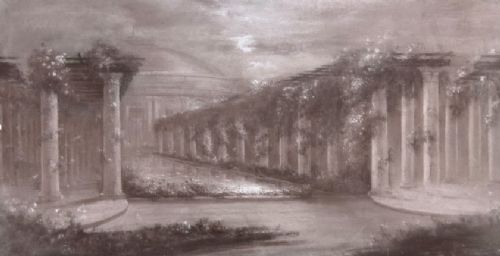
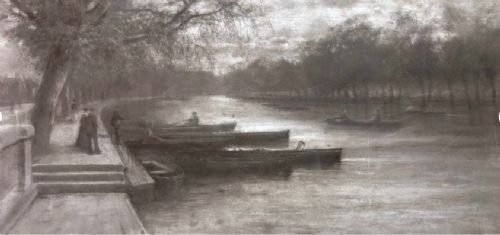
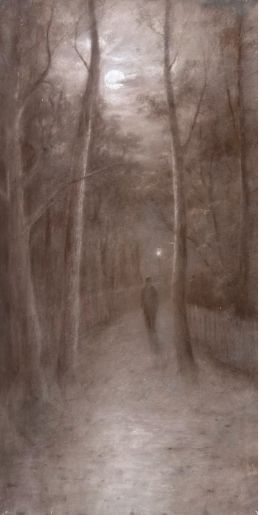
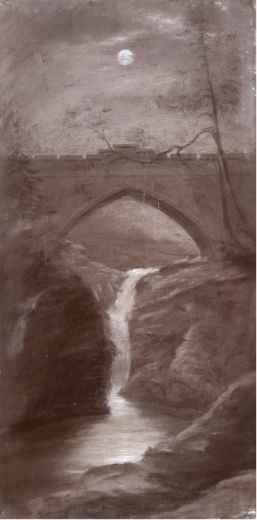
These charcoal landscape drawing works capture atmospheric scenes in monochrome, offering subtle tonal depths that suit traditional and modern rooms alike.
Charcoal Landscape Drawing
A charcoal landscape drawing brings together expressive line work and dramatic monochrome shading to depict rural views, rivers, and coastal scenes. When exploring charcoal landscape drawing options, buyers encounter everything from intimate nineteenth-century sketches to larger twentieth-century compositions.
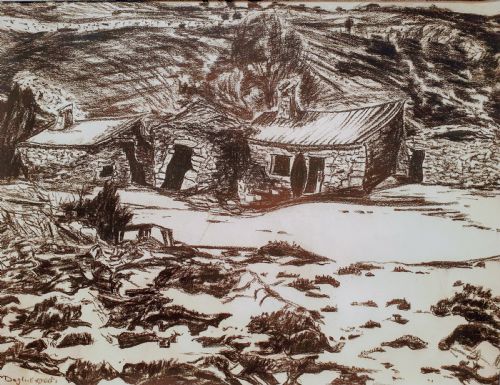
The pieces on this page span the Victorian era, the early nineteen-hundreds, and mid-century modern interpretations. Works range from focused studies of British lakes and Scottish rivers to atmospheric French farmhouses and coastal views.
How these works were made
Artists utilise charcoal sticks applied to paper or canvas stretchers, sometimes combining the medium with chalk for added highlights and depth. Glass protection often shields the fragile surface of paper works.
Support materials vary from standard drawing paper to prepared canvas, influencing how deeply the powdery black medium adheres to the surface. Frames frequently secure the drawings behind glass to preserve the delicate pigment.
Listings feature works created on paper, canvas, and canvas stretchers, protected by glass.
What separates the finest examples
Quality rests in the confidence of the hand and the control of tone, where deep blacks balance against subtle greys to create genuine atmospheric weight. Strong compositions possess a clear focal point, such as a bridge, tree cluster, or distant shoreline.
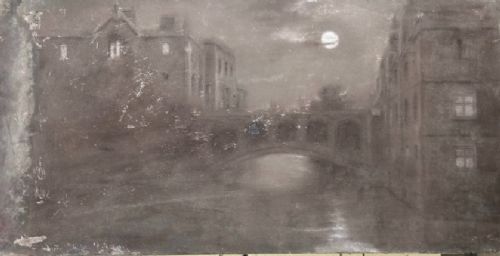
The handling of light defines the better pieces, particularly in works influenced by tonalist traditions where mist, moonlight, or twilight shape the entire view. Condition of the paper or canvas and the preservation under glass also influence the overall standard of any given piece.
Henri Joseph Harpignies·Dr Thomas Monro·LS Lowry·Frank Charles Peyraud·Mads Stage
The Charcoal Landscape Drawing Glossary
- Tonalism
- An artistic style focusing on shadow, atmosphere, and mood rather than crisp detail. Works in this manner often utilise soft, muted charcoal gradients to evoke quiet or melancholic landscapes.
- Barbizon School
- A nineteenth-century French movement dedicated to direct observation of nature and tonal realism. Artists associated with this approach favoured naturalistic outdoor scenes rendered in earthy palettes.
- Canvas stretcher
- The wooden framework used to tension canvas before drawing or painting takes place. Some charcoal works utilise this support instead of traditional paper.
- Nocturne
- A painting or drawing depicting night scenes or evening atmospheres. These works rely heavily on deep charcoal shading to convey twilight or moonlight.
- Mid-Century Modern Art
- A design and art movement spanning the middle decades of the twentieth century. Pieces from this period often apply simpler, more abstracted lines to traditional landscape subjects.
Charcoal Landscape Drawing: Frequently Asked Questions
How do I care for a charcoal drawing?
Keep the piece away from direct sunlight and moisture to prevent the paper from yellowing or warping over time. Proper framing behind glass ensures the delicate charcoal medium remains undisturbed by air movement.
Avoid hanging these artworks in humid environments such as kitchens or unventilated spaces. Gentle dusting of the outer frame is all that is required for routine maintenance.
How do I tell an early drawing from a mid-century piece?
Earlier works from the nineteenth century and early nineteen-hundreds often lean towards romantic or tonalist moods with heavy atmospheric shading. Paper quality, framing style, and handwritten inscriptions on the reverse frequently offer clues to the exact era.
Mid-century pieces tend to show cleaner lines and simpler compositions reflecting modern artistic movements. Comparing the subject matter to known historical periods helps narrow down the decade of creation.
Were these drawings used as preliminary studies?
Some charcoal pieces function as direct studies for larger oil paintings, capturing quick tonal arrangements and lighting effects outdoors. Other works were created as finished standalone art intended to be framed and displayed independently.
Artists often valued charcoal for its speed and versatility when recording fleeting light on a landscape. Both finished works and quick studies hold a distinct place in the history of monochrome art.
What is the influence of Whistler and Grimshaw?
The Whistler and Grimshaw influence manifests in moody twilight scenes, mist-laden riverbanks, and atmospheric urban or rural views. Artists inspired by this aesthetic emphasise shadow and muted illumination over bright, sunny palettes.
Such drawings rely on subtle gradients of charcoal to create a quiet, poetic stillness. This specific style frequently appears in British landscapes from around nineteen-hundred.