





19th Century Landscape Drawing
A 19th century landscape drawing captures the topography, architecture, and changing light of the period through direct hand-rendered observation.
19th Century Landscape Drawing
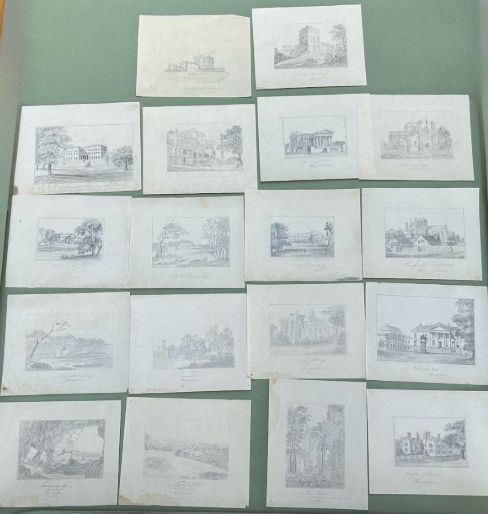
A 19th century landscape drawing encompasses works on paper ranging from rapid field sketches in pencil or charcoal to finished watercolours and mixed-media compositions. Buyers seeking these pieces will find depictions of rural vistas, coastal scenes, architectural studies, and antiquarian ruins across Britain and the Continent.
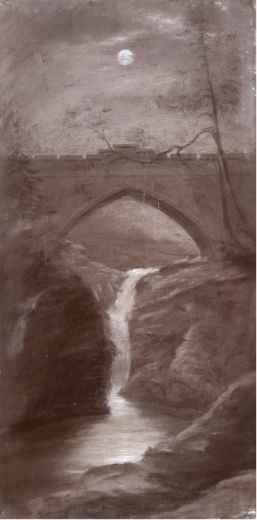
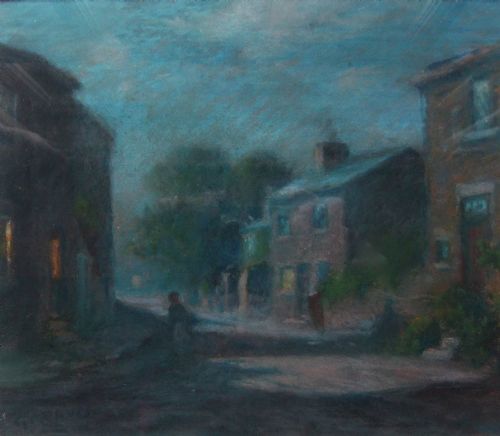
The selections available reflect the diverse movements of the era, spanning Georgian studies, Victorian topographical recording, British Impressionism, and the Barbizon School. Pieces frequently capture specific regional locales, from Yorkshire abbeys and Norfolk waterways to French and Italian views.
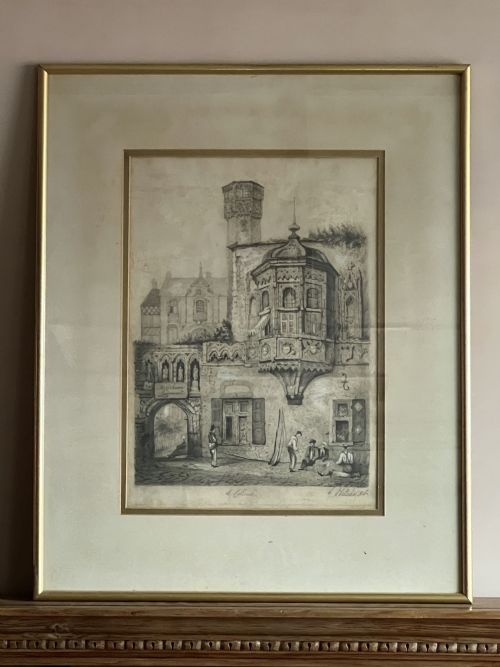
Works appear in various formats, including individual sheet studies, mounted watercolours, and framed ink drawings behind glass. Collectors encounter both signed works by known regional artists and anonymous sketches originating from Grand Tour travel albums.
Materials and methods of the period
Artists relied primarily on paper supports, applying media such as graphite pencil, charcoal, pen and ink, and sepia or watercolour washes. Many drawings incorporate heightening with white bodycolour on tinted paper to model highlights and capture atmospheric effects.
Compositions often began as en plein air pencil or ink sketches capturing immediate topography before being developed in the studio with watercolour or pastel layers. Framing traditionally utilised wood and gilt surrounds, protecting works behind glass alongside early mounting boards.
Several artists braved howling snowstorms and gloomy monastic ruins simply to capture the exact angle of an old English bridge.
Distinctions in quality and execution
Quality rests upon the sureness of the hand, where confident line work and economical mark-making separate perceptive field studies from mechanical copy work. Superior examples demonstrate a clear understanding of tonal gradation, spatial depth, and natural light.
Condition and preservation heavily influence the standing of a work, particularly regarding paper stability, foxing, and the retention of fugitive pigments against fading. The presence of contemporary inscriptions, artist monograms, or identifiable topographical context adds significant documentary weight.
Alfred Young Nutt·William Greaves·Samuel Henry Alken·John Charles Maggs·Sir Francis Leggatt Chantrey·Charles H Poingdestre·George De Paris·Henry H Parker·Matthew Hale·John Baragwanath King·Henry Bright·Henri Joseph Harpignies·John Thirttle·John Joseph Cotman·Thomas Monro·Thomas Lound·William Moore·Edwin Ridsdale Tate·Henry William Burgess
The 19th Century Landscape Drawing Glossary
- Graphite
- A form of carbon used for drawing, commonly termed lead pencil. It allowed artists to achieve varied tonal values through pressure and shading.
- Wash
- A diluted layer of ink or watercolour applied evenly across paper to create smooth background tones or shadowed areas. It is frequently combined with ink line work.
- Heightening
- The addition of opaque white pigment to a drawing on tinted paper to accentuate highlights and create contrast. This technique gives volume to clouds, architectural stonework, and water.
- Grand Tour
- An extensive cultural journey of Europe undertaken by wealthy young men in the eighteenth and nineteenth century. It generated a demand for architectural and landscape watercolours.
- Foxing
- Brown spots and discolouration that develop on antique paper over time due to chemical reactions involving iron impurities and humidity. It is a common occurrence in nineteenth-century works.
19th Century Landscape Drawing: Frequently Asked Questions
How should I frame and display these drawings?
Works on paper require conservation-grade mounting under glass to protect delicate pigments from ultraviolet light and atmospheric pollutants. Keep pieces away from direct sunlight and high humidity environments.
Traditional wood or gilt frames complement the period aesthetic of these works while ensuring the paper remains stable within the rebate.
Were these drawings created outdoors or in studios?
Artists typically produced initial pencil, charcoal, or ink sketches directly on location to capture accurate topography and immediate atmospheric effects. Finished watercolours and oil paintings were frequently developed later inside the studio using these field studies.
Grand Tour travellers and topographical artists often carried portable sketching materials for rapid recording during transit.
How do I identify the location in an antique drawing?
Many works feature contemporary handwritten inscriptions on the reverse or lower margin noting specific towns, abbeys, rivers, or architectural landmarks. Stylistic clues such as regional building materials and landscape topography often provide further geographic context.
Archival comparatives and period maps assist in pinpointing obscure rural lanes and demolished historical structures.
What is the difference between a sketch and a finished watercolour?
A sketch is typically a rapid exploratory study executed in pencil, ink, or charcoal to record form, composition, or light without extensive colour application. Finished watercolours employ layered washes and careful tonal control to present a complete, exhibitable composition.
Both forms offer insight into nineteenth-century artistic observation and technique.