


Grey Monochrome Landscape Art
Grey monochrome landscape art captures distant horizons and quiet vistas through restrained tones, offering collectors a subtle and atmospheric visual focus.
Grey Monochrome Landscape Art
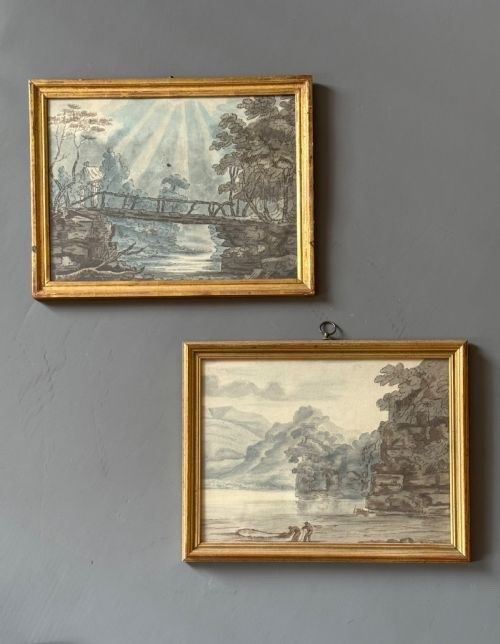
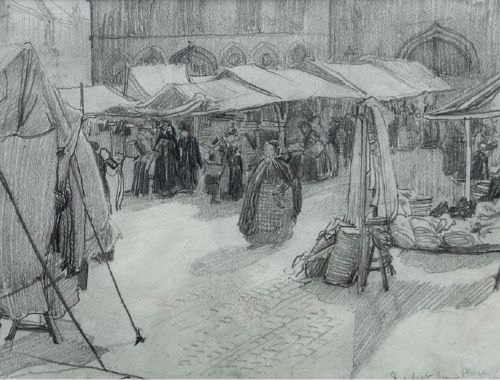
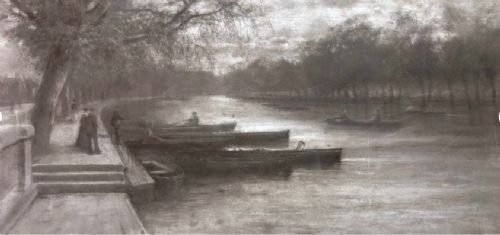
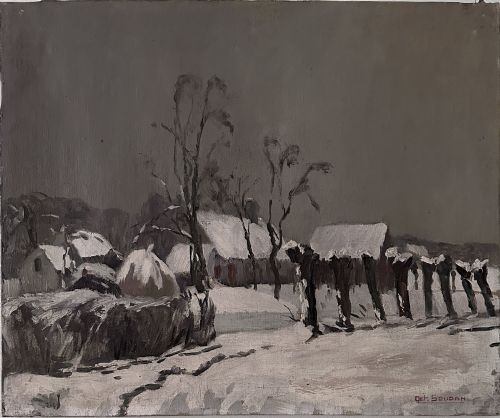
Grey monochrome landscape art encompasses works created across several centuries, ranging from eighteenth-century English pen and ink drawings to twentieth-century watercolours and charcoal sketches. These pieces present scenes such as winter villages, architectural prints, market crosses, and river embankments without a full palette of vibrant colours.
The buyer meets various forms on this page, including original drawings, framed artworks, and oil paintings. The styles stretch from Georgian and Victorian to Edwardian tonalism and early twentieth-century British art, each utilising a limited spectrum of grey tones to convey depth and mood.
How they were made
The works utilise materials such as paper, wood, and glass, combined with ink, graphite, pencil, charcoal, and watercolour. Artists applied charcoal or graphite to paper for soft, tonal depth, while others used pen and ink to establish fine architectural lines and sharp contrasts.
Watercolour paintings and oil paintings rely on fluid applications of pigment to build atmospheric skies and shadows. Protective glass frequently frames and preserves these delicate paper supports against environmental wear.
Several artists captured the quiet chill of winter village scenes and damp riverbanks using nothing more than a stick of charcoal and a sheet of paper.
What varies in quality
Quality separates through the precision of line work and the artist's ability to manipulate light and shadow within a restricted palette. Stronger examples demonstrate confident handling of charcoal or ink, creating convincing spatial depth without relying on colour.
Condition of the paper and the integrity of the framing also dictate the standard of the piece. Works that retain their original tonal contrast and show minimal fading or discolouration represent the upper tier of the range.
Edward Dayes·Amos Green·Henry Bright·Henri Joseph Harpignies·Peter Tillemans·Stanley Orchart·Fred Lawson·William J Hodgson
The Grey Monochrome Landscape Art Glossary
- Monochrome
- Art executed in a single colour or shades of a single colour. In these pieces, the palette is restricted to greys, blacks, and whites.
- Tonalism
- An artistic style that emerged in the late nineteenth century where artists painted landscapes with an overall dominant tone or atmosphere. Edwardian examples often emphasise shadow and mist.
- Provenance
- The chronology of the ownership, custody, or location of a historical historical piece. Documentation helps confirm attribution to artists such as Edward Dayes or Peter Tillemans.
- Wash
- A technique in watercolour and ink painting where a fluid layer of diluted pigment is spread evenly across the paper. This creates smooth, transparent areas of grey tone for skies or water.
Grey Monochrome Landscape Art: Frequently Asked Questions
What periods do these pieces span?
The works on this page stretch from the eighteenth century through the Victorian era into the mid-twentieth century. This timeline covers Georgian sketches alongside Edwardian tonalist watercolours.
Changes in technique and framing reflect these shifting eras, offering a clear record of changing British landscape traditions.
How should I display them?
These pieces require placement away from direct sunlight to protect delicate paper supports, watercolours, and charcoal from fading. Conservation framing with UV-filtering glass helps maintain the integrity of the grey tones.
Neutral wall colours allow the subtle gradients of ink and graphite to command attention without visual competition.
Are these works original?
The selection includes original drawings, unique watercolour paintings, and distinct oil paintings rather than modern reproductions. Many bear signatures, contemporary inscriptions, or historical attributions to named artists.
Architectural prints from the period also feature, providing documented historical views of towns and buildings.
What subjects appear in these scenes?
The artwork depicts a variety of British and European locations, including lake districts, river embankments, market crosses, and castle ruins. Winter village scenes and hunt gatherings also recur across the nineteenth-century works.
Artists focused on the quiet atmosphere of these places rather than bustling narratives.