

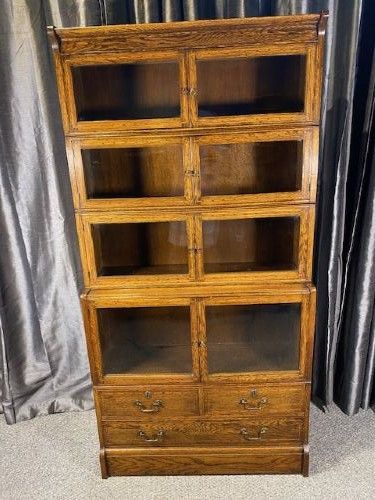
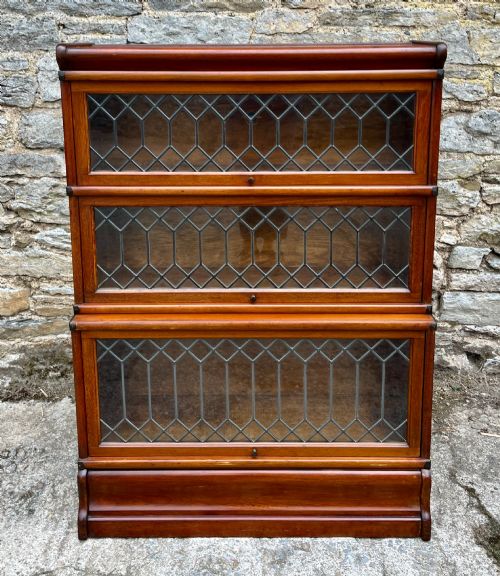
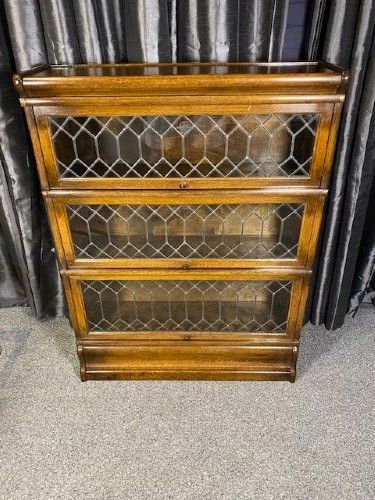
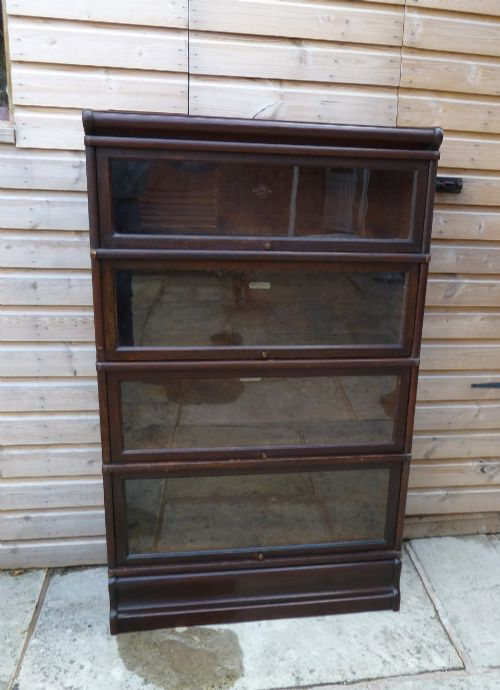
Sectional Bookcase
When you search for a sectional bookcase, you are looking at modular stacking shelving designed to protect volumes behind individual glass doors.
Sectional Bookcase
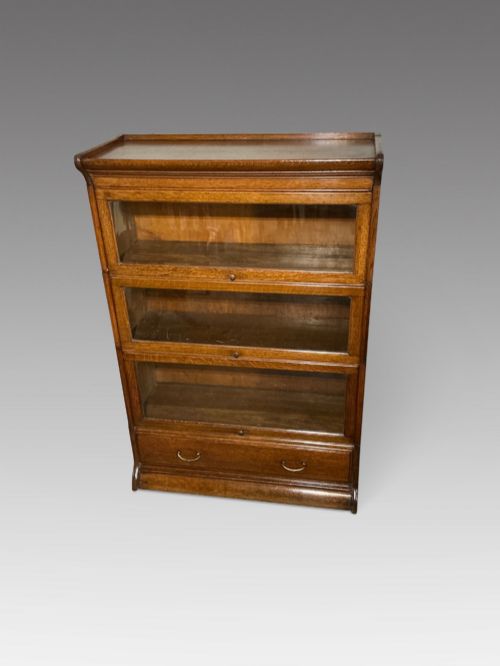
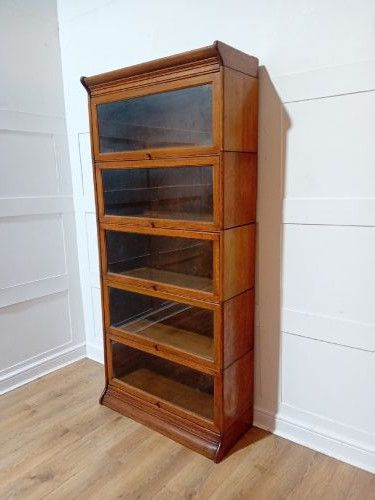
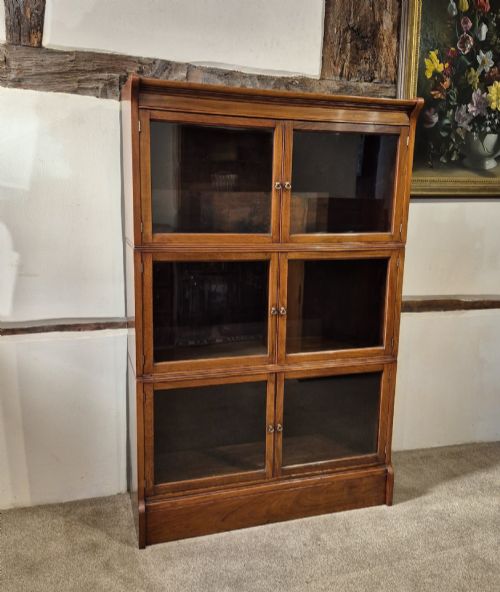
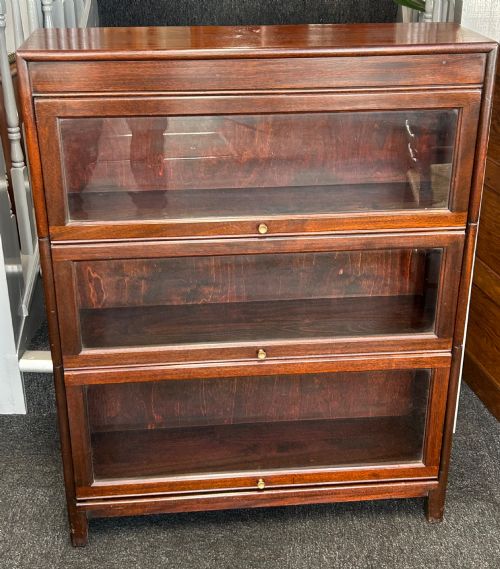
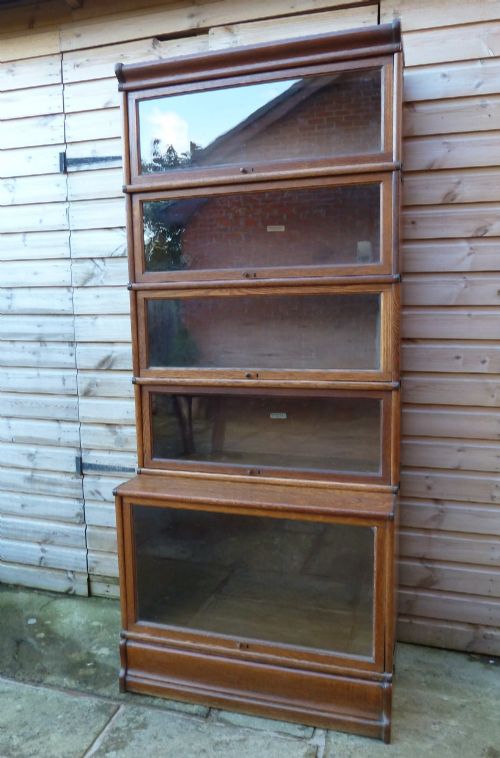
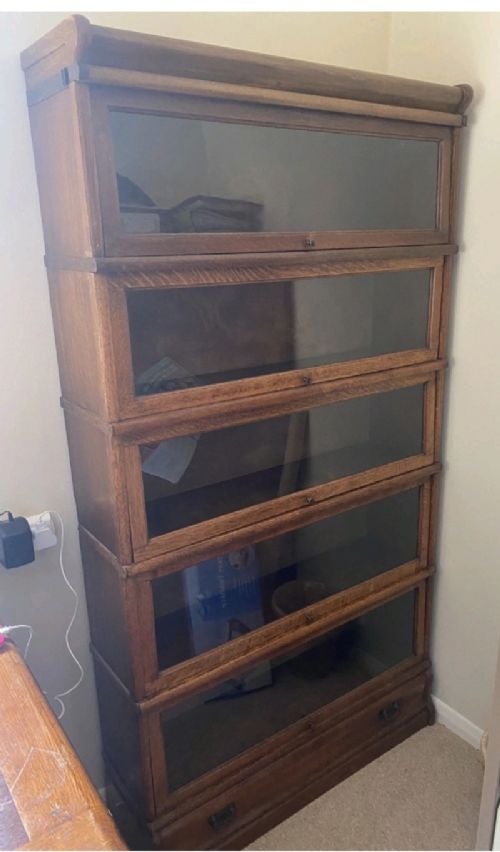
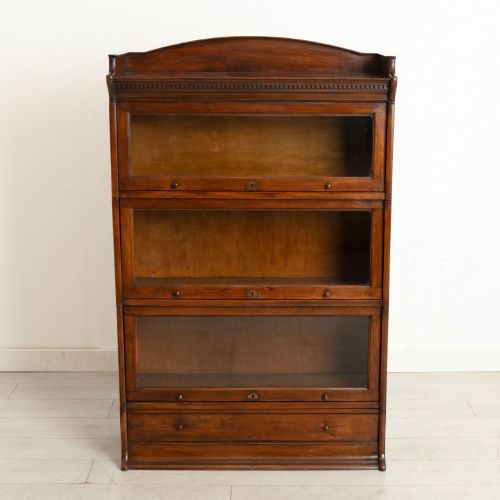
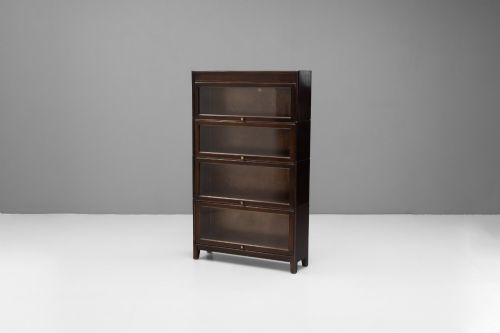
A sectional bookcase consists of separate modular tiers that stack together beneath a top cornice and above a base plinth. The form is heavily associated with Edwardian and early twentieth-century offices, libraries, and studies.
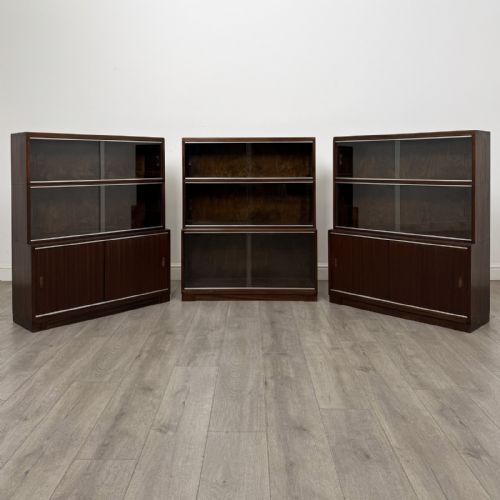
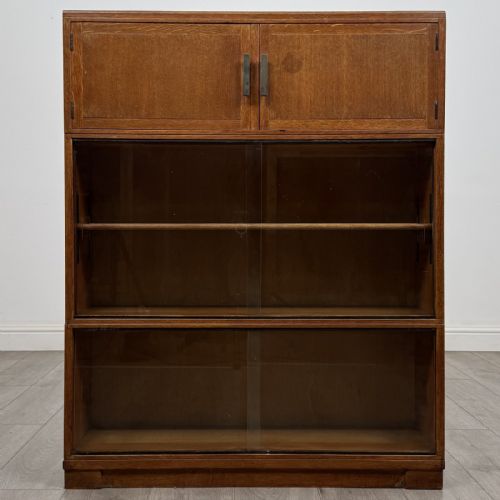
Most pieces encountered on this page originate from the Edwardian period through to the 1930s, constructed in oak or mahogany. These variants range from compact three-tier units to tall, multi-section configurations.
The layout typically incorporates glazed drop-down doors that slide upwards into the cabinet cavity, allowing easy access to the books stored within each individual tier.
How They Were Made
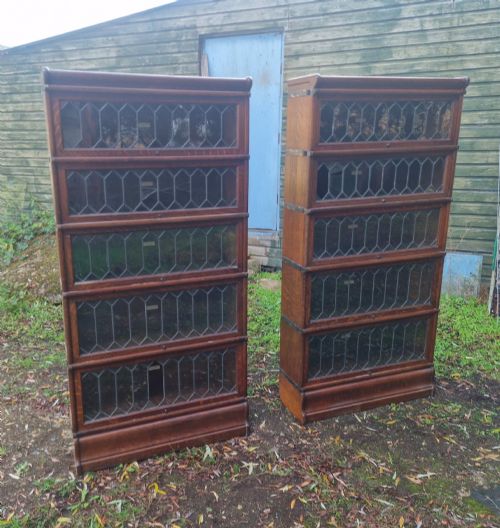
Makers utilised solid oak and mahogany as the primary timbers, frequently combined with brass hardware for the lifting mechanisms and connector clips. Glass panels, occasionally leaded, were fitted into framed wooden doors for each separate tier.
The stacking mechanism relies on precision woodworking, ensuring that individual boxes interlock securely without permanent fixings. This modular design allowed owners to add further sections vertically as their library expanded.
Sectional Bookcase Retail Price Guide 2026
Typical asking prices for sectional bookcase among the pieces listed under this phrase on Sellingantiques today, from the lower quarter to the upper quarter. They describe what is for sale here now, not the wider market.
Some lawyers insisted on leaded glass so opposing counsel could not read their case law titles during court recesses.
What Varies in Quality
The integrity of the lifting mechanism dictates much of the functional standard, as smooth operation prevents the glass and wooden frames from binding during opening. Heavier hardware and robust brass trimmings denote sturdier execution.
Timber selection and grain matching across the stacked tiers separate standard utilitarian office furniture from finer examples intended for domestic display. Original cornices and matching plinths complete the visual symmetry of upper-tier units.
Globe Wernicke·Minty·Lebus·Heal s·AMYL·Gunn
The Sectional Bookcase Glossary
- Cornice
- The decorative moulded projection that sits atop the uppermost section of the bookcase. It provides a finished architectural cap to the stacking assembly.
- Plinth
- The foundational base block upon which the lowest tier rests, elevating the entire bookcase off the floor. It anchors the stack visually and structurally.
- Barrister
- A traditional descriptor for these stacking bookcases, referencing the portable shelving once utilised by travelling lawyers. The modular format allowed legal volumes to be transported securely.
- Leaded glass
- Small panes of glass held together by strips of lead cames within the door frame. This technique produces geometric patterns typical of Arts and Crafts styling.
Sectional Bookcase: Frequently Asked Questions
How do sectional bookcases stay together?
The individual tiers stack vertically using tongue-and-groove joints or interlocking wooden lips that prevent lateral sliding. Metal clips are sometimes employed on the sides to bind the separate boxes into a unified upright stack.
Because the weight of each upper section rests securely on the one below, the entire assembly remains stable without requiring permanent wall fixings or glue.
Can I separate the tiers easily?
Yes, the modular design means each shelf tier, the top cornice, and the bottom plinth lift apart as independent pieces. This makes dismantling, transporting, and reassembling the furniture straightforward.
When moving the bookcase to a different room, lifting each tier off individually prevents strain on the joints and protects the glass doors from accidental damage.
How do the glass doors work?
The glazed doors feature a metal scissor-linkage or side-arm mechanism that guides the panel outward and upward into the top of the shelf compartment. Once pushed back, the door rests horizontally above the books.
This inward-sliding motion allows you to keep individual tiers open while reading or selecting volumes without doors projecting outward into the room.
Are all sections the same size?
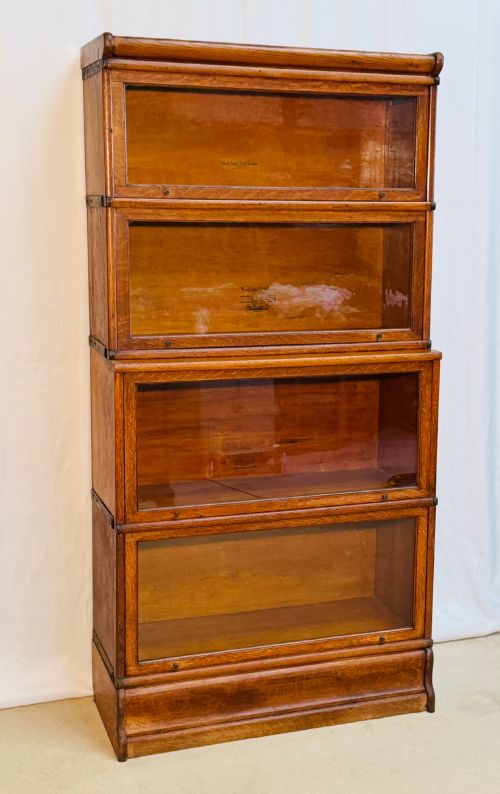
Tiers often vary in height within a single stack to accommodate different book sizes, with taller volumes placed in the deeper bottom sections and standard octavos in the upper shelves. Standardising the width and depth across the manufacturer's range allowed different heights to interlock safely.
When inspecting a tall stack, the transition from deep base units to shallow upper tiers is a deliberate design characteristic of the period.