


Seated Gentleman Portrait Painting
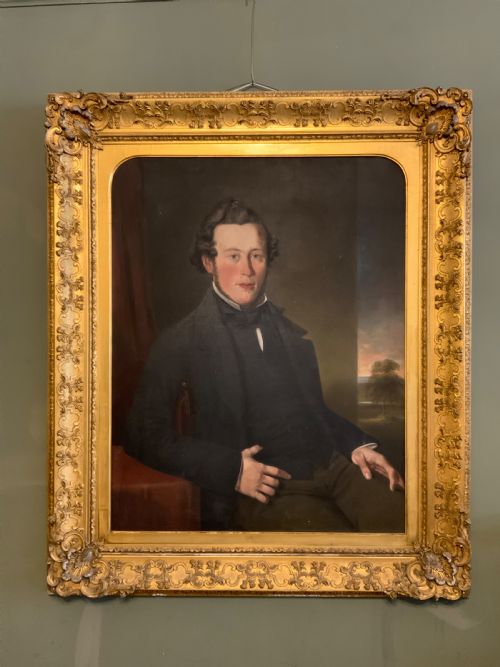
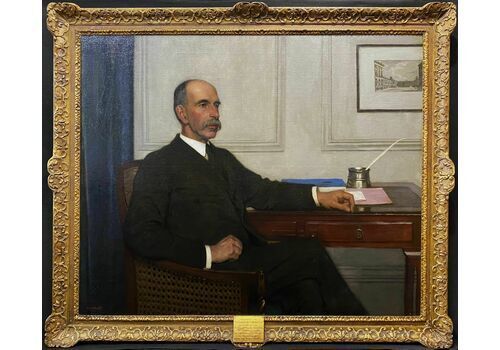
A seated gentleman portrait painting captures a recognised subject through centuries of academic, Victorian, and realist traditions.
Seated Gentleman Portrait Painting
A seated gentleman portrait painting depicts an individual subject posed within an interior setting, often seated at a desk or chair. These works span the eighteenth century through the mid-twentieth century, recording recognizable figures, professionals, and anonymous sitters alike.
The versions most frequently met on this page include nineteenth-century oils on canvas and works executed by regional British schools. Sitters appear in various contexts, from formal academic studies to relaxed Edwardian compositions.
How They Were Made
Artists primarily applied oil paint to stretched canvas or wooden boards, building up layers of pigment to render facial likenesses and fabrics. Many works retain their original gilt wood or plaster frames.
Watercolour on paper also appears among the examples, offering a lighter medium for portrait studies. Canvases are supported by wooden stretcher frames that stabilize the painted surface over time.
Listings feature works spanning the 18th century to the mid-20th century, executed in oil and watercolour on canvas, board, and paper.
What Varies in Quality
The skill of the brushwork in capturing facial expression and anatomical proportion dictates the artistic standing of each piece. Works by named academicians demonstrate superior draughtsmanship compared to anonymous provincial school paintings.
The preservation of the paint surface and the originality of the accompanying frame influence the integrity of the object. Canvases showing minimal intervention retain greater visual clarity than heavily restored examples.
Harold Knight RA·Arthur Spooner·Henry William Pickersgill·Ramsay Richard Reinagle RA·James Archer·John A.A. Berrie·Francis Alleyne·Cowan Dobson·Stephen Taylor·Joseph Clover·William Dring RA·John Dalziel Kenworthy·Neville Stephen Lytton·Frank Samuel Eastman·Benno Fischer·J Moffat·James Bell Anderson RSA
The Seated Gentleman Portrait Painting Glossary
- Oil on Canvas
- A traditional painting medium where pigments suspended in oil are applied to a woven fabric support. This combination allows for rich colour blending and durable preservation.
- Academic Realism
- A style of painting governed by the strict standards of European art academies. It emphasises precise anatomical accuracy and smooth finish.
- Gilt Wood
- Wood carved and coated with a thin layer of gold leaf or metallic powder. This material is standard for period picture frames.
- Watercolour
- A painting method where fine pigment particles are suspended in a water-based solution. It produces translucent washes on paper supports.
Seated Gentleman Portrait Painting: Frequently Asked Questions
What periods do these portraits cover?
The selection spans from the eighteenth century through the nineteenth century and into the mid-twentieth century.
Works reflect changing artistic movements including Regency, Victorian, Edwardian, and mid-century realism.
How can I identify the sitter in the painting?
Many listings include documented names of professionals, writers, engineers, and clergymen recorded on the canvas or frame.
Biographical details often accompany works depicting known historical figures and local dignitaries.
What framing do these paintings typically have?
Pieces frequently feature period frames constructed from wood, giltwood, or plaster.
These surrounds complement the era of the artwork, ranging from ornate nineteenth-century mouldings to simpler wooden profiles.
Are all the works painted in oil?
While oil on canvas and board forms the majority of the works, watercolour examples on paper also appear.
Canvas works are mounted on wooden stretchers within protective frames.