


Formal Gentleman Portrait Painting
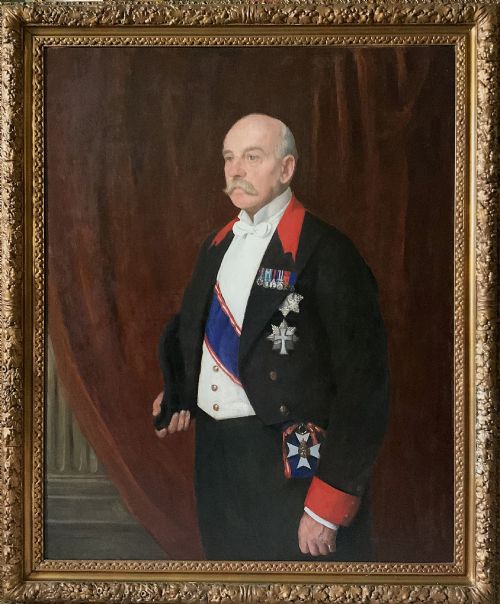
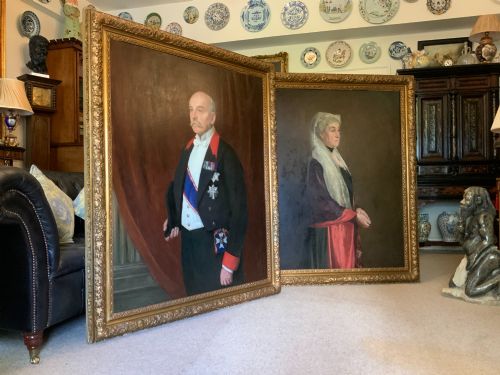
A formal gentleman portrait painting brings quiet authority to a room through traditional oil on canvas and gilded framing.
Formal Gentleman Portrait Painting
A formal gentleman portrait painting depicts identified or anonymous sitters in structured attire ranging from evening wear to military uniform. These works emerge from various periods including the nineteenth century and the Edwardian era, capturing sitters with measured dignity.
The pieces on this page primarily utilise oil paint on canvas, often housed within wood and gold leaf or gilt wood frames. Examples span from historical militia pairs to individual academic realisms and English School compositions.
Subjects include baronets, military generals, and medical professionals rendered through academic realism and mid-century portraiture. Such artworks anchor a study or library with historical presence.
Judging quality in portraiture
Quality rests upon the skill of the brushwork in capturing the likeness and texture of the sitter's garments. Masterful handling of light across fabric distinguishes professional commissions from standard commercial output.
The preservation of the original canvas and the integrity of the gilt wood frame influence the overall integrity of the piece. Intact surfaces without excessive restoration retain closer proximity to the artist's original intention.
Listings feature works executed in oil on canvas across the nineteenth and twentieth centuries, including pieces by named Royal Academicians.
Henry William Pickersgill·John A.A. Berrie·Frank Thomas Copnall·William Dring RA
The Formal Gentleman Portrait Painting Glossary
- Academic Realism
- A style of painting governed by the standards of European academies, emphasising precise anatomical drawing and smooth finishes. It produces lifelike depictions of sitters.
- Gilt Wood
- Wood that has been coated with a thin layer of gold leaf or powder. This treatment adds a reflective border to the painting.
- Black Tie
- Semi-formal evening wear featuring a tuxedo and bow tie. This attire frequently appears in nineteenth-century and twentieth-century portrait subjects.
- English School
- A classification for artists born or working primarily in England. It encompasses varied portrait traditions across multiple centuries.
Formal Gentleman Portrait Painting: Frequently Asked Questions
What periods do these portraits cover?
The works span from the nineteenth century through the Edwardian period and into the mid-twentieth century.
Most pieces reflect academic realism or English School traditions from these eras.
How should I hang a large portrait?
Ensure the wall structure supports the weight of the canvas and the heavy gilt wood frame.
Position the centre of the painting at eye level in a room with controlled lighting.
Are the subjects usually identified?
Many portraits name specific historical figures, military leaders, or physicians in their titles.
Others depict anonymous gentlemen from the Victorian or Edwardian periods.
What framing materials are common?
Frames typically combine moulded wood with plaster enrichment under gold leaf or gilt finishes.
These surrounds are chosen to complement the formal nature of the oil painting.