
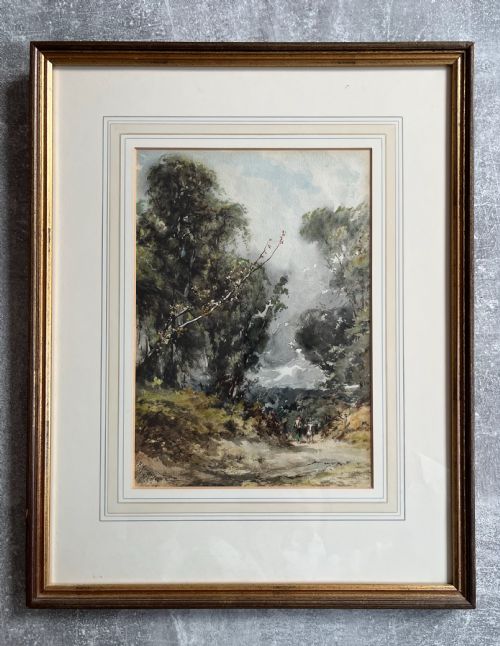
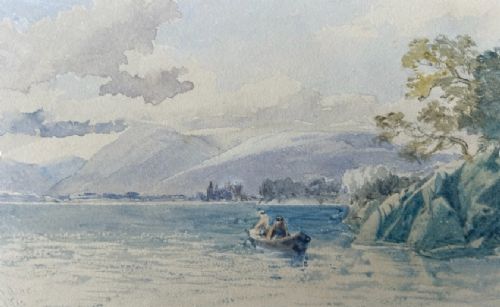

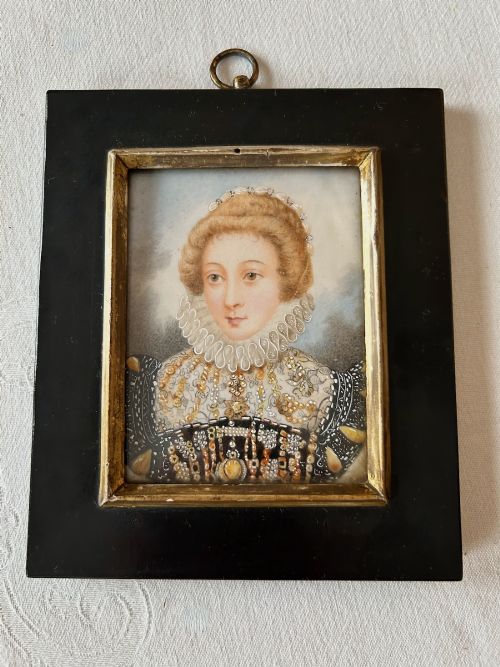
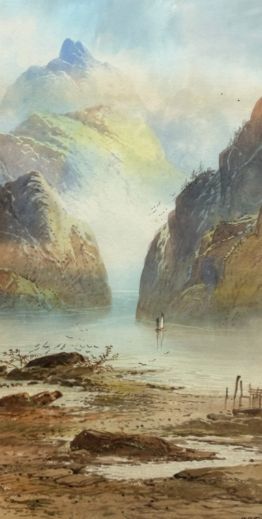

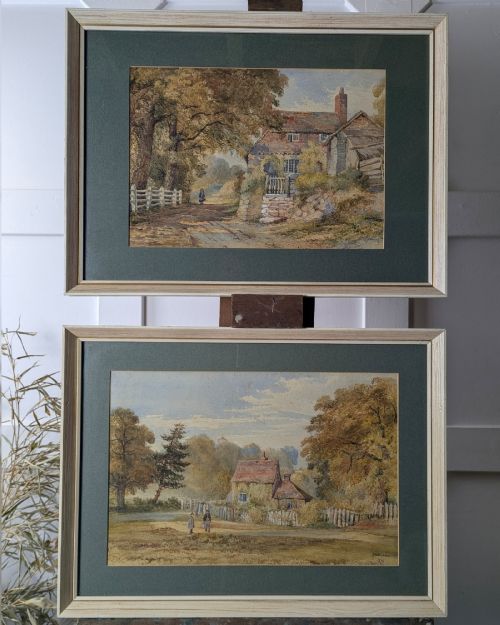
Framed Victorian Watercolour Painting
A framed victorian watercolour painting brings nineteenth-century colour and paper to a wall inside a domestic room.
Framed Victorian Watercolour Painting
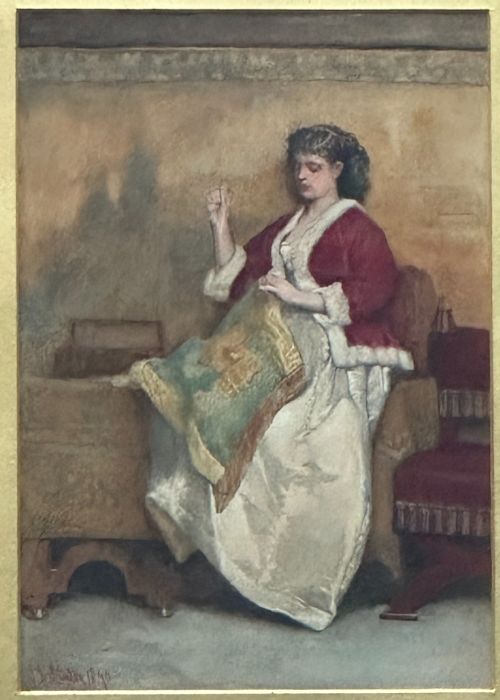
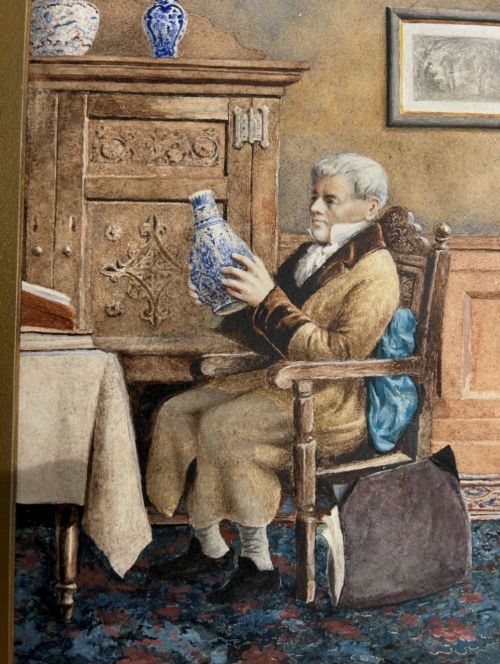
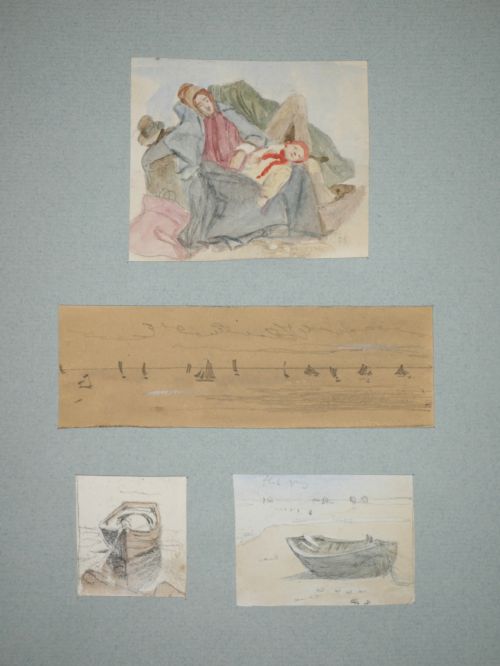
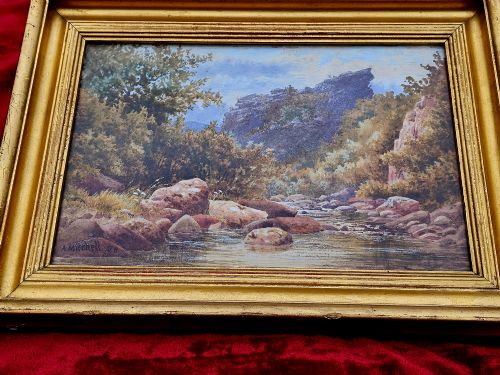
When you search for a framed victorian watercolour painting, you are looking at original works on paper produced during the nineteenth century and housed in protective timber housings with glass. The selection spans maritime views, botanical studies, portraits, and rural landscapes created across the decades from the eighteen-sixties onward.
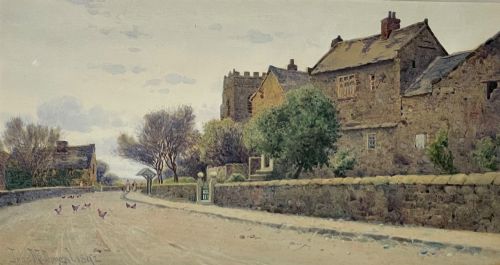
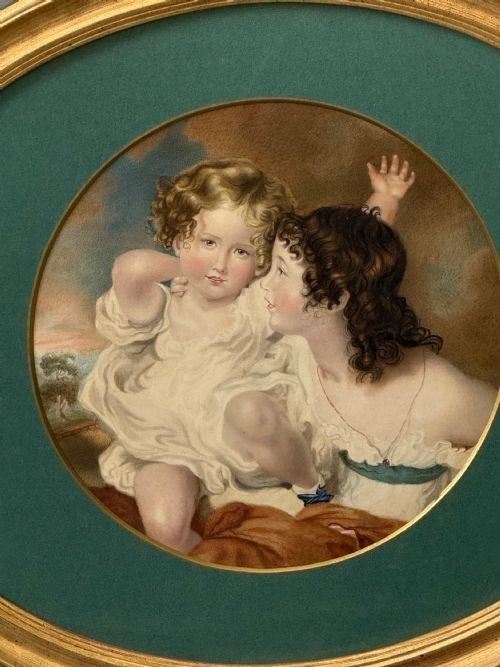
Most examples meet you as landscape or coastal scenes by named British artists, alongside domestic genre scenes and floral still lifes. These watercolours capture the shifting light of Scottish lochs, Cornish harbours, and Italianate vistas using water-soluble pigments on paper.
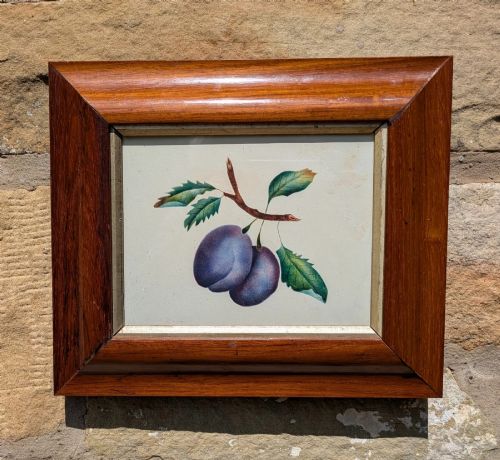
Framed formats range from modest botanical watercolours in rosewood frames to large seascapes bearing gilt wood surrounds. The pieces reflect the Victorian appetite for descriptive detail, topographical accuracy, and narrative charm in domestic art.
Materials and technique
Watercolour pigment is applied directly to paper support, sometimes enhanced with bodycolour or gouache to build opacity in highlights. Artists of the period utilised gum arabic binders to give depth and luminosity to the washes.
The resulting works on paper are secured behind glass to protect the delicate pigments from atmospheric moisture and handling. Original framing relies on wood, gilt wood, and gold leaf mouldings that complement the tonal range of the painting.
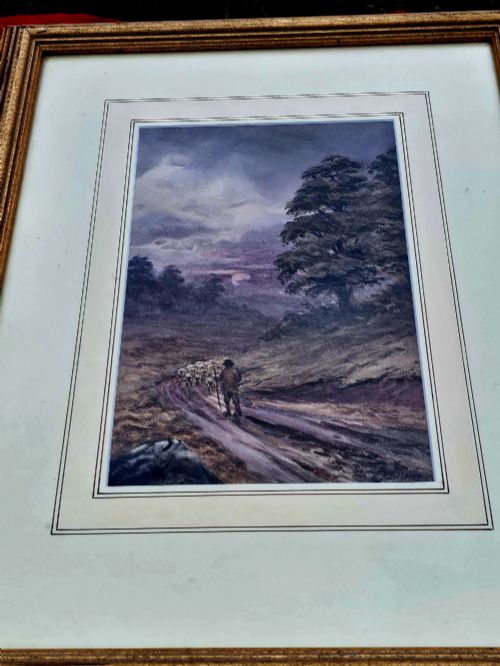
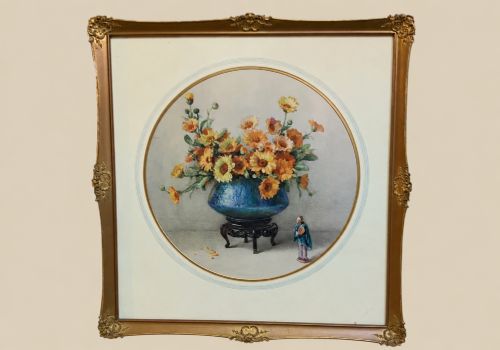
A nineteenth-century artist recorded a quiet moment of botanical observation while keeping a watchful eye on local market sheep.
Qualities of distinction
Quality rests in the surety of the brushwork and the stability of the pigment against fading over time. Strong compositional balance and precise handling elevate works by exhibited Royal Academy artists above commercial topographical sketches.
The integrity of the original mount and the preservation of the gold leaf or rosewood frame contribute to the overall coherence of the object. Works that retain their original signed inscriptions and dated paper provide clearer provenance.
George Fotherly Hargitt·Thomas Miles Richardson Jnr·James Orrock·William Henry Earp·Sir James Dromgole Linton·Henry Stacy Marks·James Smetham·John McDougal·William Banks Fortescue·Henry Silkstone Hopwood·Vincent Clare·Robert Thorne Waite·Joseph H Barnes·Ernest Arthur Rowe·Frederick Walker·TB Hardy·Frederick James Kerr·Carlo Ferranti·Frederick Tatham·Arthur Dudley
The Framed Victorian Watercolour Painting Glossary
- Watercolour
- A painting method in which natural pigments are suspended in a water-soluble vehicle. The medium relies on the white of the paper showing through translucent washes of colour.
- Gilt Wood
- Timber carved or moulded and coated with a thin layer of gold leaf or metallic paint. This finish provides a reflective border suited to nineteenth-century display.
- Portrait Miniature
- A small-scale painting depicting a specific person, executed with fine detail. These works frequently appear on paper or glass within compact frames.
- Bodycolour
- Watercolour paint mixed with a white pigment to make it opaque. Artists used this technique to add solid highlights to landscapes and still lifes.
- Provenance
- The documented history of ownership or creation for an artwork. Signatures and dates assist in establishing this record.
Framed Victorian Watercolour Painting: Frequently Asked Questions
How should I hang a watercolour painting?
Keep watercolours away from direct sunlight to prevent the pigments from fading across the paper surface. Stable indoor humidity protects both the paper support and the timber frame.
Position the frame at eye level where ambient room light illuminates the fine brushwork without causing glare on the protective glass.
How do I identify the date of a watercolour?
Look for artist signatures, monograms, and handwritten inscriptions on the front or reverse of the paper. Period framing techniques and timber types also offer clues to the decade of creation.
Comparative stylistic analysis against documented works by the same hand helps narrow the production window.
What subjects are common in these paintings?
Nineteenth-century watercolours frequently depict coastal fishing harbours, pastoral landscapes with livestock, and botanical studies of flowers. Portrait miniatures and genre scenes involving figures also appear regularly.
Topographical views of British and European locations reflect the travel habits of artists during the period.
Are these works always signed?
Many nineteenth-century watercolours bear the artist signature or monogram in pencil or ink near the lower edge. Other legitimate period works remain unsigned or carry attribution notes on the backing board.
Absence of a signature does not preclude attribution when technique and provenance align with a known hand.