





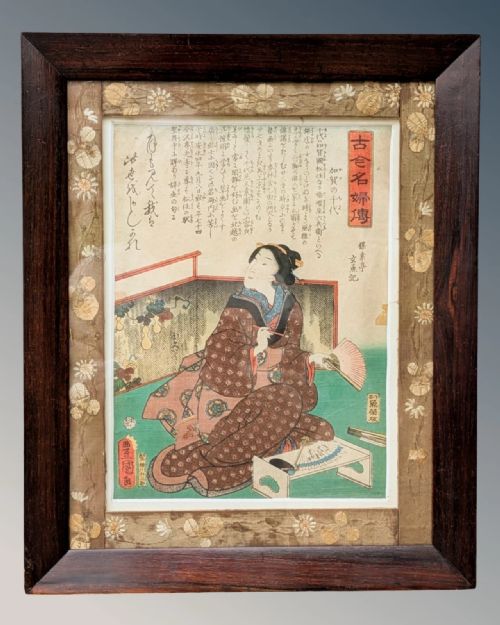

Rosewood Framed Portrait
A rosewood framed portrait brings intimate nineteenth-century character to a wall, combining rich timber grain with delicate likenesses.
Rosewood Framed Portrait
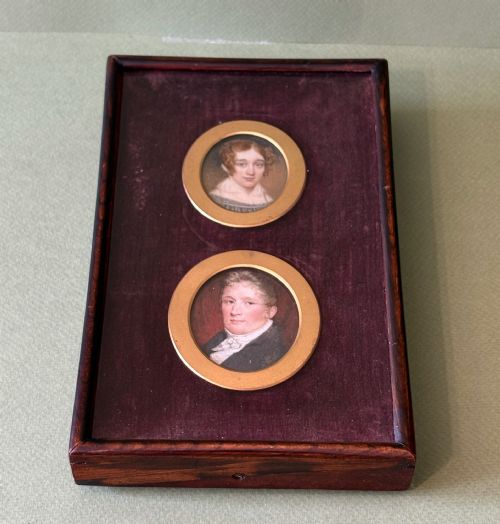
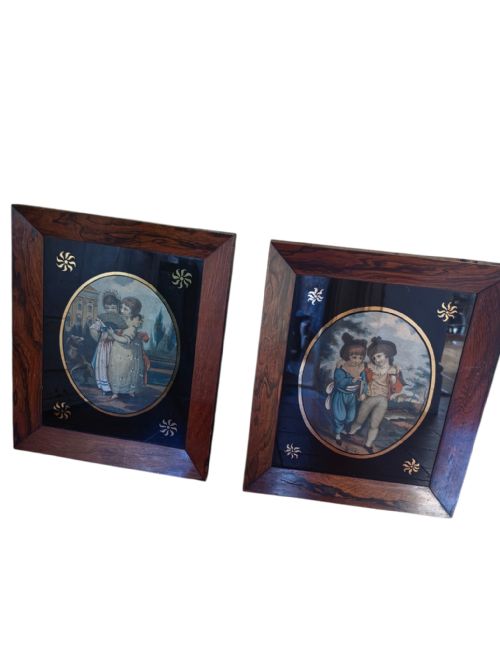
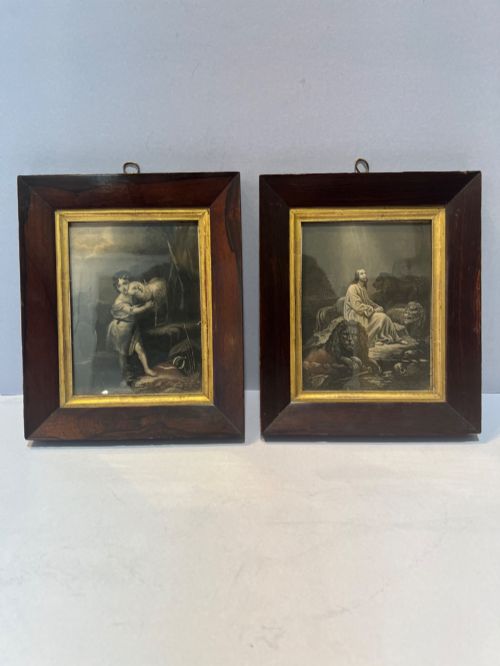
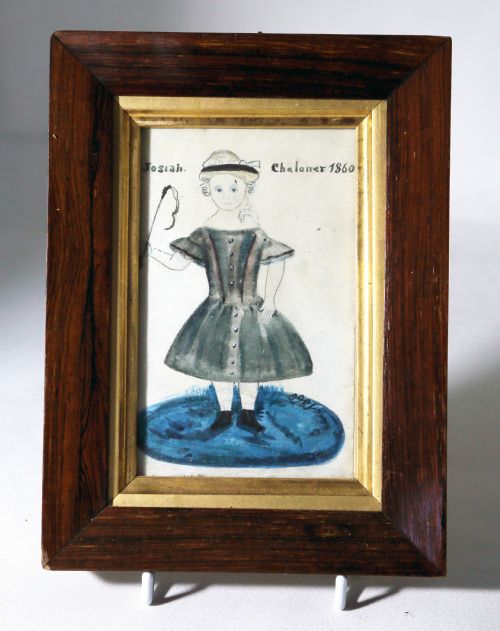
A rosewood framed portrait represents the intersection of domestic portraiture and dark, dense timber framing from the nineteenth century. When you search for rosewood framed portrait, you encounter miniature portraits, silhouettes, watercolours, and engravings housed in deep wood surrounds.
The selections on this page span the nineteenth century, taking in Regency, Georgian, and Victorian periods. You find both single likenesses and pairs depicting children, army officers, and named sitters.
Forms vary from primitive watercolours and pencil drawings to tinsel prints, Japanese woodblock prints, and silhouettes. Each object pairs a likeness on paper with the characteristic dark grain of rosewood.
Materials and construction methods
These works rely on paper supports treated with watercolour, ink, pencil, or engraving techniques. Many pieces incorporate gold leaf highlights or silk brocade mounts to enhance the visual depth of the portrait.
The framing utilises solid rosewood, shaped into deep moulded sections that provide a dark, contrasting border around the paper work. Glass protects the surface of the watercolour, print, or silhouette within the timber housing.
Rosewood Framed Portrait Retail Price Guide 2026
Typical asking prices for rosewood framed portrait among the pieces listed under this phrase on Sellingantiques today, from the lower quarter to the upper quarter. They describe what is for sale here now, not the wider market.
Several portraits preserve the identities of named individuals, including Edward Chance, Josiah Chaloner, and William Ousey Lindley.
Distinctions in craftsmanship and preservation
The condition of the rosewood frame and the clarity of the underlying paper also define the standard. Well-preserved timber frames with intact grain contrast sharply with pieces showing heavy surface wear.
The Rosewood Framed Portrait Glossary
- Silhouette
- A profile likeness cut from black paper or painted in solid dark pigment, often highlighted with gold.
- Watercolour
- A painting method using pigment suspended in water-based solution on paper support.
- Rosewood
- A dense, dark timber valued for its distinct grain patterns and deep colouration in frames.
- Miniature
- A small-scale portrait executed with fine detail, typical of nineteenth-century domestic art.
- Tinsel print
- A nineteenth-century theatrical print embellished with pieces of tinsel, foil, and fabric.
Rosewood Framed Portrait: Frequently Asked Questions
What is a rosewood framed portrait?
It is a nineteenth-century artwork depicting a person, housed in a dark timber frame made from rosewood.
These pieces include watercolours, silhouettes, and engravings produced across the Georgian and Victorian eras.
How were these portraits displayed?
They were hung on domestic walls to display family members, notable figures, or decorative theatrical characters.
Pairs and collections were often grouped together to create balanced arrangements in Victorian interiors.
How do I date a rosewood framed portrait?
Dating relies on the style of dress worn by the sitter, the framing technique, and any inscriptions on the reverse.
Periods span from the Regency era through to the mid-nineteenth century, supported by dated examples.
How do I care for rosewood frames?
Keep the timber away from direct sunlight and excessive moisture to protect the polished wood surface.
Dust the frame gently with a dry cloth and ensure the glass protects the paper artwork within.