


19th Century Male Portraiture
19th century male portraiture brings canvas and paper to life, capturing gentlemen, rulers, and notable figures in oil paint and watercolour.
19th Century Male Portraiture
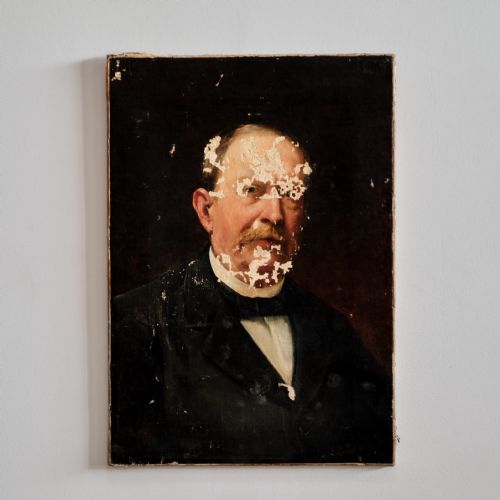
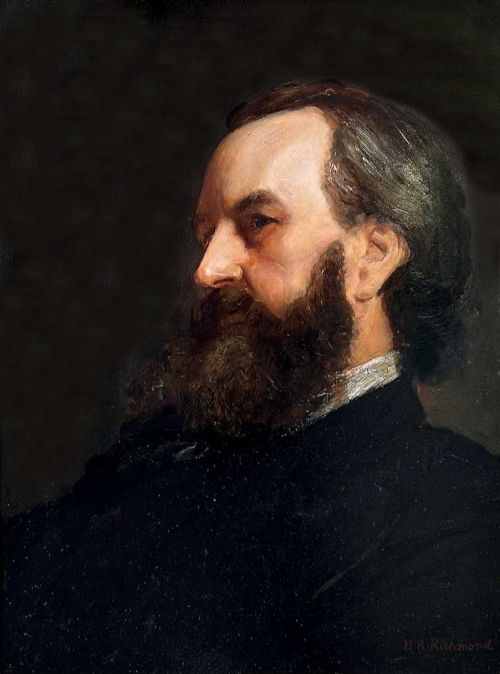
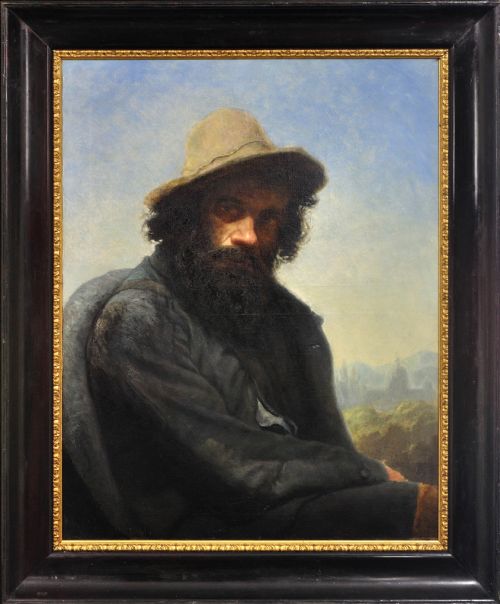
19th century male portraiture comprises framed oil paintings, watercolour and pastel works, and portrait drawings depicting individual men. These pieces range from intimate small studies to large formal canvases representing gentlemen, artists, surgeons, and public figures.
The works span the Victorian era, Regency period, and broader nineteenth century, reflecting shifts in British and continental European portrait traditions. Subjects include named historical figures such as George IV, Robert Lowe, and Sir Frederick Augustus Abel, alongside unidentified gentlemen.
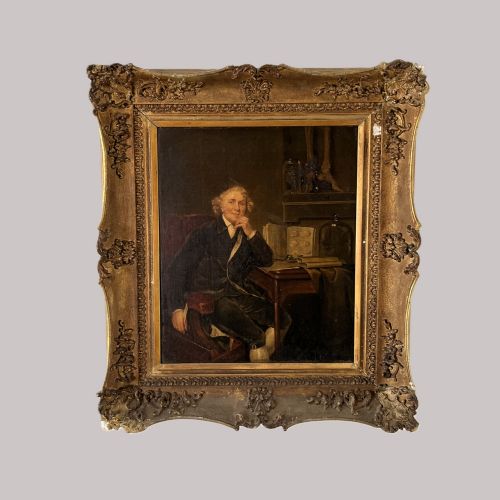
Oil on canvas remains the dominant medium, often housed in original or period giltwood and gesso frames enriched with gold leaf. Works on paper utilise watercolour and pastel, offering a more intimate scale and delicate handling of likeness.
Materials and construction
Painters applied oil paint to stretched canvas or utilised watercolour and pastel on paper to build form and character. Wood provides the structural support for stretchers and frames, while gesso and gold leaf create ornate decorative borders.
Framing forms an integral part of these works, utilising moulded gesso finished with gold leaf to complement the palette of the canvas. The combination of durable oil pigments on canvas ensures longevity, whereas works on paper require careful protection under glass.
Listings feature works created across the nineteenth century, utilising canvas, paper, wood, oil paint, and gold leaf.
Assessing quality in portraits
Quality rests upon the precision of the draughtsmanship, the handling of light and shadow, and the psychological depth captured in the sitter's expression. Superior works demonstrate confident brushwork and anatomical accuracy, distinguishing professional commissions from standard commercial output.
The preservation of the original surface and the integrity of the frame contribute significantly to a piece's standing. Intact oil paint layers free from excessive restoration, combined with period giltwood frames, represent the highest grade of survival.
William Blake Richmond·Albin Mattenheimer·Rudolph Lehmann·Samuel Drummond·Thomas Jones Barker·Henry Wyatt·George Richmond·John Ward Dunsmore·John E Fernley
The 19th Century Male Portraiture Glossary
- Giltwood
- Wood carved and covered with a thin layer of gold leaf. This material is commonly found on traditional picture frames surrounding nineteenth century canvases.
- Gesso
- A plaster mix applied to wood frames before gilding. It provides a smooth surface for intricate moulded ornament.
- Watercolour
- A paint method using water-soluble pigments on paper. It creates transparent washes often used for preparatory sketches or intimate portraits.
- Pastel
- A dry medium of powdered pigment pressed into sticks. Artists apply it to paper to achieve soft textures and blended tones.
- Canvas
- Heavy woven fabric stretched across a wooden frame to form a painting surface. It serves as the primary ground for oil portraits of this era.
19th Century Male Portraiture: Frequently Asked Questions
What is the difference between oil and watercolour portraits?
Oil paintings utilise pigment suspended in drying oil on a canvas support, offering rich colour depth and a robust physical presence. Watercolours employ water-soluble pigments on paper, producing a lighter, more translucent quality that requires protection behind glass.
Oils generally denote formal, larger scale commissions intended for public display rooms. Watercolours and pastels often indicate private, domestic pieces or preparatory studies.
How should I hang and light these portraits?
Position oil paintings away from direct sunlight and sources of extreme heat to prevent the canvas and paint layers from drying out or cracking. Use picture lights with low UV output to illuminate the surface evenly without generating excessive warmth.
Ensure wall fixings match the weight of the frame, particularly for large giltwood pieces. Consult a professional framer if the hanging hardware on the reverse requires updating for safety.
Are original frames important?
Original giltwood and gesso frames enhance the historical context and visual harmony of nineteenth century canvases. They reflect the aesthetic tastes of the period in which the portrait was painted.
While replacement frames protect the artwork if the original is damaged, matching period mouldings preserve the integrity of the piece. Look for consistent wear and patina shared between the canvas and its border.