





Scrolled Leg Pedestals
Scrolled leg pedestals bring sculptural presence and steady architectural support to tables and stands across several historic periods.
Scrolled Leg Pedestals
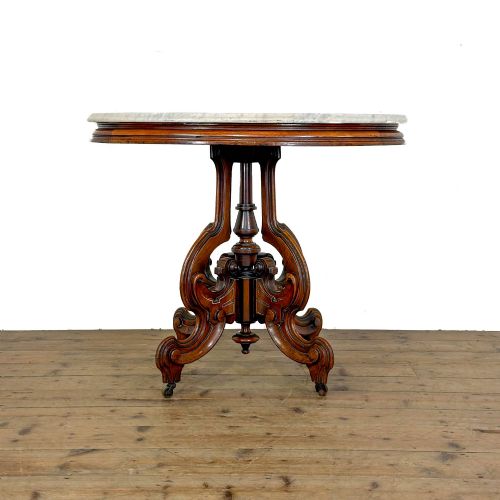
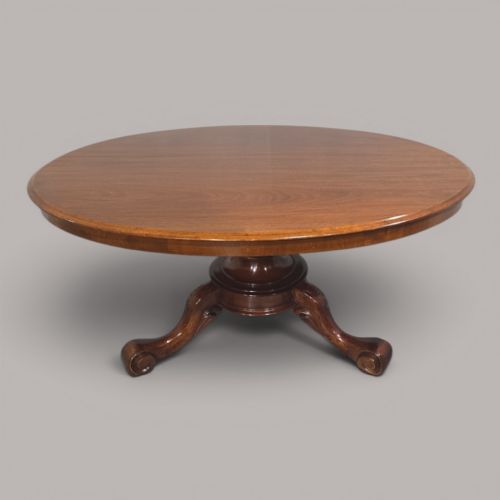
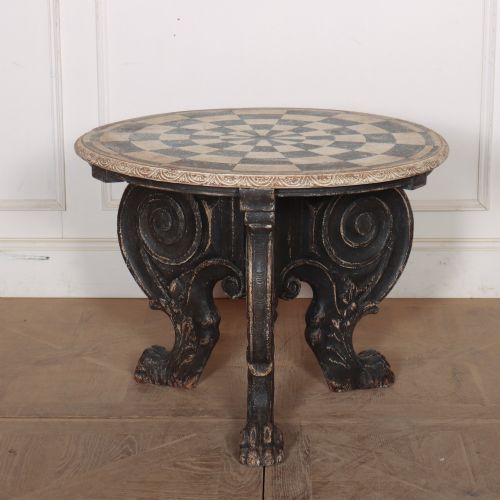
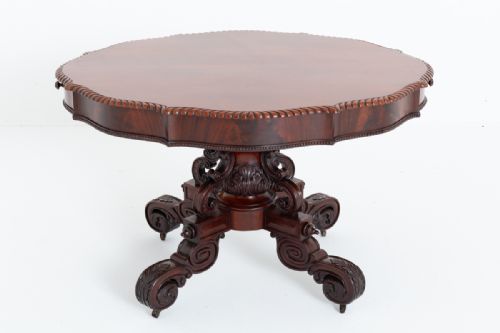
Scrolled leg pedestals describe table bases and supports featuring curved, scroll-shaped woodwork, appearing predominantly on nineteenth-century centre tables, breakfast tables, and occasional tables. These forms often manifest as substantial pillar supports resting on shaped platform bases with scrolled feet.
Buyers browsing this selection will frequently encounter Victorian mahogany and walnut examples alongside earlier Georgian and Regency pieces. The inventory includes circular breakfast tables, side tables, and specialised wine tables sharing this distinctive curved pedestal configuration.
Originating across English, French, Dutch, and Swedish workshops, these tables demonstrate diverse regional interpretations of scrollwork. The assortment ranges from compact lamp tables to monumental dining furniture united by their pedestal bases.
Materials and construction
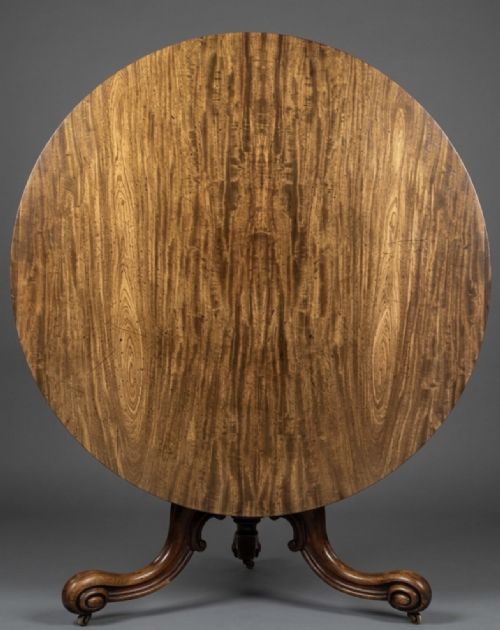
Cabinet makers utilised dense hardwoods such as mahogany, walnut, rosewood, and ash to achieve structural stability for heavy pedestal columns. Flame mahogany and burr walnut veneers frequently cover table tops to provide rich grain patterns.
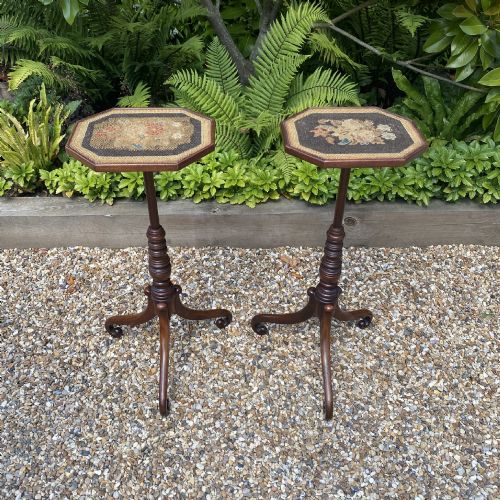
Advanced woodworking techniques enabled craftsmen to carve intricate scrolls and curves into solid timber and apply decorative marquetry or satinwood inlay. Brass fittings and needlepoint textiles occasionally supplement the primary wooden structures.
Listings feature mahogany, walnut, rosewood, and ash timbers across Victorian, Georgian, and Regency periods.
Evaluating craftsmanship and condition
Quality separates pieces through the crispness of the hand-carved scrollwork and the selection of figured veneers on the top and pedestal. Superior examples display harmonious proportions between the central column and the supporting platform.
The integrity of the central column attachment dictates the stability of the entire table. Master carvers executed tight joints and balanced weights that prevent the pedestal from leaning under daily use.
The Scrolled Leg Pedestals Glossary
- Pedestal
- A structural support or column holding a table top. This central pillar replaces standard four-legged designs.
- Gueridon
- A small French table supported by a central column or figures. These decorative stands often feature circular tops.
- Torchere
- A tall ornamental stand designed to hold a light or decorative object. Examples here showcase pedestal bases.
- Breakfast table
- A large occasional table with a tilt-top mechanism supported by a heavy pillar. They became popular during the Georgian and Victorian eras.
- Specimen wood
- Furniture constructed using multiple decorative timbers arranged in geometric patterns. These tops showcase varied natural colours.
Scrolled Leg Pedestals: Frequently Asked Questions
What is a scrolled leg pedestal table?
These pieces comprise tables where the central column or base incorporates curved scroll motifs. They provide sturdy support while adding decorative visual weight.
Such designs appear frequently on nineteenth-century centre and breakfast tables. The scrollwork shapes the transition from the floor platform to the vertical shaft.
How do I place a pedestal table?
Pedestal tables work effectively as centrepieces in rooms where people circulate around the furniture. The central column prevents legs from obstructing chairs.
They function well in entryways, libraries, and living spaces as display surfaces. Their compact footprint maximises usable floor space.
Are these tables sturdy?
The structural stability depends on the weight distribution of the central column and base platform. Well-designed pedestal tables balance heavy timber tops securely.
Original construction methods utilise robust tenon joints to anchor the pillar. Regular tightening of internal fittings maintains their strength.
How do I identify the period?
Stylistic clues such as wood selection, carving depth, and edge moulding indicate the era of manufacture. Georgian pieces display restrained classical lines, whereas Victorian examples favour heavier proportions.
Secondary woods and construction hardware offer further chronological evidence. Examining the underside reveals period-specific fastening techniques.