






Marquetry Candle Stands
Marquetry candle stands combine intricate wood inlay with functional height, offering a striking display surface for lighting.
Marquetry Candle Stands
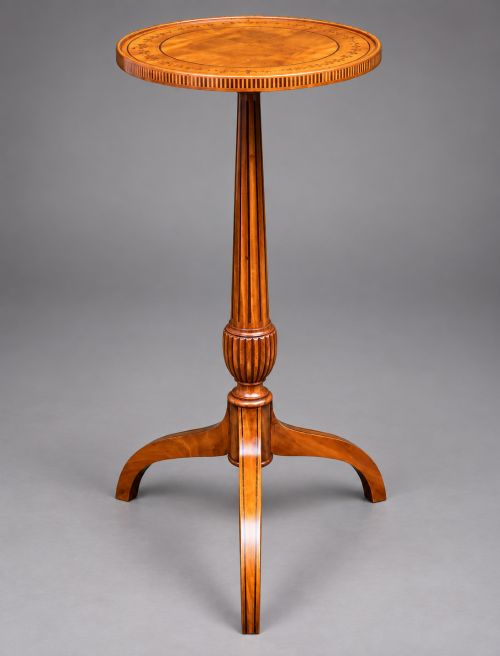
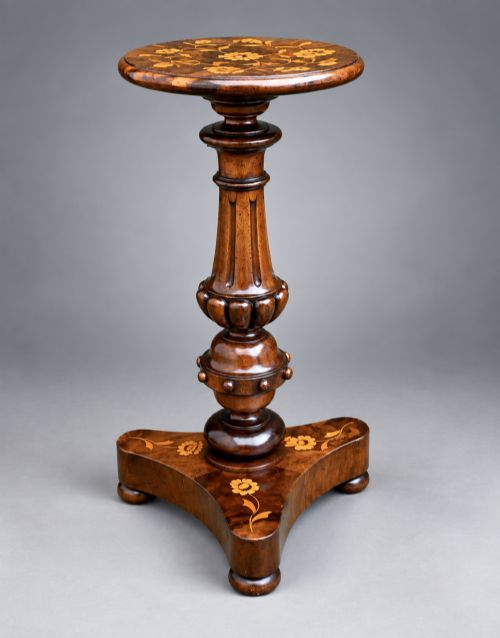
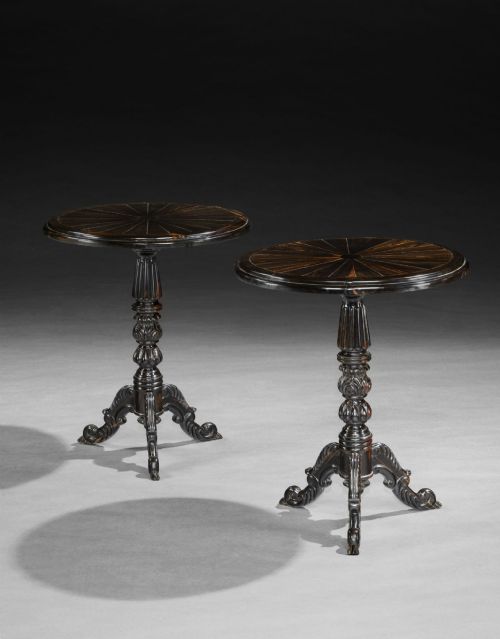
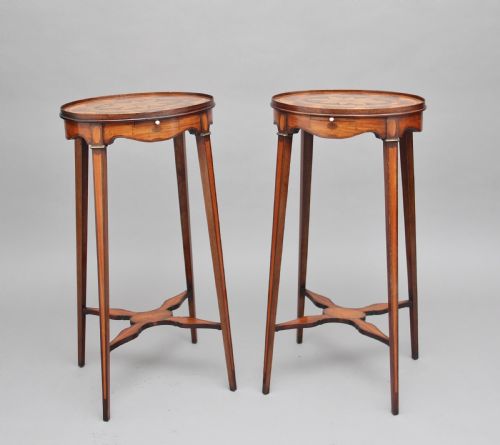
Marquetry candle stands are elevated small tables designed to hold illumination, frequently appearing as tripod wine tables, pedestals, and torchieres. These compact items surface predominantly in Georgian, Regency, and Victorian iterations, spanning the eighteenth and nineteenth centuries.
The buyer encounters various forms ranging from Dutch floral marquetry examples to Sheraton revival satinwood stands and William IV specimen wood designs. Most pieces function well as occasional lamp tables or urn stands in traditional interiors.
How they were made
Cabinet makers constructed these stands using supportive foundational timbers such as mahogany, oak, walnut, and ebony, upon which decorative veneers were applied. Woods like satinwood, fruitwood, and kingwood formed contrasting background surfaces for intricate patterned inlays.
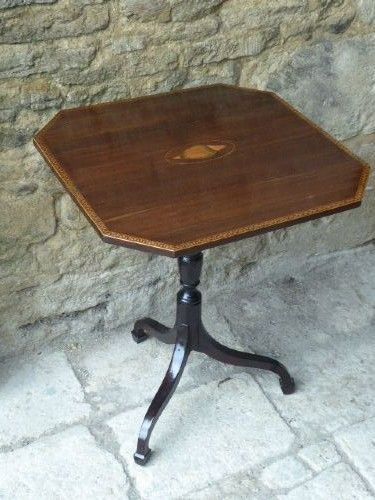
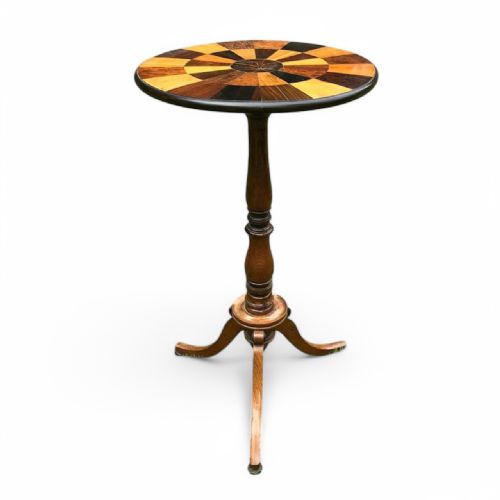
Veneers were precisely cut and assembled into pictorial or geometric motifs, including floral sprays and compass roses, then secured to circular or octagonal table tops. Many examples incorporate tripod bases with turned columns and snap-top or tilting mechanisms.
Several tables feature inlaid compass roses, perhaps intended to help wandering Victorians navigate their way back to the sofa after dark.
What varies in quality
The sophistication of the timber inlay dictates much of the visual distinction, separating simple geometric banding from elaborate pictorial floral marquetry. Finer examples display meticulous control of grain direction and tone across multiple contrasting exotic woods.
Structural execution also separates standard pieces from exceptional ones, particularly in the stability of the tripod base and the crispness of the turned pillar. Original surfaces and patination on woods like burr walnut or satinwood significantly elevate the stature of a stand.
The Marquetry Candle Stands Glossary
- Marquetry
- Decorative veneer work where pieces of wood, brass, or other materials are fitted together to form pictorial designs. This technique transforms a plain table top into a detailed surface of contrasting colours and textures.
- Torchere
- A tall, slender stand designed specifically to support a candle or lamp. These elevated pieces often feature ornate carving or inlay to enhance their decorative impact in a room.
- Tripod base
- A three-legged support structure commonly found on nineteenth-century small tables. This design ensures stability on uneven floor surfaces while maintaining a lightweight silhouette.
- Snap top
- A hinged table top mechanism that allows the surface to tilt into a vertical position when not in use. This clever engineering saved valuable floor space in historic interiors.
- Specimen wood
- Furniture constructed using a variety of different timber samples, often collected during travel. The distinct natural colours of each wood create a striking geometric or mosaic pattern.
Marquetry Candle Stands: Frequently Asked Questions
Where should I place a candle stand?
These compact stands suit corners, beside armchairs, or nestled between seating where a full-sized table proves too bulky.
Their elevated surfaces work well for small lamps, decorative objects, or modest floral arrangements without cluttering the floor space.
How do I care for antique marquetry?
Keep inlaid wooden surfaces away from direct sunlight and steady heat sources to prevent the delicate veneers from lifting or drying out.
Apply a light application of appropriate wax polish occasionally to maintain the sheen and nourish the historic timbers.
Are these tables sturdy enough for daily use?
Most tripod designs provide adequate stability for holding lamps or decorative items during normal household routines.
Avoid placing excessive weight or leaning heavily upon the edges, particularly on examples featuring tilt-top mechanisms.
How do I identify a Georgian stand?
Georgian pieces generally display restrained proportions, rich mahogany or walnut construction, and classical turning on the central pillar.
Earlier examples often rely on simple timber grains before the heavier adoption of complex floral marquetry in later Victorian revivals.