

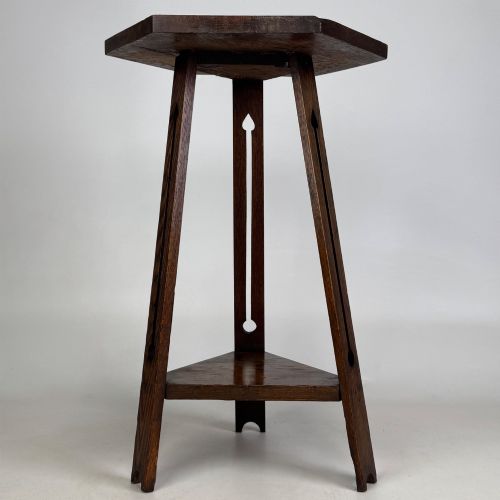
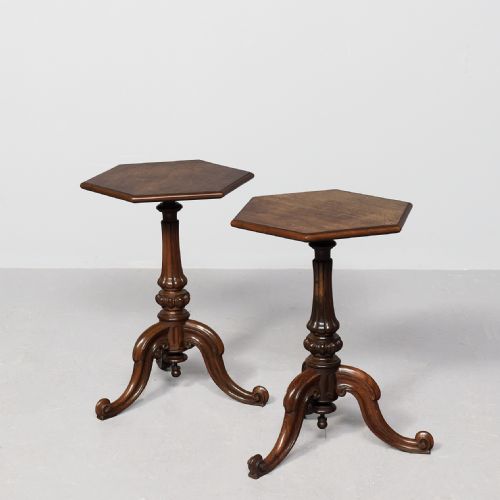
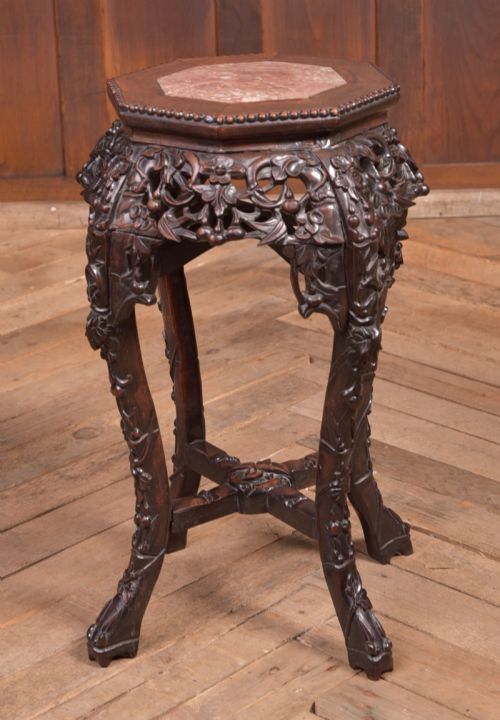


Hexagonal Pedestal Stand
A hexagonal pedestal stand offers a distinct geometry for displaying objects, prized for its angled profile and sturdy column form.
Hexagonal Pedestal Stand
A hexagonal pedestal stand serves primarily as a decorative platform for lamps, plants, and decorative arts. The form draws the eye through its six-sided top and supporting vertical column or pedestal base.
Buyers encountering this search phrase find diverse examples spanning the Georgian, Victorian, and Edwardian periods. Materials range from traditional mahogany and oak to exotic hardwoods and marble.
Origins vary widely across these listings, encompassing British vernacular designs, Anglo-Indian craftsmanship, and Chinese furniture traditions. Each piece adapts the six-sided format to the aesthetic priorities of its era and region.
How they were made
Construction relies upon solid timbers and substantial veneers applied to structural hardwoods like mahogany, oak, and walnut. Joinery techniques secure the multi-sided top firmly to the central pedestal or cabinet base.
Surface ornamentation incorporates specialised embellishments such as marble inserts, gilded brass mounts, pearl inlay, and intricate carving. These decorative additions reflect both European revival styles and traditional Eastern craftsmanship.
One stand arrives with pearl inlay from Syria, proving that six-sided geometry transcends cultural borders.
What varies in quality
Quality reveals itself in the selection of timber figures and the precision of the joinery forming the six-sided top. Superior examples maintain structural rigidity in the pedestal without relying on excessive secondary bracing.
The refinement of surface enrichment distinguishes finer work, from crisply carved foliage to accurately fitted marble tops and intact inlay. Less ambitious pieces offer simpler surfaces and straightforward utilitarian construction.
The Hexagonal Pedestal Stand Glossary
- Torchere
- A tall ornamental stand designed specifically to support a lamp or candleholder. These pieces often feature slender columns and elevated platforms.
- Pedestal
- A supporting base or column that elevates a tabletop, urn, or sculpture above floor level. It provides architectural stability to the furniture form.
- Padouk
- A heavy, durable tropical hardwood prized for its rich reddish-brown colour and dense grain structure. It appears frequently in Asian export furniture.
- Kingwood
- A heavily figured exotic timber featuring striking dark violet and brown contrasting streaks. Cabinetmakers utilise it primarily for decorative veneer work.
Hexagonal Pedestal Stand: Frequently Asked Questions
What is a hexagonal pedestal stand used for?
These pieces function primarily as display furniture for holding table lamps, decorative vessels, or potted plants. Their elevated platforms raise objects to a comfortable viewing height within a room.
The six-sided top provides a compact footprint suitable for corners or beside seating furniture. This shape frames displayed items differently than standard round or square tables.
How do I date a wooden stand?
Dating relies upon observing the timber species, construction methods, and decorative style relative to known historical periods. Georgian and Victorian pieces exhibit specific joinery traits and aesthetic preferences distinct from Edwardian work.
Secondary woods and hardware types also assist in determining the approximate era of manufacture. Examining the wear patterns on the base and top provides further clues to age.
Where were these stands made?
The listings demonstrate a diverse geographical range encompassing British workshops, continental European makers, and Asian export centres. Anglo-Indian and Chinese pieces illustrate the global exchange of furniture forms during the nineteenth century.
Local European makers adapted these influences into prevailing styles such as Gothic revival and Dutch Rococo. Each region contributed distinct decorative vocabularies to the basic pedestal format.
How do I care for antique timber?
Maintain wooden surfaces by keeping them away from direct heat sources and dramatic humidity fluctuations. Gentle dusting with a soft cloth preserves the polished finish without abrasion.
Avoid commercial silicone sprays that can penetrate porous historic finishes. Periodic application of appropriate wax protects the grain and maintains a natural lustre.