


Scroll End Sofa
Scroll end sofa designs offer sweeping classical lines and deep comfort, making them a commanding focal point in any period interior.

Scroll End Sofa
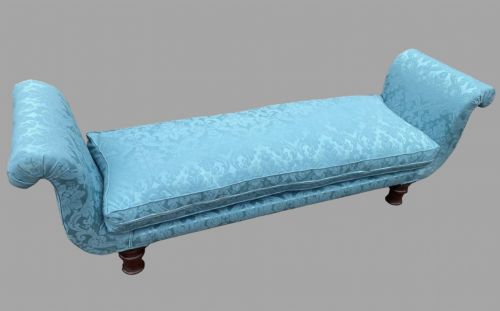
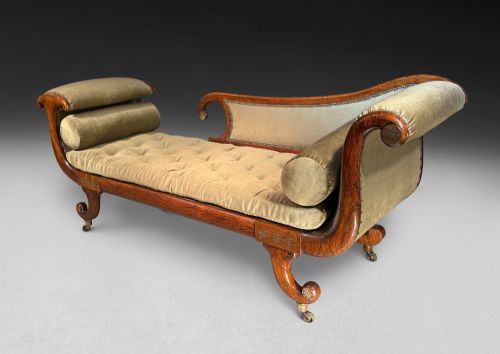
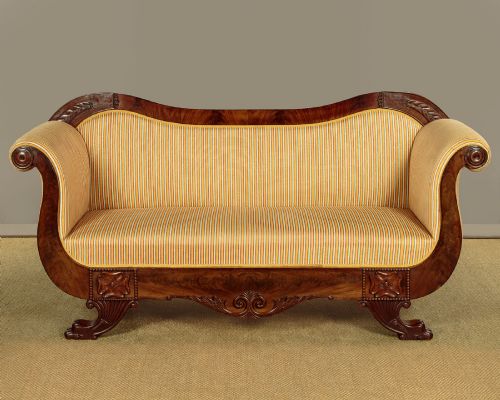
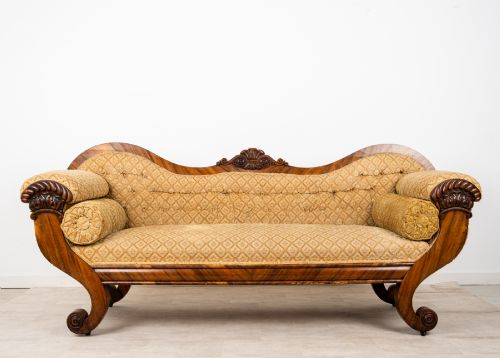
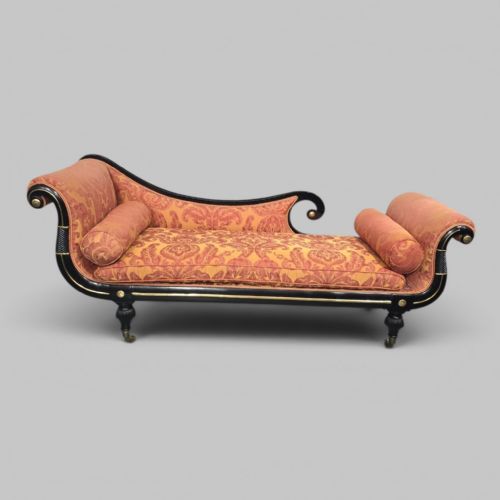
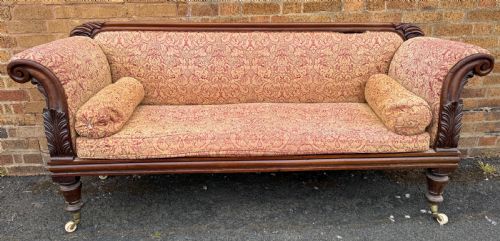
A scroll end sofa displays characteristic outward-curving arms reminiscent of ancient Grecian and Roman daybeds, providing an elongated surface suited for reclining. Buyers searching for a scroll end sofa encounter substantial timber frames shaped during the Regency, William IV, and Victorian periods.
The profile ranges from single-ended couches to symmetrical double-ended settees designed to sit away from the wall. Many examples combine architectural mahogany or rosewood framing with generous upholstery intended for daytime resting.
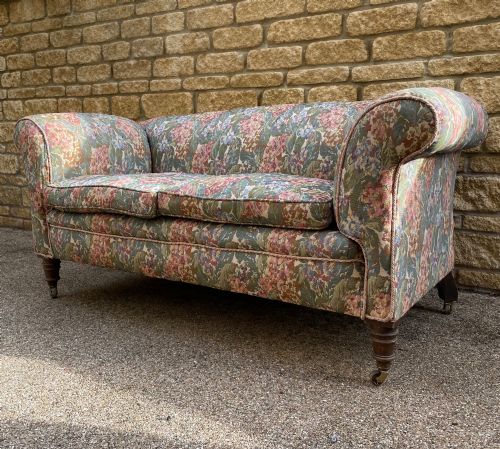
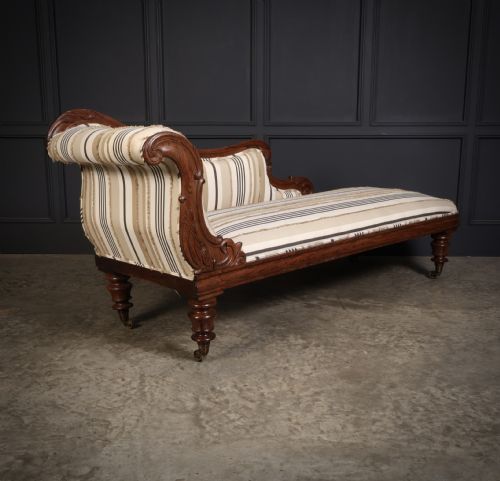
Beyond standard two and four-seater settees, the selection incorporates daybeds, chaise longues, and window seats that share the signature scrolled arm architecture. These seating forms reflect classical Revival tastes spanning the nineteenth century.
Materials and construction
Cabinet makers built the structural carcasses using dense hardwoods like solid mahogany, rosewood, and burr walnut, frequently applying simulated graining or ebonised finishes to mimic exotic species. Brass inlay, carved scrollwork, and moulded facings accent the primary timber frameworks.
Upholstery techniques involved traditional webbing, horsehair stuffing, and heavy textiles secured with brass-headed tacks along the show wood rails. Frame joints relied on heavy tenon and mortise construction to withstand the outward lateral pressure exerted by the scrolling arm terminals.
Several pieces preserve their original brass inlay, proving that nineteenth-century artisans loved a bit of subtle flash.
Evaluating craftsmanship and design
Quality reveals itself in the sculptural fluidity of the timber arms and the crispness of hand-carved classical details such as rosettes, leaves, and reeded mouldings. Superior frames utilise choice cuts of figured mahogany or rosewood with consistent grain patterns across the primary show surfaces.
Proportion and scale distinguish exceptional pieces, particularly where the sweeping scroll of the arm matches the rake of the backrest in a unified composition. Maker attribution and the retention of original decorative brass inlay further elevate certain examples.
Willian Trotter·George Smith
The Scroll End Sofa Glossary
- Scroll End
- A furniture arm that curves outward and downward in a continuous spiral volute. This shape derives from ancient classical reclining furniture popularised during the Regency era.
- Chaise Longue
- An upholstered long chair or daybed designed for reclining, often featuring a single raised end. It functions as a hybrid between a chair and a full settee.
- Simulated Rosewood
- A painted or stained surface treatment applied to a lesser timber to imitate the rich dark grain of genuine rosewood. This technique was common in nineteenth-century country houses.
- William IV
- A British design period spanning the 1830s characterised by robust classical proportions and heavy mahogany or rosewood show frames. Pieces from this era often display bold architectural carving.
- Double Ended
- A settee or sofa featuring identical scrolled arms at both extremities rather than a single raised headrest. This symmetrical form allows a user to recline comfortably from either direction.
Scroll End Sofa: Frequently Asked Questions
Where did scroll end sofa designs originate?
The form draws direct inspiration from classical Greek and Roman archetypes, particularly excavated artefacts from Pompeii and Herculaneum.
British cabinet makers reinterpreted these ancient reclining shapes during the Regency period to satisfy a widespread fascination with classical antiquity.
How do I distinguish Regency from Victorian examples?
Regency frames tend to display crisper architectural carving, lighter proportions, and decorative brass inlay or simulated rosewood finishes.
Victorian iterations generally present heavier rosewood or mahogany show frames with deeper buttoned upholstery and broader proportions dating towards the late nineteenth century.
Can I use a scroll end sofa for everyday seating?
These pieces function well as primary seating in a drawing room or study, provided the internal webbing and upholstery support daily use.
Many surviving frames have been historically reupholstered to accommodate modern comfort preferences while preserving the historic timber structure.