
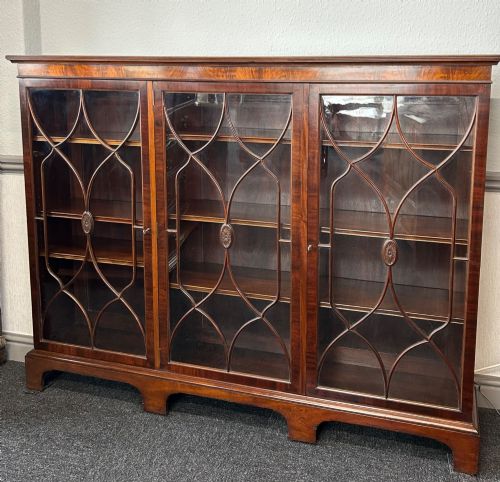
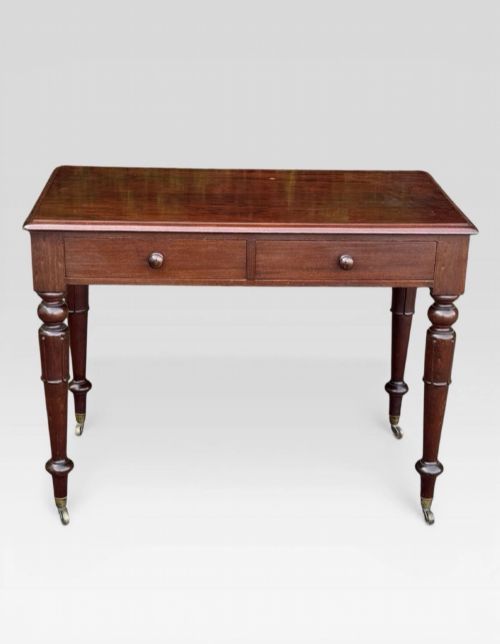


Scottish Mahogany Cabinet
A Scottish mahogany cabinet brings architectural weight and rich timber grain to a room, built by regional makers who favoured deep drawers and striking veneers.
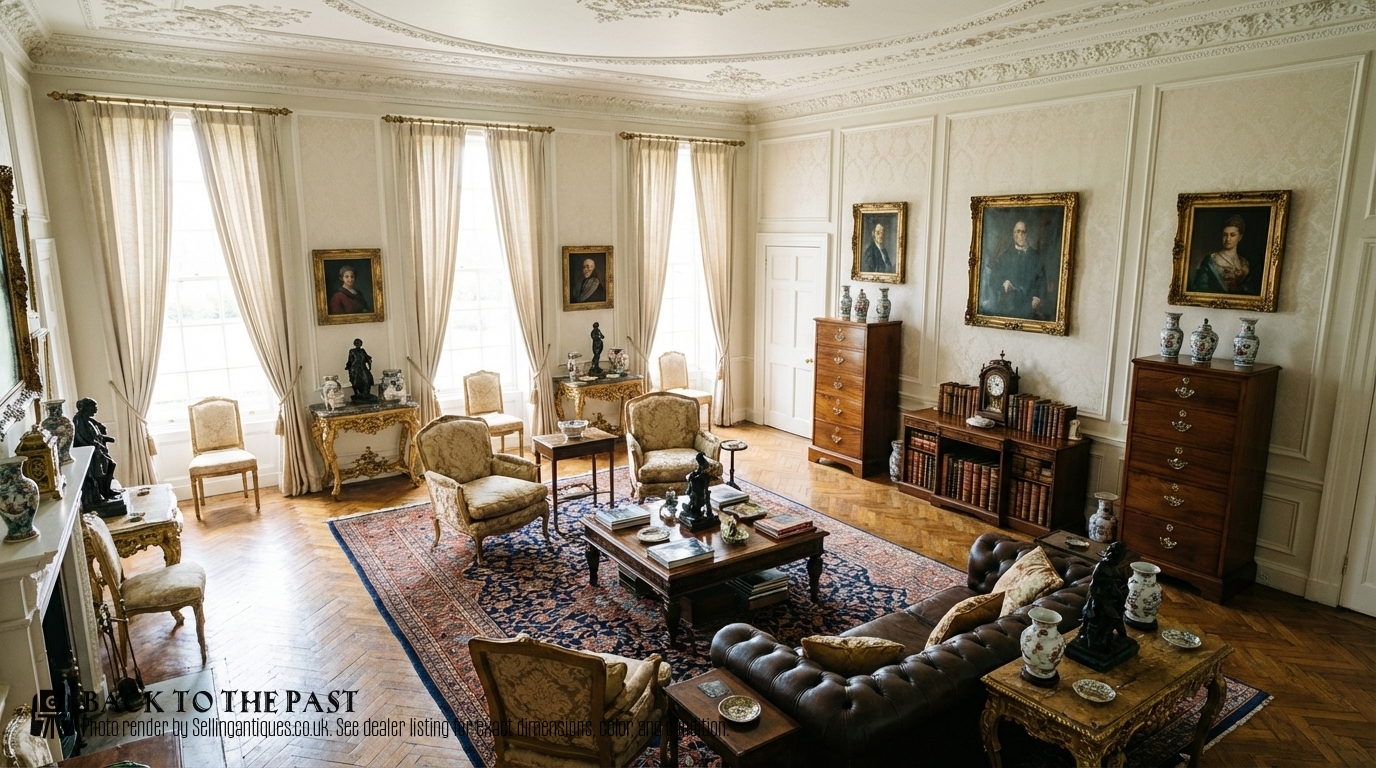
Scottish Mahogany Cabinet
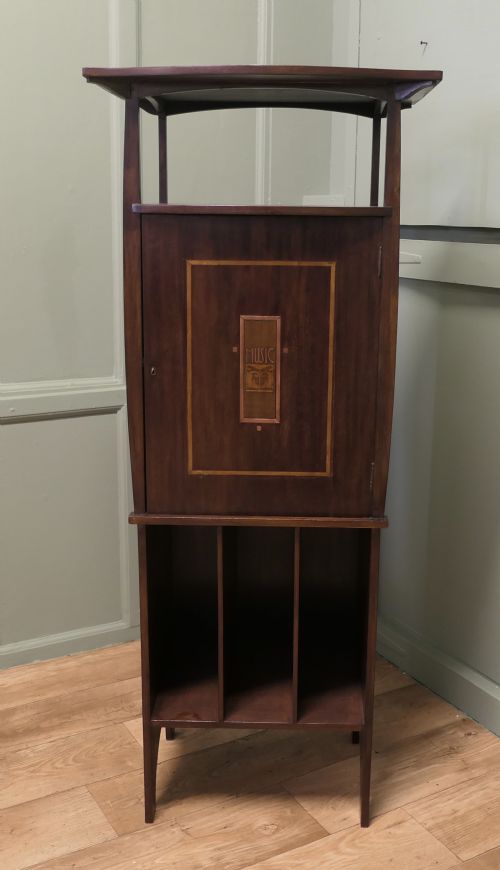
A scottish mahogany cabinet spans utilitarian bedside pieces, towering bookcases, and architectural sideboards that anchor a room with serious presence. You will frequently encounter Georgian corner cabinets and nineteenth century sideboards alongside more compact apprentice chests and music cabinets.
Makers north of the border often worked with dense timbers and distinctive stage backs or glazed doors that set their output apart from English equivalents. The selection here ranges from restrained George III designs to Arts and Crafts interpretations and Edwardian glazed bookcases.
How they were made
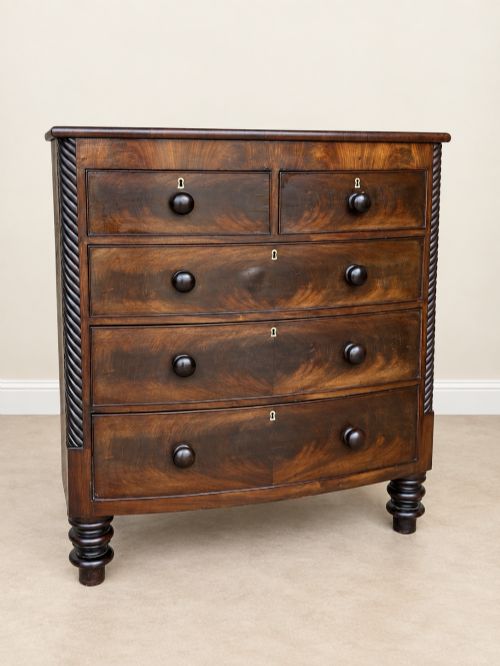
Cabinets rely on solid mahogany carcasses faced with flame mahogany veneer to create deep, rippling grain patterns across drawer fronts and doors. Cabinet makers incorporated secondary woods like pine for internal drawer linings and carcass backs.
Glazing bars divided large glass panels on bookcases and display cabinets, while brass handles, escutcheons, and hinges provided robust functional hardware. Wood inlay and marquetry occasionally accented Arts and Crafts and Georgian pieces with delicate contrasting lines.
Fishermen and culinary enthusiasts once shared the exact same taste in imposing Victorian display cabinets.
What varies in quality
Quality rests upon the selection of timber figure, where book-matched flame veneer displays a balanced, symmetrical pattern across large cupboard doors rather than mismatched patches. The crispness of carved details, such as stage backs and column mounts, separates ambitious workshop production from routine trade output.
Internal construction reveals the maker's hand through hand-cut dovetails on drawer boxes and the weight of the secondary timber used in hidden areas. Well-proportioned cornices and original brass hardware preserve the intended visual balance of the piece.
GM Elwood for JS Henry·Morison and Co·Wylie and Lochhead·J A Mein Edinburgh Cabinet Maker·Whytock and Reid of Edinburgh·Francis Brodie·William Trotter Edinburgh·John Alexander
The Scottish Mahogany Cabinet Glossary
- Flame mahogany veneer
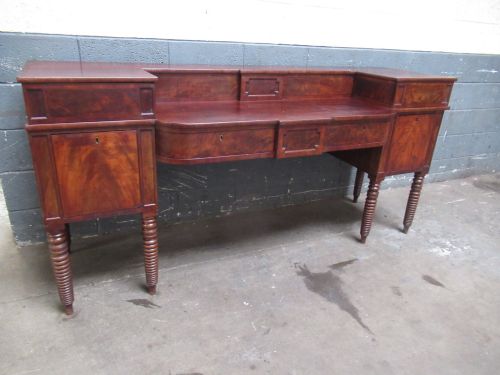
- A thin slice of timber cut from the fork of the tree where branches meet the trunk, creating a fiery, undulating pattern. Cabinet makers laid this symmetrical figure across primary display surfaces.
- Stage-back sideboard
- A serving sideboard featuring a raised tiered superstructure or shelf at the rear, common in Scottish dining furniture. This feature provided display space for silver and ceramics.
- Apprentice chest
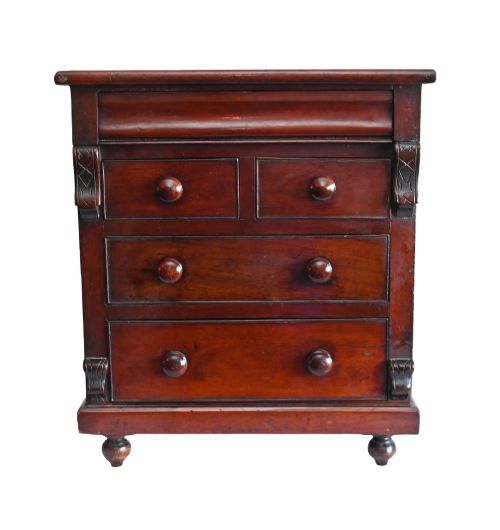
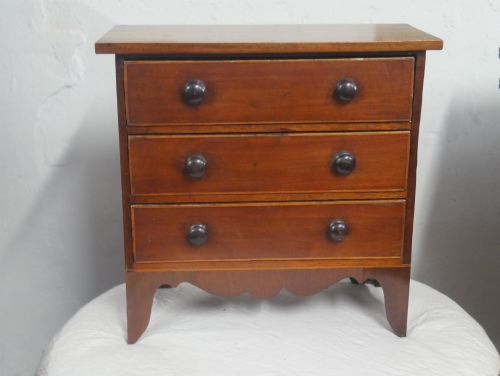
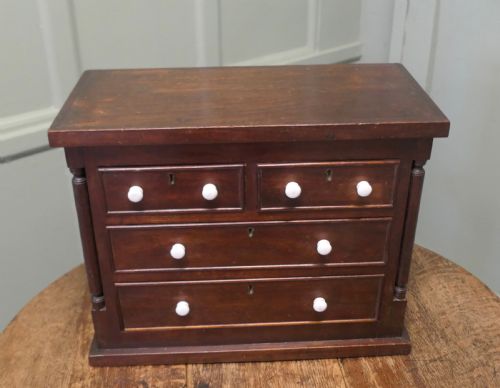
- A scaled-down cabinet or set of drawers demonstrating a young craftsman's mastery of joinery before entering a guild. These smaller pieces reproduce full-scale furniture details accurately.
- Secretaire
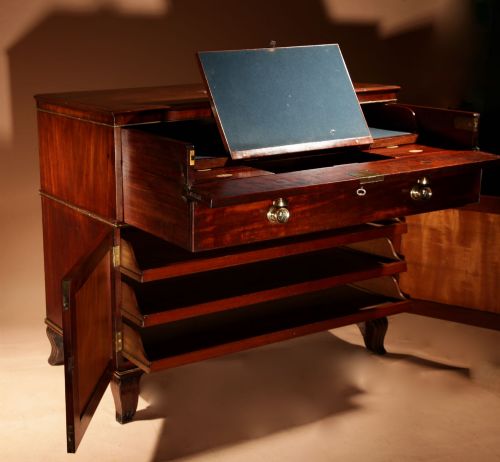
- A cabinet incorporating a fitted drop-front writing drawer with internal pigeonholes and small compartments. This dual-purpose form disguised a writing desk within a standard chest or bookcase base.
- Glazed corner cabinet
- A triangular wall-hanging or floor-standing storage piece designed to fit snugly into a room angle with glass panelling. The front door displays collections while protecting contents from dust.
Scottish Mahogany Cabinet: Frequently Asked Questions
How do I identify a Scottish cabinet?
Scottish pieces often feature bolder proportions, distinctive stage-back superstructures on sideboards, and heavy use of flame mahogany veneers. Regional cabinet makers also favoured specific internal construction methods and local secondary timbers like pine.
Examining the secondary woods and overall carcass architecture helps separate Scottish workshop production from contemporary English equivalents.
Where were these cabinets used?
Larger bookcases and sideboards belonged in formal libraries, dining rooms, and entrance halls of substantial townhouses and country estates. Smaller bedside cabinets, music cabinets, and corner units served bedrooms and smaller drawing rooms.
Their substantial storage capacity made them essential furniture for organising household ledgers, collections, table linen, and personal items.
How should I clean mahogany?
Maintenance requires only a soft, lint-free cloth to remove dust and preserve the natural wax finish built up over generations of care. Avoid modern silicone sprays and harsh chemical cleaners that can damage fragile old veneers.
Applying a traditional beeswax polish occasionally will nourish the timber and maintain the subtle sheen on the flame mahogany surfaces.
Are apprentice chests real furniture?
Apprentice chests were fully functional miniature pieces built by young tradesmen to prove their competence to master craftsmen. Every structural detail, from the dovetail joints to the drawer linings, mirrors a full-sized chest.
Collectors prize them for their charming scale and the high standard of precision required to construct them.