

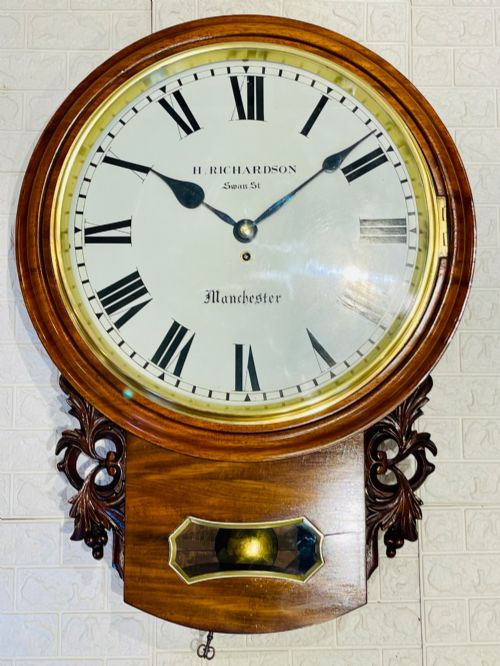
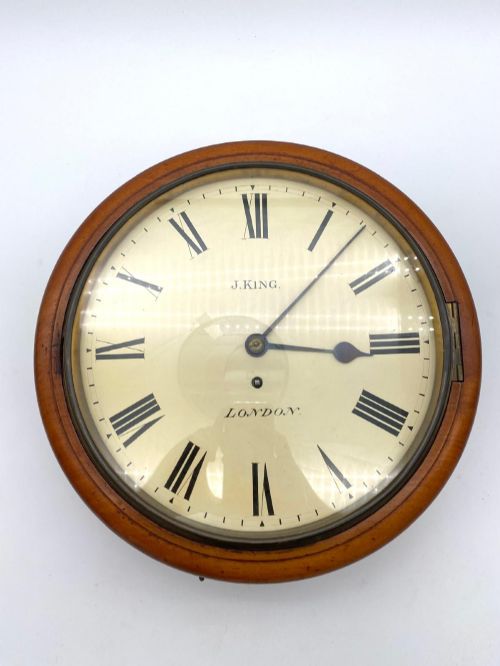
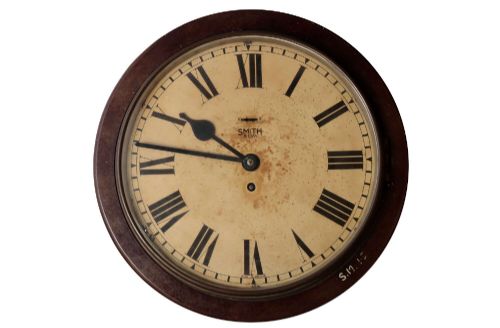
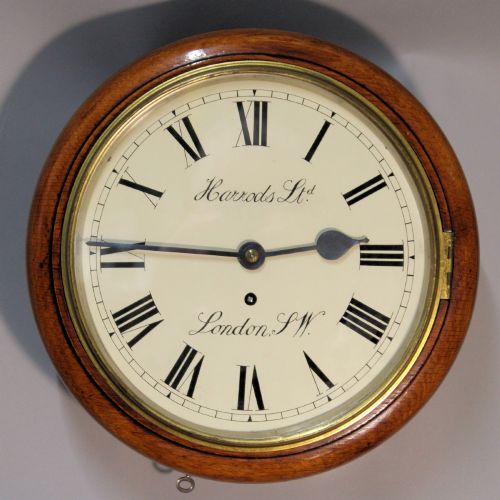
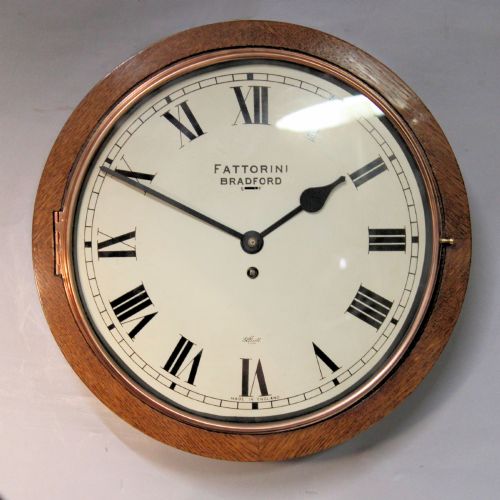
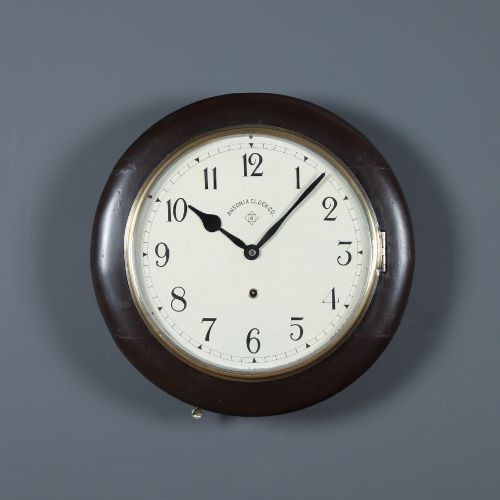
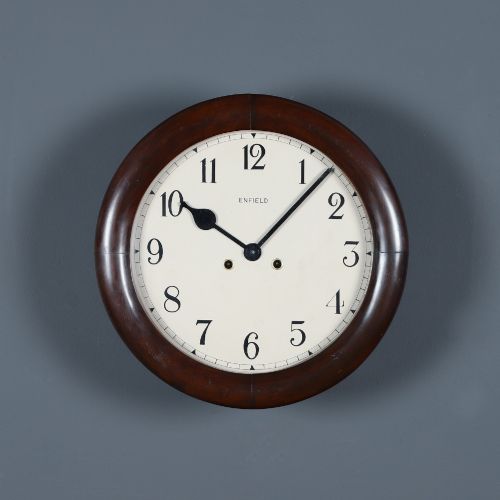
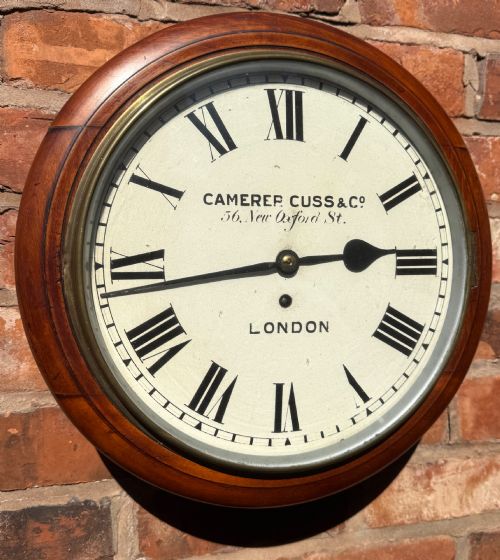
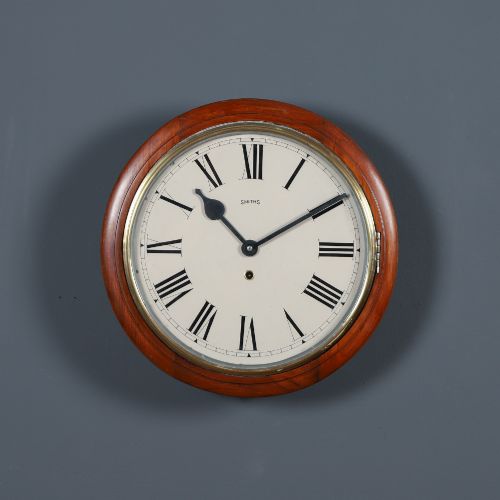
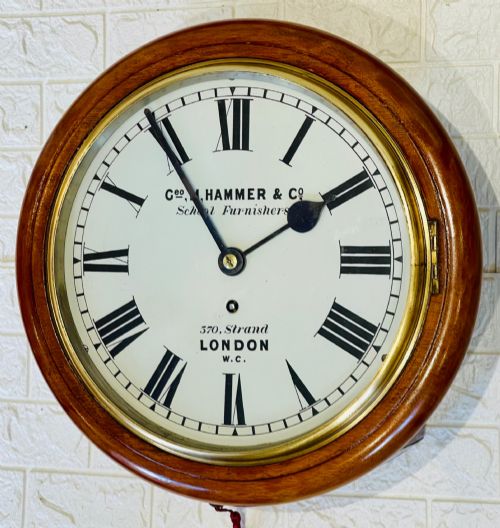
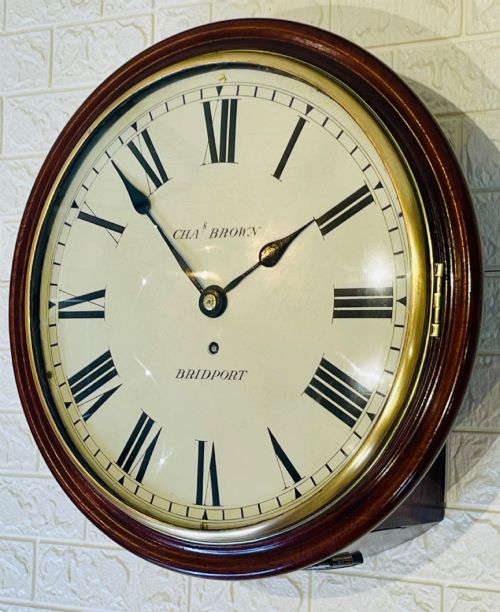
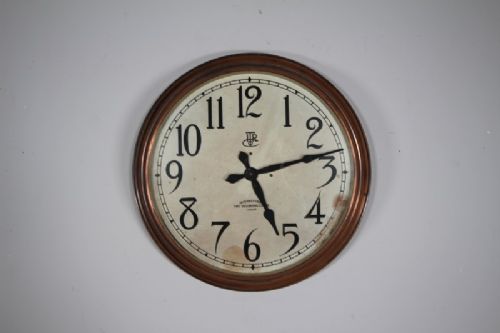
School Dial Wall Clock
School dial wall clock pieces are robust timekeepers originating from public rooms and institutions, sought after for their clean circular faces and reliable movements.
School Dial Wall Clock
When searching for a school dial wall clock, a buyer is examining circular timepieces designed for clear legibility in large spaces. These objects stem from diverse periods including the Georgian era, the Victorian epoch, and the twentieth century.
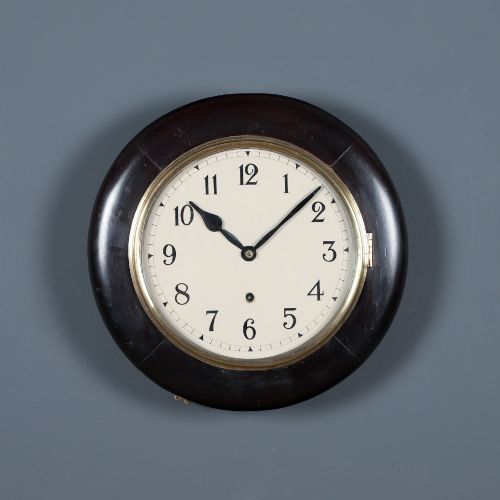
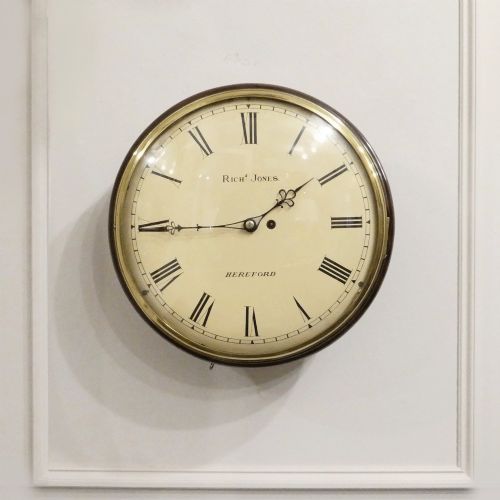
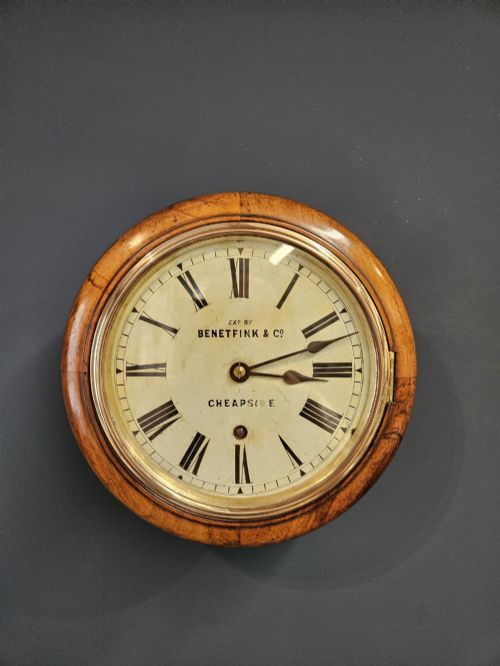
The versions most frequently met on this page combine traditional timber cases with bold painted dials. Formats range from compact six-inch timepieces to substantial railway and institutional indicators.
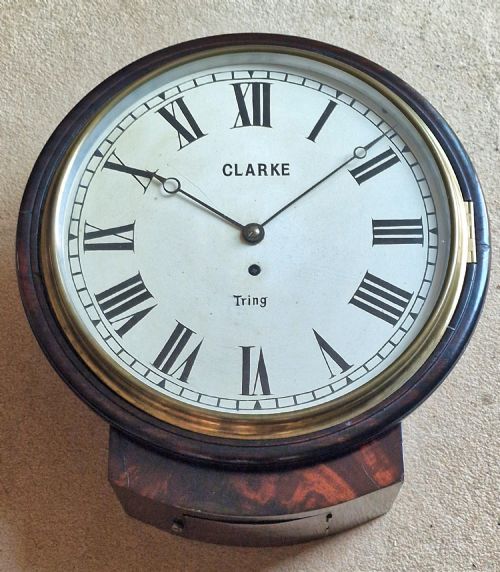
Examples frequently share lineage with railway station and office clocks, reflecting standardised public timekeeping requirements. Cases appear in rounded timber frames, sometimes featuring drop-dial configurations below the main face.
Materials and construction
Makers utilised dense timbers such as mahogany, oak, and beech to construct durable circular wall housings that protected the internal mechanisms from dust and damage. Glass protected the dial face, held securely within hinged or pegged bezels.
Movements relied on chain fusee or lever escapement mechanisms to maintain steady tension and accurate timekeeping across days or hours. Dials were commonly painted iron or wood, marked with distinct numerals for effortless distant reading.
School Dial Wall Clock Retail Price Guide 2026
Typical asking prices for school dial wall clock among the pieces listed under this phrase on Sellingantiques today, from the lower quarter to the upper quarter. They describe what is for sale here now, not the wider market.
Listings span periods from the Georgian era through the Victorian epoch and into the twentieth century.
Distinctions in quality
Superior examples exhibit refined timber selection, such as figured mahogany or polished oak with tight joinery, alongside crisp hand-painted dial lettering. Finer movements often incorporate sophisticated fusee mechanisms rather than simpler spring or lever designs.
The presence of original signature engraving from known makers or institutional markings on the dial and case elevates an example. Quality also rests in the preservation of original glass, brass bezels, and uncompromised internal gear trains.
Richard Jones of Hereford·Elliott·Camerer Cuss and Co London·Smiths·Enfield·Ansonia·George Clarke Tring·D and J Wellby London·Henry Harris of Monythusloyn·Joseph Bird of Stroud·L Morris Islington·Rudge Swindon
The School Dial Wall Clock Glossary
- Fusee
- A conical pulley used with a chain or cord to equalize the driving force of the mainspring as it unwinds. This mechanism ensures consistent power delivery to the gear train.
- Dial
- The visible face of the clock where the numbers are marked and the hands indicate the time. These are frequently painted iron or wood.
- Drop dial
- A clock case design featuring a circular dial section at the top attached to a lower vertical trunk or box. This lower section accommodates a longer pendulum swing.
- Escapement
- The mechanical linkage that controls the release of power from the gear train to the pendulum or balance wheel. It maintains the motion of the timekeeper.
- Timepiece
- A clock that indicates the time without possessing a striking or chiming mechanism. These are driven purely for temporal observation.
School Dial Wall Clock: Frequently Asked Questions
What is a school dial wall clock?
A school dial wall clock is a traditional circular timekeeper originally utilised in public buildings, classrooms, and offices for clear time observation.
These pieces feature prominent painted faces housed in timber frames, designed for robust daily service.
How do fusee movements work?
A fusee movement uses a conical pulley and chain to regulate the pull of the mainspring.
This system ensures even power distribution as the spring unwinds, improving accuracy over the running period.
How should I hang a wall clock?
Hang these heavy timber clocks securely from a strong wall fixing that can support the total weight of the case and movement.
Ensure the clock is mounted plumb so the pendulum swings evenly without catching on the interior housing.
How do I identify the period?
Period identification relies on examining timber types, case construction methods, and dial materials alongside any maker signatures.
Victorian and Georgian examples often feature fusee movements and mahogany cases, while twentieth-century versions may employ oak or alternative escapements.