






Scalloped Porcelain Platter
A scalloped porcelain platter brings pattern, colour and formal service into a room, offering both decorative presence and historical utility.
Scalloped Porcelain Platter
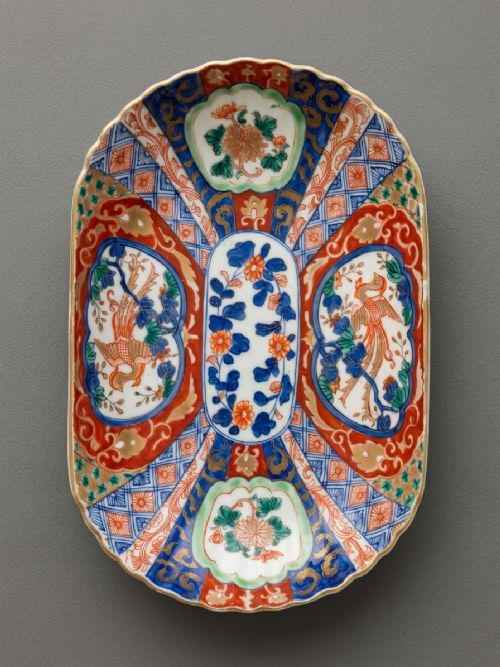
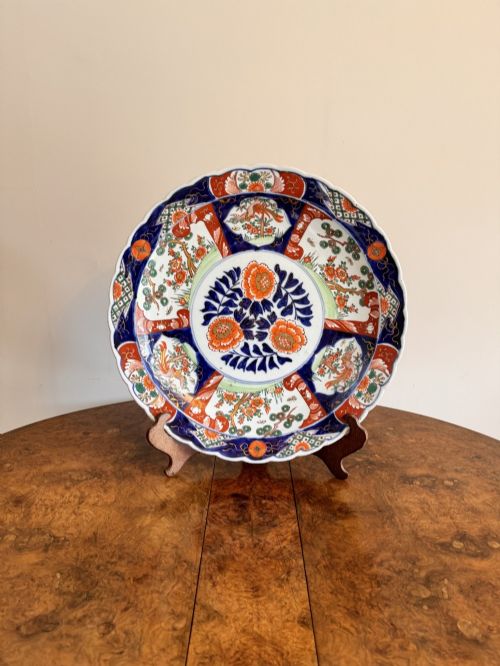
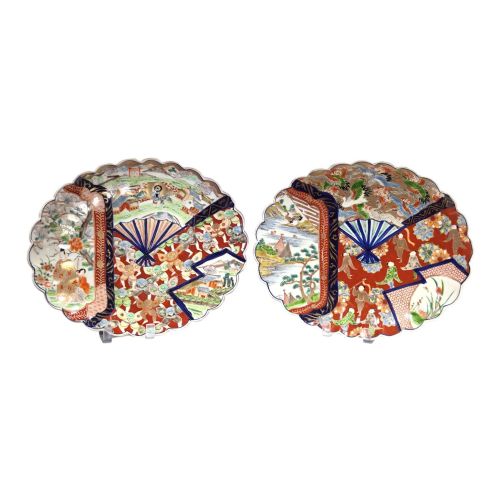
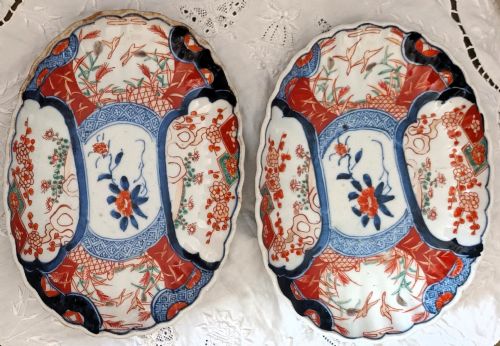
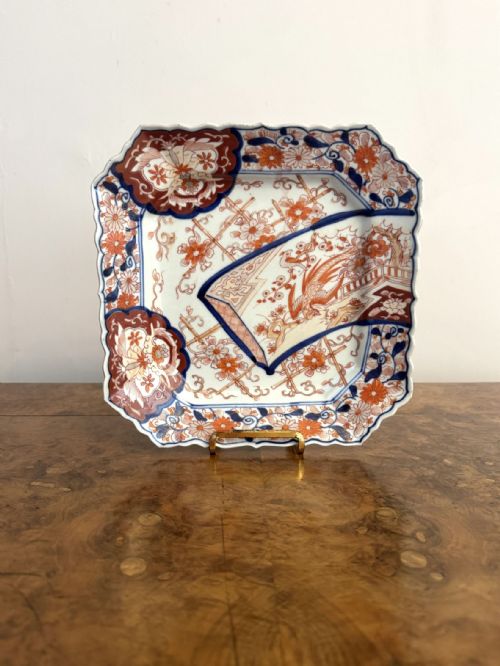
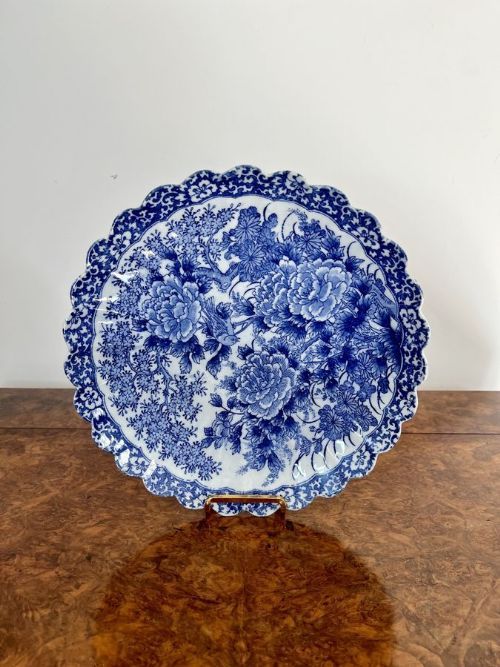
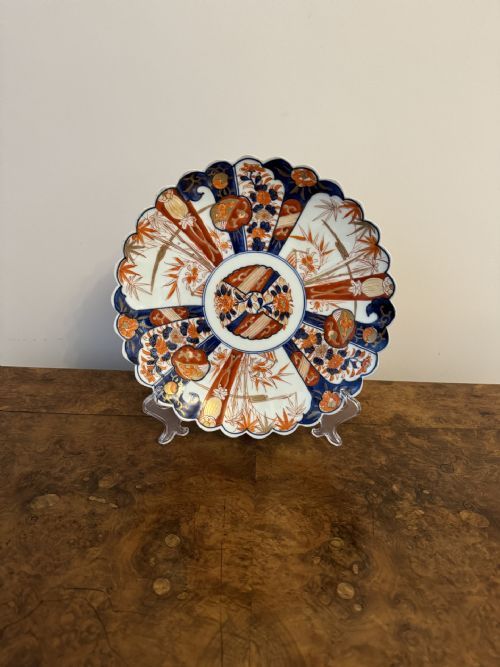
A scalloped porcelain platter combines a shaped, indented rim with durable ceramic body material designed for domestic display or serving. When a buyer searches for a scalloped porcelain platter, they encounter a heavy concentration of Japanese Imari wares from the late nineteenth and early twentieth centuries alongside domestic British pieces from the Georgian, Regency and Victorian eras.
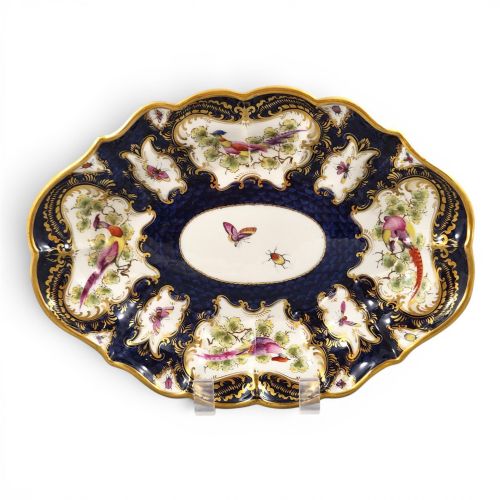
The Japanese examples, often spanning the Meiji period and around nineteen hundred, present dense hand-painted floral and bird designs or depictions of the Seven Lucky Gods. European counterparts from factories such as Royal Worcester, Rockingham Pottery, KPM and Barr, Flight and Barr offer contrasting aesthetic traditions utilising blue scale patterns and fluted forms.
The scale of these pieces ranges from intimate dessert dishes and oval serving dishes to substantial chargers exceeding twenty inches in diameter. These variations in form reflect diverse historical uses, from formal dining table service to wall-hung decorative display.
Materials and production methods
The physical backbone of these objects is hard or soft-paste porcelain and ceramic, fired at high temperatures to achieve a vitreous and durable body. Makers applied cobalt underglaze pigments before the glaze firing, ensuring the characteristic deep blue tones remained fixed beneath the smooth surface.
Overglaze enamels and gold leaf or gilding were frequently added in subsequent decorative stages to introduce contrasting iron-reds, greens and gilt highlights. Skilled artisans hand painted complex floral, bird and figural motifs directly onto the glazed ceramic body, resulting in individual surface textures and subtle variations across each platter.
Scalloped Porcelain Platter Retail Price Guide 2026
Typical asking prices for scalloped porcelain platter among the pieces listed under this phrase on Sellingantiques today, from the lower quarter to the upper quarter. They describe what is for sale here now, not the wider market.
Current listings demonstrate a strong presence of Japanese Imari wares alongside nineteenth-century European porcelain from British and continental factories.
Distinctions in quality and execution
The distinction between ordinary and superior examples lies in the precision and density of the hand painted brushwork across the surface. Pieces displaying finely delineated floral and bird designs or carefully rendered figural groups demonstrate superior artisan skill compared to more repetitive or hastily executed patterns.
The clarity of the cobalt underglaze and the preservation of overglaze enamels and gilt highlights determine the visual impact of the platter. Greater uniformity in the moulded scalloped edge and the absence of heavy surface wear indicate careful historic handling and higher initial manufacturing standards.
Royal Worcester·Rockingham Pottery·KPM·Barr, Flight and Barr
The Scalloped Porcelain Platter Glossary
- Imari
- A traditional Japanese style of porcelain decoration originating from Arita, characterised by a palette of cobalt blue, iron red and gold. This aesthetic heavily influences nineteenth-century Japanese chargers and plates found on the market.
- Charger
- A large decorative plate or platter traditionally used for ceremonial dining or placed beneath other courses. These pieces often measure twelve inches or significantly more in diameter.
- Scalloped
- A shaped edge formed of alternating curves and points that creates a decorative, undulating outline. This moulding technique appears frequently on the borders of nineteenth-century dessert dishes and large plates.
- Underglaze
- Pigment applied to the ceramic body before the application of a glassy protective coating and subsequent kiln firing. This technique protects the blue decoration from physical wear over centuries of use.
Scalloped Porcelain Platter: Frequently Asked Questions
How were these platters originally used?
These pieces served practical functions on dining tables for presenting fruit, desserts or meat courses during formal meals. Larger chargers additionally functioned as wall-hung decorative displays in domestic interiors.
Over time, many transitioned exclusively into decorative objects valued for their complex painted surfaces and historic associations.
How do I identify a Meiji period piece?
Meiji period items, typically dating from eighteen sixty-eight to nineteen twelve, frequently exhibit dense Japanese Imari patterns featuring floral motifs, birds or cultural figures. They rely on hand-painted cobalt blue and iron-red enamels enriched with gold leaf.
Examining the weight, ceramic body and pigment application helps distinguish these nineteenth and early twentieth-century Asian wares from later reproductions.
Can I use these platters for serving food?
While structurally robust and manufactured from durable porcelain or ceramic, these antique pieces require careful handling if utilised for modern dining. Hand washing is essential to preserve fragile overglaze enamels and historic gilding.
Many collectors prefer to exhibit them on stands or walls to protect the surface decoration from accidental scratching and chemical detergents.
What does blue scale decoration mean?
Blue scale refers to a specific underglaze pattern resembling fish scales, developed by European porcelain factories such as Royal Worcester during the eighteenth and nineteenth centuries. This textured blue background often frames intricate hand-painted cartouches.
It represents a distinct departure from Japanese Imari designs, showcasing European mastery of ceramic ground colours.