

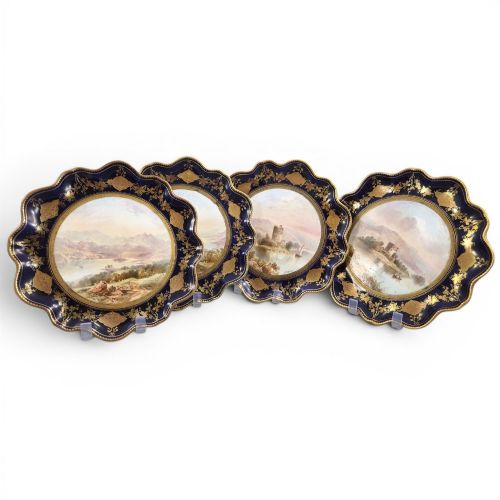


Scalloped Gilded Plates
These scalloped gilded plates bring together fine porcelain, rich enamel and gold leaf across eras from the eighteenth century to the twentieth.
Scalloped Gilded Plates
When you search for scalloped gilded plates, you encounter pieces intended for display, dessert service and formal dining. The selection includes decorative dishes, large chargers and cabinet plates spanning Georgian, Victorian and later periods.
You are most likely to meet Japanese Imari examples from around 1900 alongside English porcelain from makers such as Worcester, Coalport and Derby. These range from single cabinet display pieces to sets of dessert plates.
The forms vary from traditional circular plates with shaped edges to shell-shaped dishes and square plates. Many incorporate hand-painted floral and bird designs enhanced with gilt highlights.
How they were made
Makers utilised ceramic bodies including porcelain, bone china and faience, shaped with distinctive scalloped or rope edges. These bases received hand-painted decoration using enamel pigments before being glazed and fired.
Gold leaf and gilding were applied to rims and surface details, often requiring secondary firing to bond the metal to the glaze. Artisans combined underglaze blue with iron red and gilt embellishments, particularly in Imari traditions.
Listings span multiple eras, encompassing eighteenth-century faience, nineteenth-century porcelain and twentieth-century bone china.
What varies in quality
Quality rests in the crispness of the hand-painted brushwork and the precision of the gilding applied to the shaped edges. Superior pieces display detailed floral or bird motifs executed with clear control over the enamel palette.
The weight and translucency of the porcelain body also distinguish finer examples, alongside the preservation of the gold leaf against wear. Consistency across a matched set indicates higher manufacturing standards.
Aynsley·Meissen·Rockingham Pottery·Derby·Royal Worcester·Flight Barr And Barr·Veuve Perrin·Barr Flight And Barr·Coalport·Wileman Foley Shelley
The Scalloped Gilded Plates Glossary
- Imari
- A style of Japanese porcelain featuring a distinct palette of underglaze blue, iron red and rich gilding. These pieces were widely exported to Europe and copied by Western potteries.
- Charger
- A large decorative plate or dish used primarily for display on a wall, sideboard or table centre. They frequently measure significantly larger than standard dining plates.
- Faience
- Tin-glazed earthenware produced in various European centres, particularly France. It provides an opaque white surface suitable for hand-painted enamel decoration.
- Cabinet plate
- A decorative ceramic piece made specifically for display in a cabinet rather than for daily dining use. They often showcase superior artistic execution and elaborate gilding.
- Gilding
- The application of gold leaf or gold powder to ceramic surfaces to highlight rims, patterns and moulded details. Its intact survival indicates careful handling over the decades.
Scalloped Gilded Plates: Frequently Asked Questions
How were these plates used?
Many of these pieces served practical functions in nineteenth-century dining, particularly as part of dessert services for fruit and sweetmeats.
Larger chargers and cabinet plates were designed primarily for decorative display on sideboards or walls rather than for daily table service.
How do I care for gilded porcelain?
Gilded porcelain requires gentle hand washing in lukewarm water with mild soap. Avoid abrasive sponges that can wear away the gold leaf and enamel over time.
Display plates should be kept secure in stable environments away from direct sunlight to preserve the hand-painted colours.
How do I identify Japanese Imari?
Japanese Imari is recognised by its characteristic colour combination of deep underglaze blue and iron red, frequently accented with heavy gilding. The designs often incorporate floral and bird motifs across shaped porcelain bodies.
Pieces originating from the Meiji period around 1900 demonstrate the continuation of these traditional export styles.