

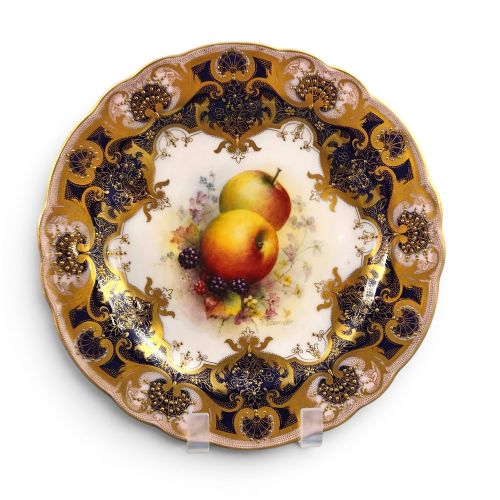
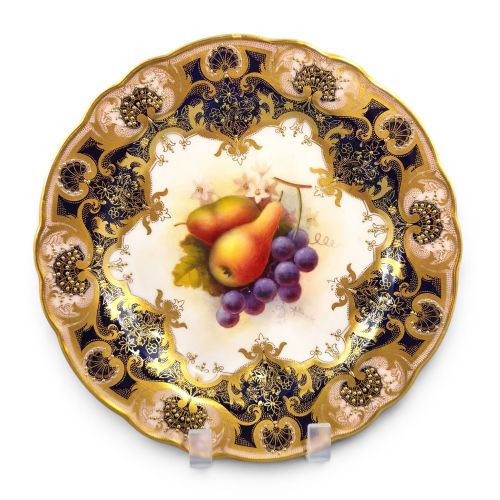
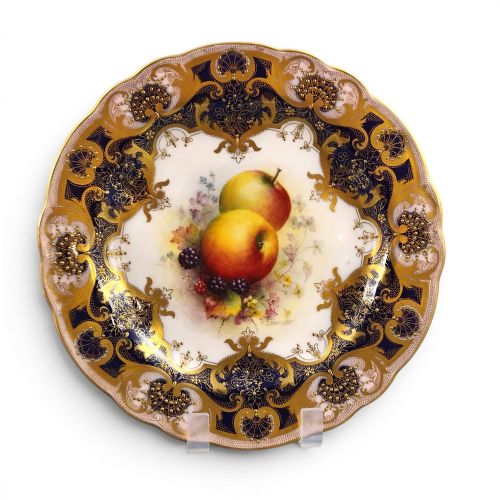
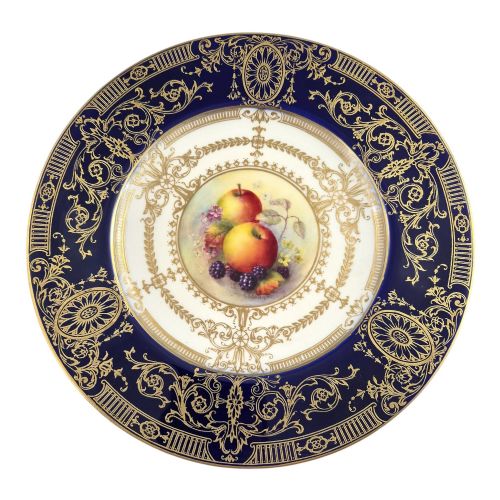
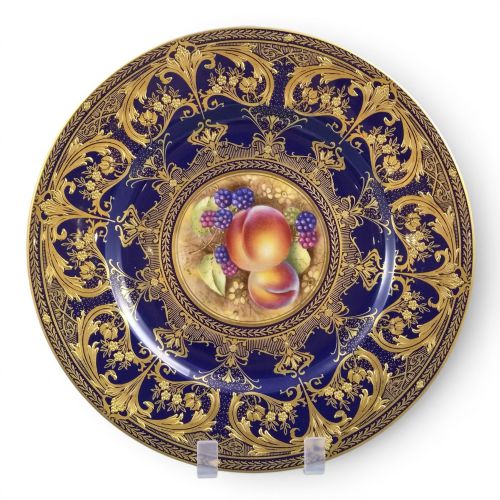
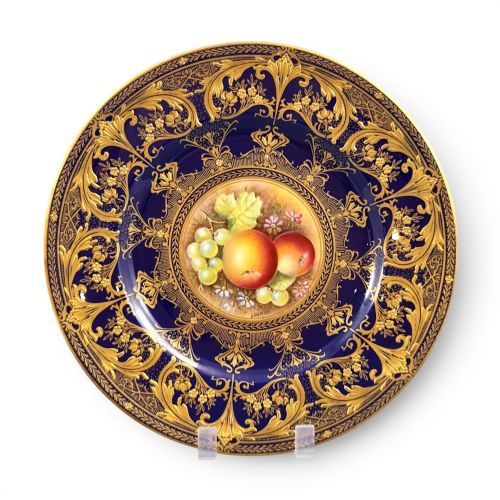

Blue Gilded Porcelain Plate
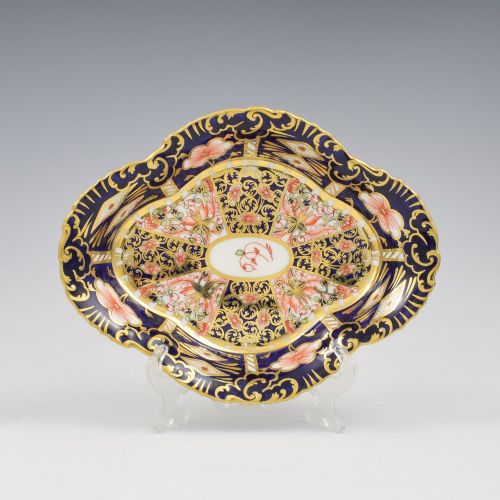
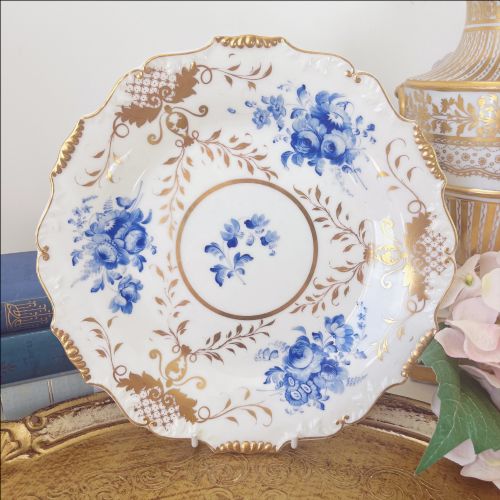
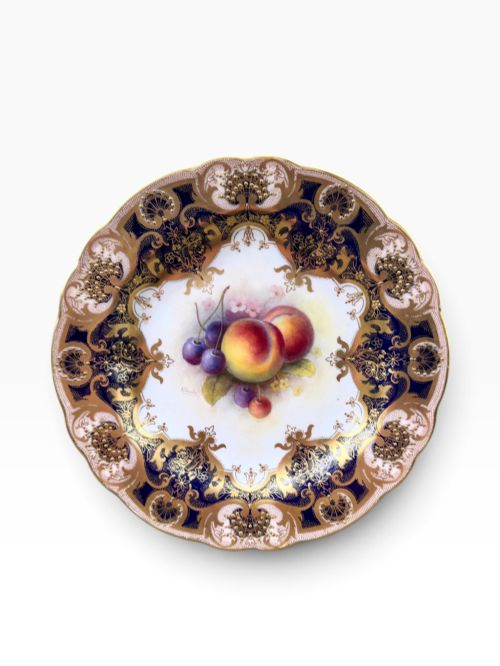
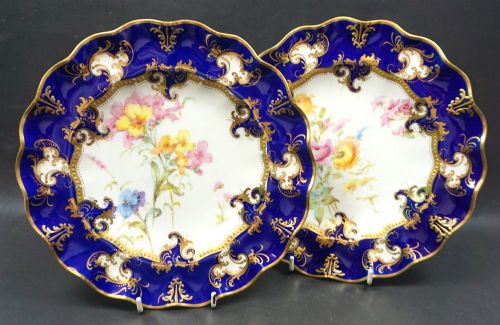
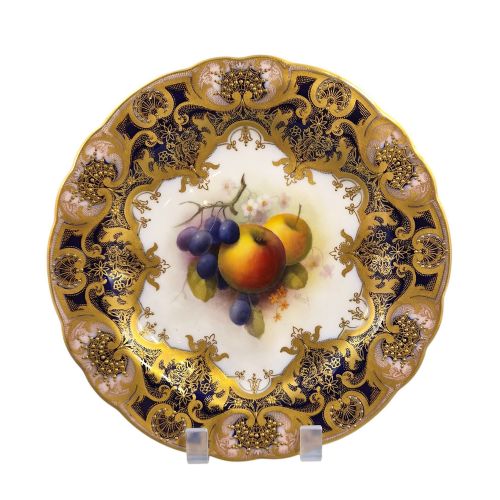
A blue gilded porcelain plate brings together cobalt blue pigment and metal leaf, appearing across dessert services, cabinet pieces and chargers from the eighteenth century to the mid twentieth century.
Blue Gilded Porcelain Plate
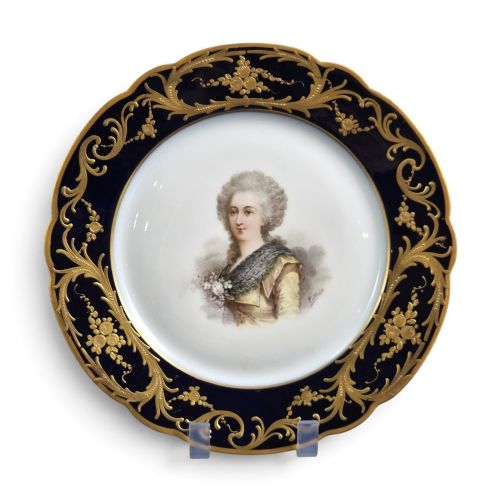
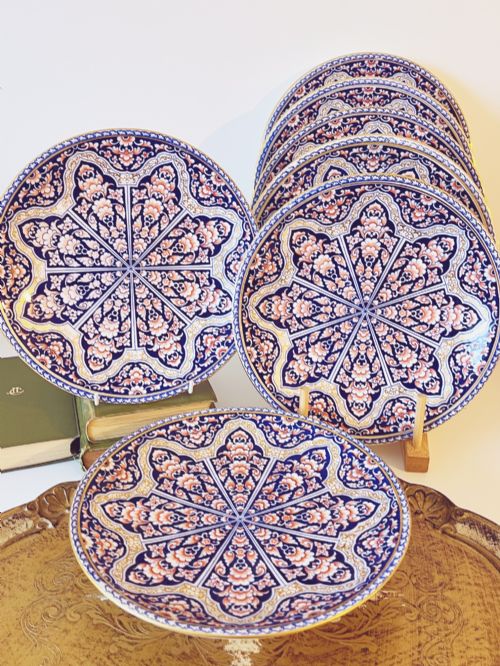
A blue gilded porcelain plate is found in forms such as decorative cabinet plates, chargers and dessert service pieces originating from English, French, Russian and Japanese kilns. The selection spans eighteenth-century Worcester and creamware alongside nineteenth-century Japanese Imari patterns, Sèvres-style portrait pieces and twentieth-century fruit plates.
Makers represented on this page include Royal Crown Derby, Royal Worcester, Coalport and Wedgwood, alongside Japanese Meiji period examples. These pieces function primarily as display items or serving dishes rather than everyday tableware.
How they were made
Potters shaped porcelain, bone china, soft-paste porcelain and earthenware before applying underglaze blue pigments and enamel details. Artisans then added gold leaf or gilding to rims, motifs and borders, firing the pieces multiple times to fuse the metallic accents to the glazed ceramic body.
Hand painting appears on botanical, avian, landscape and portrait subjects, with Japanese Imari pieces utilising distinct blue and iron-red palettes enriched with gilt highlights.
Materials span bone china, soft-paste porcelain, earthenware and gold leaf.
What varies in quality
The distinction between standard production and the finest work lies in the execution of the hand painting and the application of the gold leaf. Detailed floral studies, named views and hand-painted fruit signed by individual artists elevate a piece above transfer-printed equivalents.
The precision of the cobalt blue underglaze work and the density of the gilding indicate the skill level of the factory or studio producing the service.
Royal Crown Derby·Royal Worcester·Coalport·Wedgwood·Darte Brothers·Hicks And Meigh·Pucher Deroche
The Blue Gilded Porcelain Plate Glossary
- Cabinet plate
- A decorative plate intended for display in a cabinet or on a wall rather than for practical dining use. These items frequently feature hand-painted scenes or intricate gilding.
- Charger
- A large decorative plate or dish used traditionally as a base setting or a substantial serving platter. They measure significantly larger than standard dinner plates.
- Imari
- A Japanese export porcelain style characterised by underglaze blue, iron red and rich gilding. European factories frequently copied these distinctive colour schemes.
- Soft-paste porcelain
- A ceramic material composed of clay and glass frit fired at lower temperatures than hard paste. It produces a warm, slightly translucent body common in eighteenth-century English pieces.
Blue Gilded Porcelain Plate: Frequently Asked Questions
How do I identify a cabinet plate?
Cabinet plates generally feature intricate hand-painted central artwork, pierced borders or heavy gilding that makes them impractical for regular food service. They often carry specific artist signatures or named topographical views on the reverse.
Makers designed these items exclusively for visual display within domestic interiors, resulting in better preserved painted surfaces than working tableware.
What is Japanese Imari porcelain?
Japanese Imari porcelain originates from the Arita region and uses a distinct palette combining underglaze cobalt blue with iron red and applied gold leaf. Meiji period examples and earlier pieces show dense floral, bird or architectural motifs.
European factories adopted this visual style during the nineteenth century, creating their own interpretations of the traditional Japanese aesthetic.
How should I display my plates?
Display plates safely by using secure wall hangers designed specifically for porcelain or stable plate stands inside enclosed cabinets. Keep them away from direct sunlight to protect the enamel colours and gold leaf over time.
Avoid using adhesive disk hangers that attach directly to the ceramic base, as these can disturb historic backstamps or weaken old glazes.
Can I use these plates for dining?
Historical porcelain and soft-paste pieces with delicate gilding and enamels suit display or light serving purposes rather than daily meals. Modern dishwashers and harsh detergents will damage the antique gold leaf and hand-painted surfaces.
Gentle hand washing in lukewarm water with mild soap preserves the integrity of the glaze and the metallic details.