



Victorian Landscape Cabinet Plates
Victorian landscape cabinet plates bring hand-painted scenery into the home through finely decorated porcelain and pottery.
Victorian Landscape Cabinet Plates
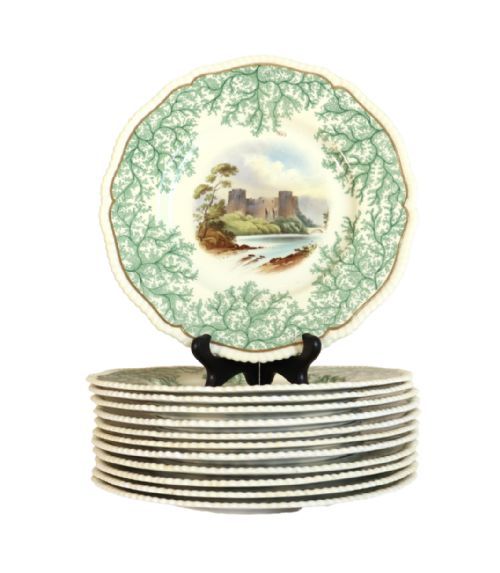
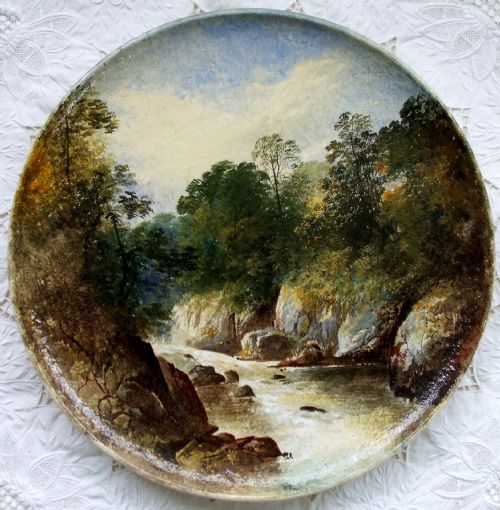
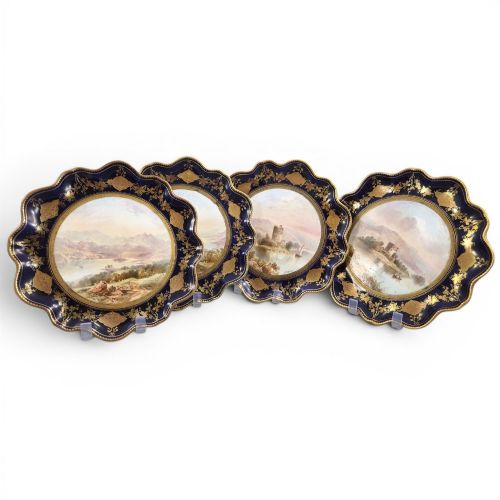
Victorian landscape cabinet plates combine the decorative arts with natural scenery, often depicting specific British or French locations. These pieces were made for display in cabinets or on walls rather than for everyday dining.
The selection here encompasses items from the nineteenth century, including specific Victorian years such as eighteen-eighty and eighteen-eighty-eight. Forms range from standard cabinet plates and dinner plates to decorative plaques and dishes.
Makers represented in this group include Spode, Copeland, Aynsley, Coalport, Derby, Minton, and Pucher Deroche. These manufactories produced both individual showpieces and numbered sets with named views.
Materials and construction
Potters utilised ceramic bases such as porcelain and earthenware, applying glaze and enamel to create smooth surfaces for detailed artwork. Paint was meticulously hand-applied by skilled decorators to render natural vistas and topographical scenes.
Many items incorporate gold leaf embellishments and specialist finishes like enamel glaze or pearl jewelling. These decorative additions frame the central painted landscape and enhance the visual depth of each piece.
Nineteenth-century artists painted Welsh valleys and Scottish lakes onto dinner plates so people could tour the highlands without leaving the dining room.
Assessing quality in the collection
The standard of painting determines much of the distinction among these pieces, separating simple decoration from accomplished artistic rendering. Fine brushwork captures topographic detail, atmospheric light, and natural colour with precision.
Surface treatments such as applied gold leaf and jewelled borders indicate the level of craftsmanship invested in the manufacture. Maker attribution also influences distinction, with signed artist work and established pottery marks commanding attention.
William Yale·Pucher Deroche
The Victorian Landscape Cabinet Plates Glossary
- Cabinet plate
- A decorative ceramic plate intended primarily for display in a cabinet rather than for serving food. These pieces frequently feature hand-painted scenes or intricate borders.
- Porcelain
- A hard, fine-grained ceramic material fired at high temperatures to achieve a vitrified, non-porous body. It served as the primary canvas for detailed nineteenth-century landscape painting.
- Enamel
- A vitreous composition fused to the ceramic surface through firing to impart colour and a glossy finish. Painters used enamel colours to build up rich pictorial scenes.
- Gold leaf
- Thinly beaten gold applied to ceramic borders and highlights to add metallic lustre. It frequently frames the central painted landscape.
- Named view
- A topographical scene identified by a specific title or location inscribed on the reverse or front of the ceramic. This practice allowed owners to recognise exact geographic spots.
Victorian Landscape Cabinet Plates: Frequently Asked Questions
What are Victorian landscape cabinet plates?
These are ceramic and porcelain plates decorated with hand-painted natural views, produced during the nineteenth century. They were created primarily for display in drawing rooms rather than for heavy domestic use.
Potteries across England and France employed skilled artists to paint specific topographical scenes, lakes, and country landscapes onto glazed surfaces.
How were these plates displayed?
Victorian households typically exhibited these decorative items in glazed display cabinets or mounted them on walls using specialised hangers. They served as conversation pieces that reflected the owner's taste in art and travel.
Because the painted surfaces and gold leaf embellishments were vulnerable to cutlery scratching, they stayed away from the dining table during regular meals.
How do I care for antique porcelain?
Dust these items gently with a dry, soft cloth and avoid using harsh chemical cleaners or abrasive sponges. Hand washing in lukewarm water with mild soap is suitable only when strictly necessary, keeping them away from dishwashers entirely.
Display them away from direct sunlight to prevent the hand-painted enamels and gold leaf highlights from fading over time.
How can I identify the maker?
Makers often marked their porcelain and earthenware on the reverse using impressed stamps, printed factory logos, or handwritten pattern numbers. Some pieces also feature the handwritten signature of the individual artist who painted the landscape.
Reference marks and named views inscribed on the back help connect the piece to specific nineteenth-century manufactories and decorators.