
Scalloped Edge Tea Table
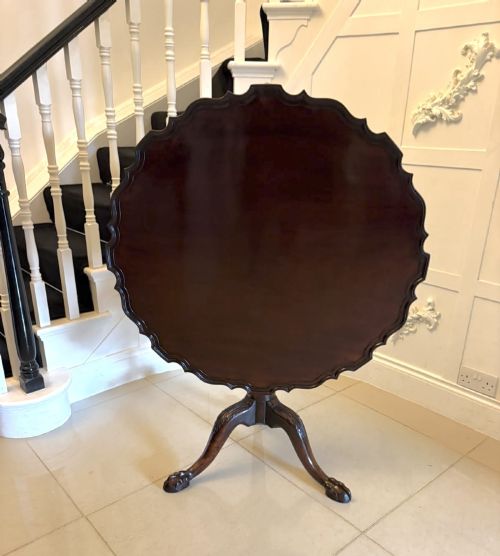
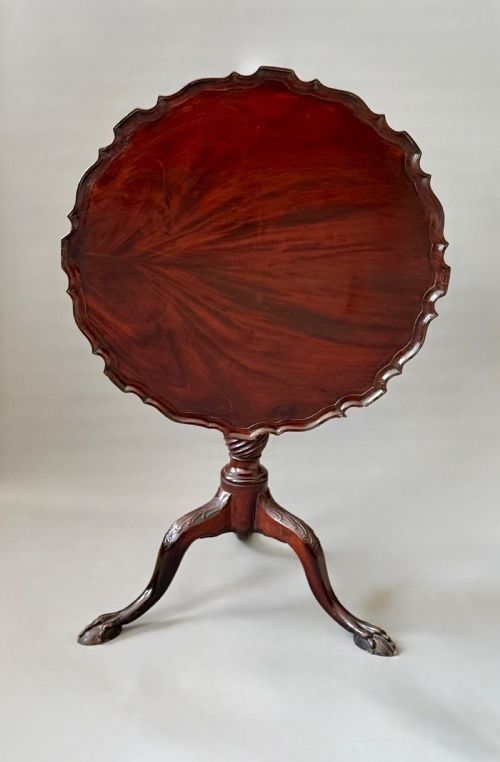
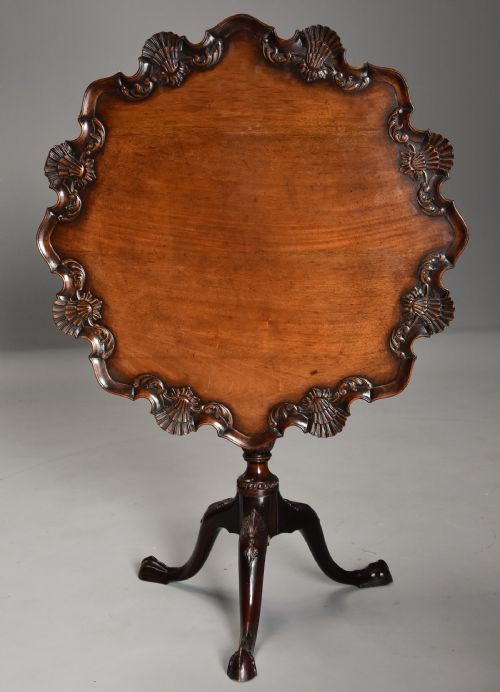
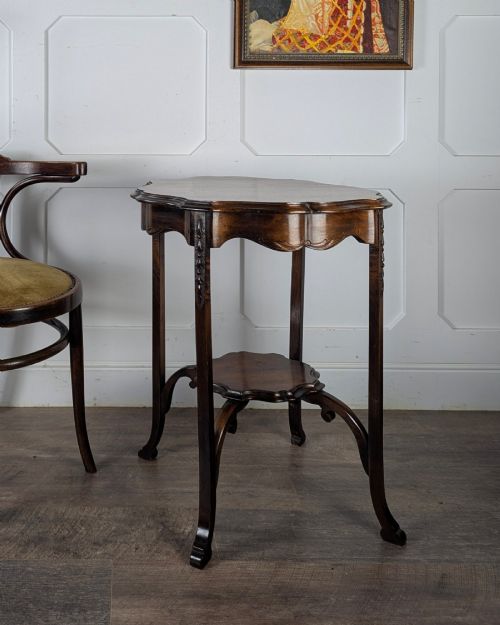
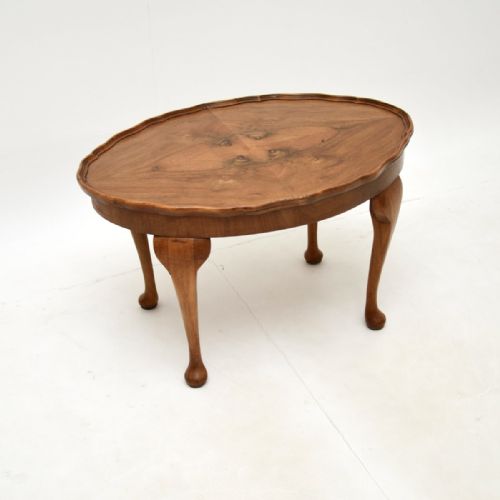
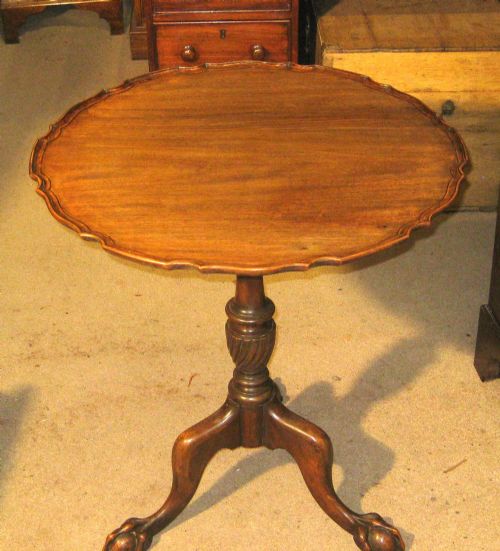
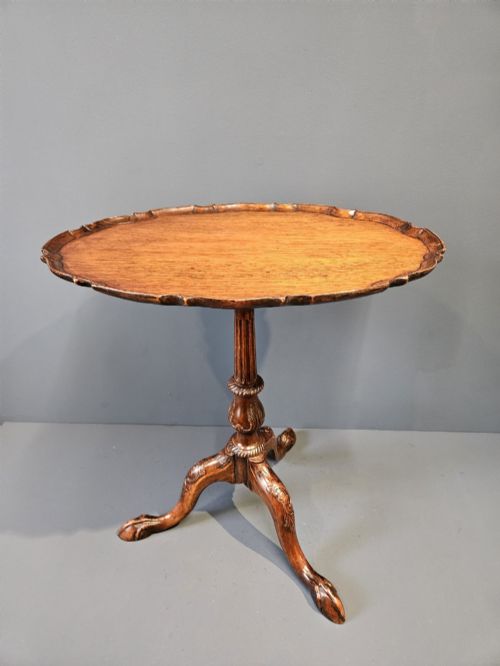
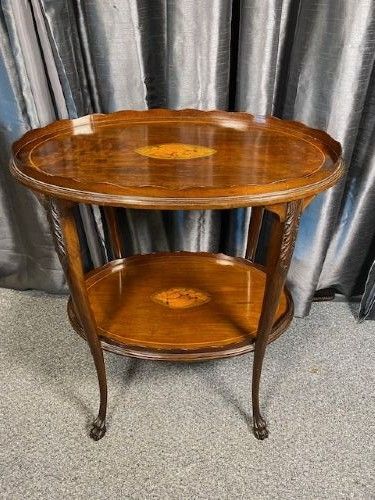
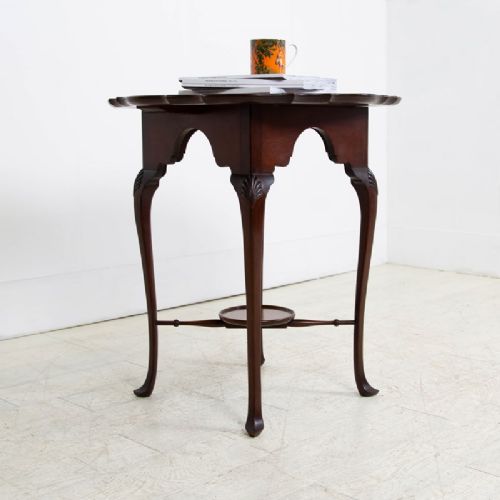
A scalloped edge tea table brings organic curves to a room, offering a raised profile that prevents small items from rolling away.
Scalloped Edge Tea Table
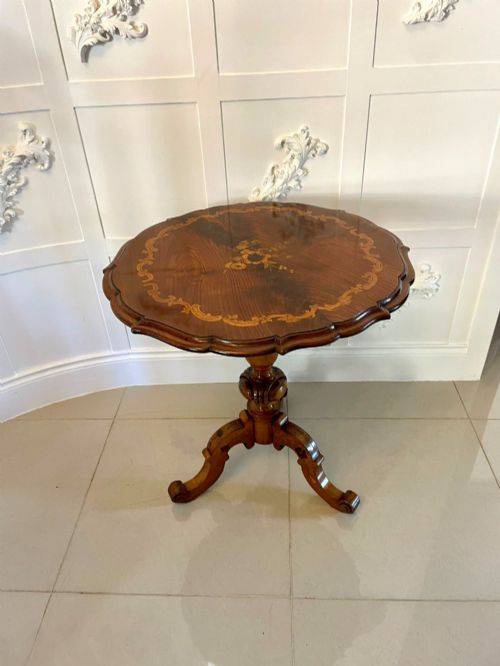
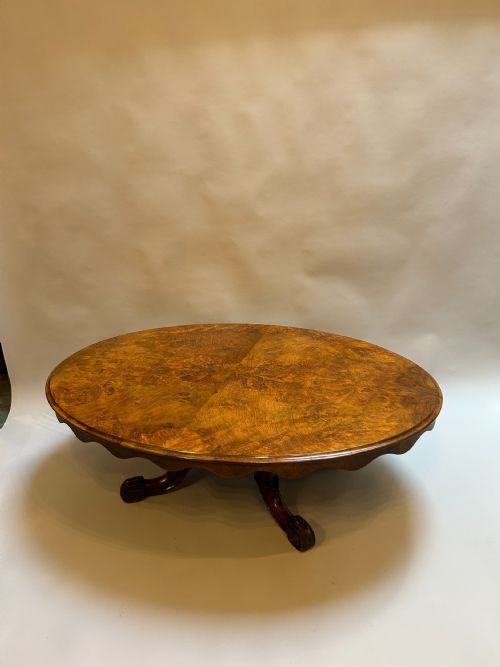
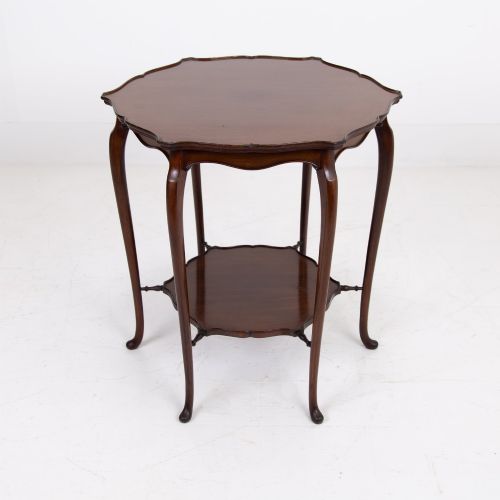
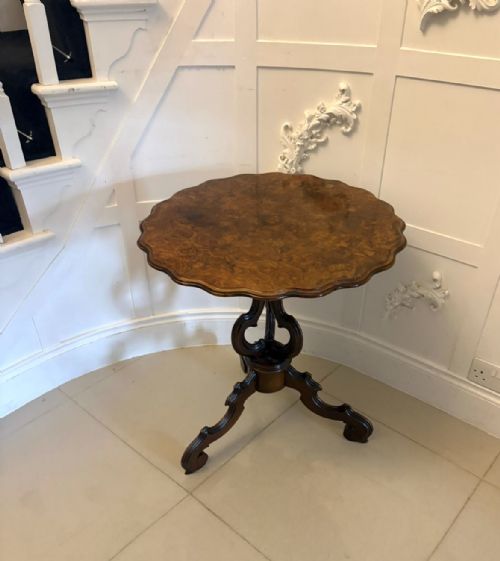
The evidence shows these surfaces functioning as tilt-top tables, wine tables, and coffee tables, drawing heavily on Georgian and Chippendale styling. Alongside traditional tripod bases with birdcage mechanisms, the selection includes side tables and occasional tables produced during the Victorian and Edwardian periods.
Makers and workshops utilised distinct revival styles, producing Queen Anne and Chippendale revival pieces alongside earlier examples. The forms span from compact wine tables to larger centre tables, all united by the characteristic shaped edge.
How they were made
Construction relies heavily on timbers such as mahogany, walnut, burr walnut, and figured walnut, sometimes complemented by inlaid wood and brass details. Cabinetmakers shaped the perimeters of these tops by hand, carving the undulating profile directly from solid timber or assembling shaped mouldings.
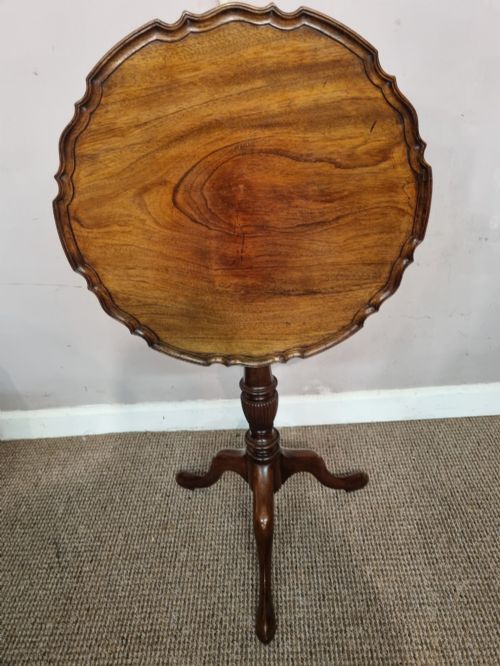
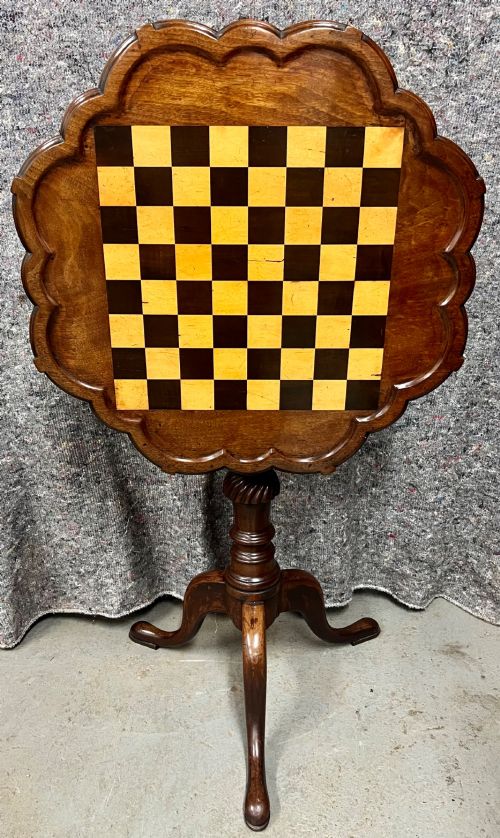
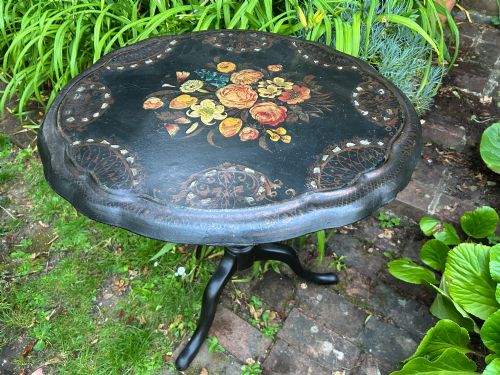
Tripod bases frequently incorporate birdcage actions allowing the top to tilt and rotate, supported by three columnar legs ending in pad or claw feet. Joinery involves traditional turning and tenoning, while later nineteenth- and twentieth-century examples integrate marquetry and painted finishes.
Scalloped Edge Tea Table Retail Price Guide 2026
Typical asking prices for scalloped edge tea table among the pieces listed under this phrase on Sellingantiques today, from the lower quarter to the upper quarter. They describe what is for sale here now, not the wider market.
The listings show scalloped edge tea tables spanning from the Georgian period through the Victorian era to Edwardian and 1930s revivals.
What varies in quality
Quality rests upon the crispness of the carved edge moulding and the selection of timber figure, particularly in figured and burr walnut examples where grain movement defines the visual depth. The integration of the tilt mechanism and the stability of the tripod column reveal the original maker's joinery standards.
Proportion and timber selection separate standard production from superior examples, with finer pieces displaying well-matched veneers, delicate turning on the central pillar, and harmonious leg proportions that prevent tipping.
Shapland and Petter
The Scalloped Edge Tea Table Glossary
- Piecrust edge
- A raised, carved moulding along the perimeter of a table top that resembles the fluted pastry edge of a pie. This feature helps contain small items placed on the surface.
- Tilt-top
- A table mechanism featuring a hinged block beneath the top, allowing the surface to swivel and fold vertically for compact storage against a wall.
- Birdcage
- A wooden framework beneath a tilt-top table allowing the top to both pivot and rotate independently of the central column. This mechanism appears on many eighteenth-century tripod tables.
- Tripod table
- A small freestanding table supported by a central pillar resting on three legs. The design provides stability on uneven floors.
- Marquetry
- The art of applying pieces of veneer to a structure to form decorative patterns and pictures. It appears frequently on Victorian walnut furniture.
Scalloped Edge Tea Table: Frequently Asked Questions
What is a scalloped edge tea table used for?
These tables served historically for holding tea service items, with the raised edge preventing cups and saucers from sliding off. Today, they function primarily as accent furniture, lamp tables, or coffee tables in living spaces.
Their compact footprints make them versatile for placing beside chairs or in corners where a standard rectangular table proves too large.
What is a tilt-top table mechanism?
A tilt-top mechanism uses a hinged block connected to the underside of the table top, allowing the surface to pivot upright when not in use. This design enabled servants to store multiple tables compactly against the walls of a grand room.
The hinge often locks into a horizontal position using a small wooden catch or a sliding peg.
Where should I place a tilt-top table?
A tilt-top table suits spaces where flexibility matters, as it can be folded down and displayed flat against a wall to showcase the carved edge or wood grain. In daily use, it sits comfortably beside a sofa or armchair as an occasional surface.
Keeping the table away from direct heat sources protects the timber and prevents the movement of the veneered or solid top.