





Scalloped Edge Dishes
These scalloped edge dishes bring centuries of ceramic artistry into the home, offering striking forms and intricate painted patterns that draw the eye.
Scalloped Edge Dishes
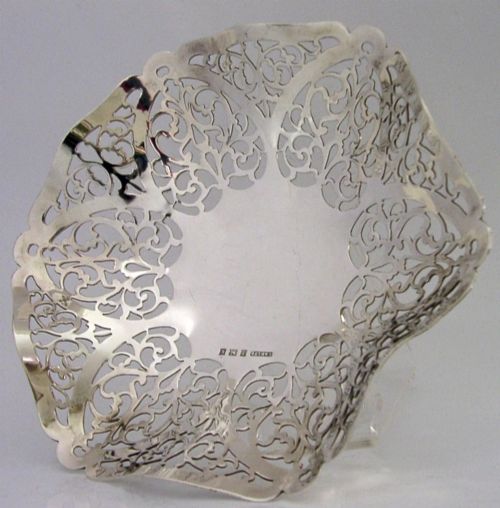
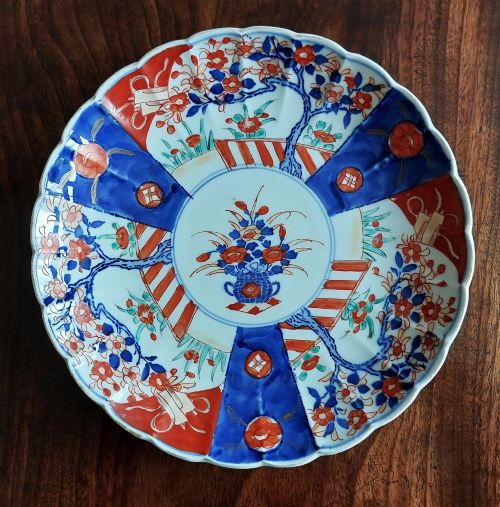
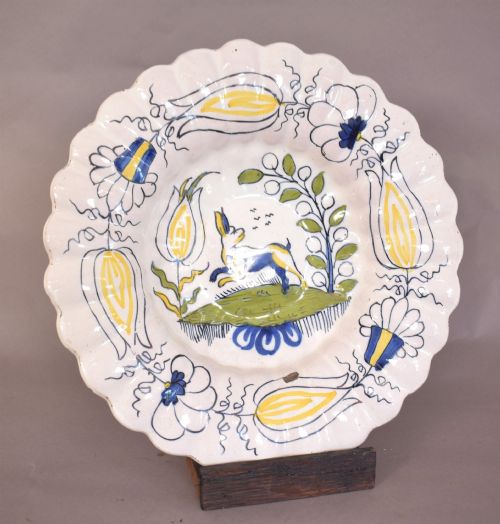
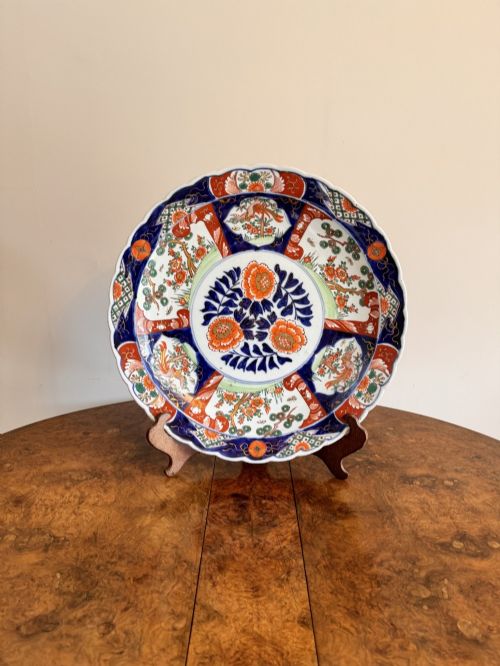
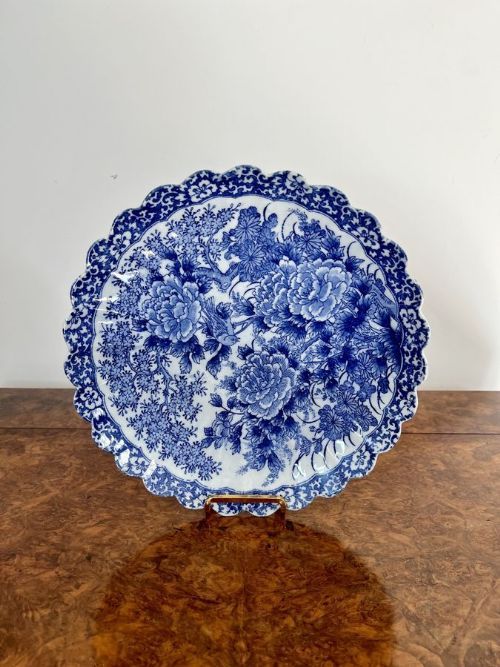
When you search for scalloped edge dishes, you encounter a selection spanning from the seventeenth century through the Victorian era. These pieces include decorative plates, chargers, serving dishes, and pedestal bowls shaped with distinctive indented rims.
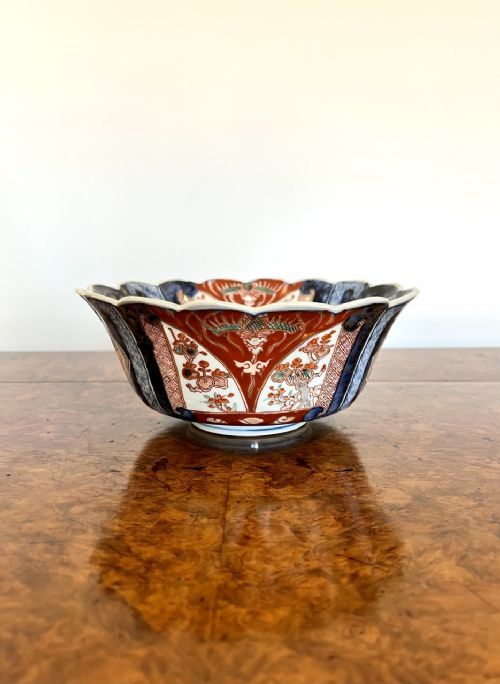
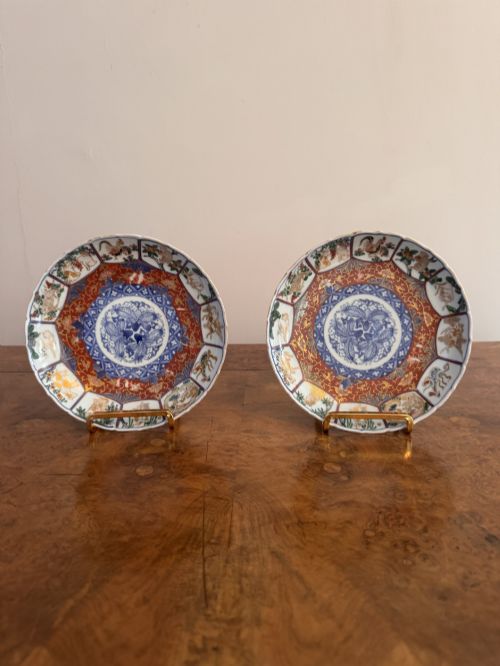
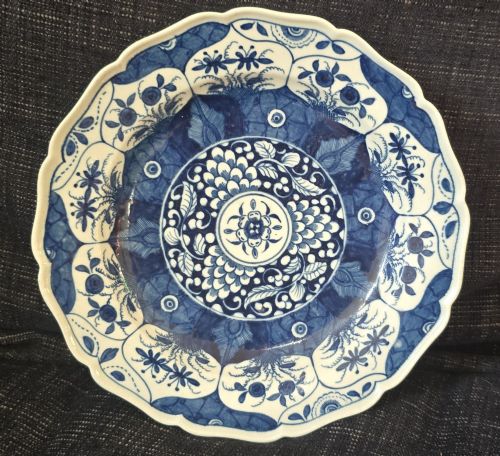
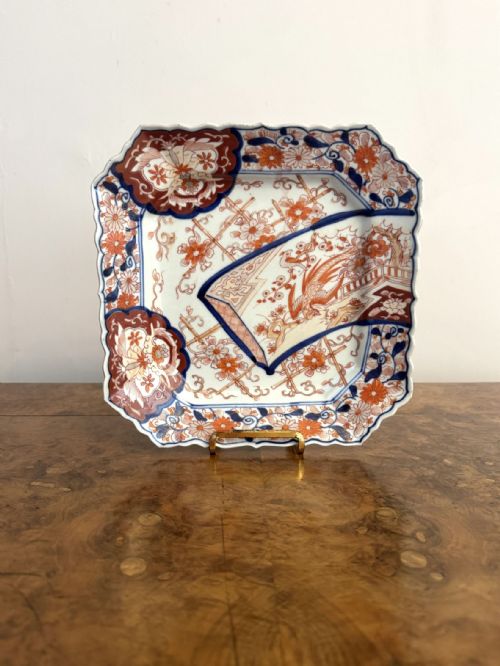
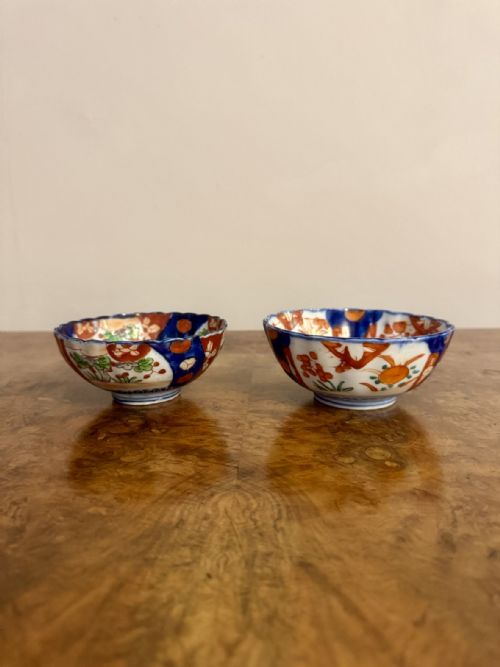
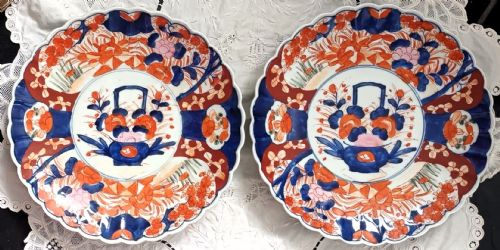
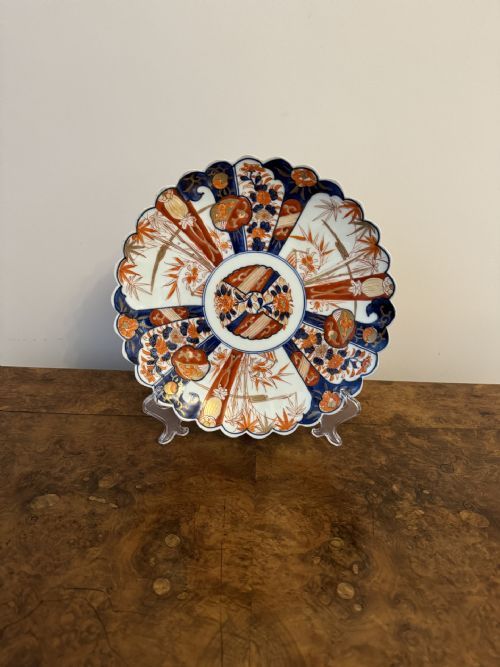
The most common examples on this page are Japanese Imari porcelains from the Meiji period, featuring characteristic blue and rust-red palettes. Alongside these sit Chinese export porcelains, European tin-glazed earthenwares, and French soft-paste table wares.
Forms range from small cabinet plates to large chargers and deep bowls designed for display or service. Each piece reflects the specific aesthetic and technical capabilities of its period of origin.
Materials and construction
The pieces rely primarily on porcelain, earthenware, and ironstone bodies shaped by hand or moulded to create the characteristic wavy rims. Potters applied glazes directly to the clay body before firing, often utilising tin glaze for European chargers and transparent glass-like coatings for Asian porcelains.
Decoration involves hand-painted mineral pigments, occasionally accented with gold leaf and gilding applied over the glaze. Cobalt blue underglaze painting appears frequently, combined with iron-red and enamels in Imari and Famille Rose pieces.
Scalloped Edge Dishes Retail Price Guide 2026
Typical asking prices for scalloped edge dishes among the pieces listed under this phrase on Sellingantiques today, from the lower quarter to the upper quarter. They describe what is for sale here now, not the wider market.
Listings feature pieces spanning from the seventeenth century to the Victorian era, executed in porcelain, earthenware, and tin glaze.
Quality differences
Quality rests in the crispness of the moulded edge and the precision of the hand-painted decoration. Finer pieces display confident brushwork and well-defined pigment application without bleeding or smudging across the glazed surface.
The weight, resonance, and translucency of the ceramic body distinguish standard utility wares from superior decorative examples. Well-preserved gilding and intact enamel colours also elevate the standing of an individual piece.
The Scalloped Edge Dishes Glossary
- Imari
- A style of Japanese porcelain decorated in underglaze blue, iron red, and gold, named after the port from which it was shipped to Europe. This aesthetic became highly popular during the Meiji period.
- Charger
- A large decorative plate or platter used primarily for presentation or serving during formal meals. These items often feature elaborate painted scenes across a broad central well.
- Tin Glaze
- An opaque white ceramic glaze containing tin oxide, providing a smooth surface for painted decoration on European earthenwares. This technique defines traditional Delftware and related continental pieces.
- Ironstone
- A durable type of heavy earthenware patented in the nineteenth century to imitate porcelain. It offers robust strength for large serving platters and pedestal bowls.
- Pedestal Bowl
- A raised vessel standing upon a short foot or column, lifting the display surface above the table. These forms appear in nineteenth-century ironstone and porcelain.
Scalloped Edge Dishes: Frequently Asked Questions
How were scalloped edge dishes used originally?
These vessels served various functions depending on their size and depth. Smaller plates and bowls held food at the table, whilst large chargers and pedestal bowls functioned as centrepieces for display.
Over time, many decorative chargers were hung on walls or placed on sideboards rather than used for dining.
How do I care for antique ceramic dishes?
Wash antique porcelain and earthenware gently by hand using lukewarm water and mild soap. Avoid soaking pieces with delicate overglaze enamels or gold leaf to protect the surface decoration.
Keep them away from sudden temperature changes and direct sunlight to preserve the glazes and pigments.
What defines the Meiji period in these ceramics?
The Meiji period spans from eighteen sixty-eight to nineteen twelve, a time when Japanese kilns produced vast quantities of porcelain for Western export. These items display exceptional technical skill in moulding complex scalloped rims and applying vibrant enamel decorations.