



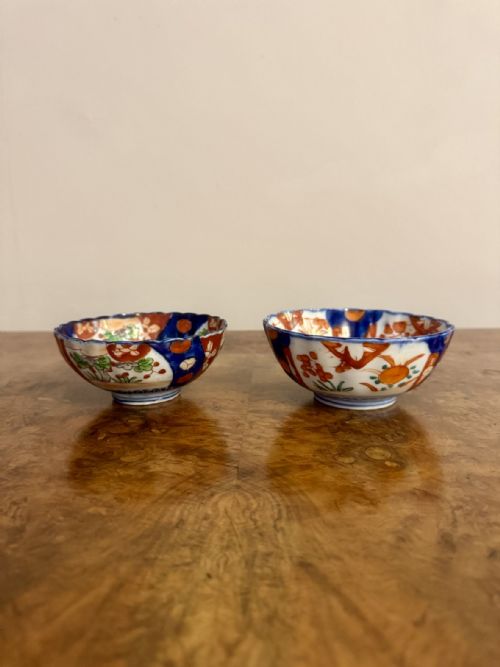
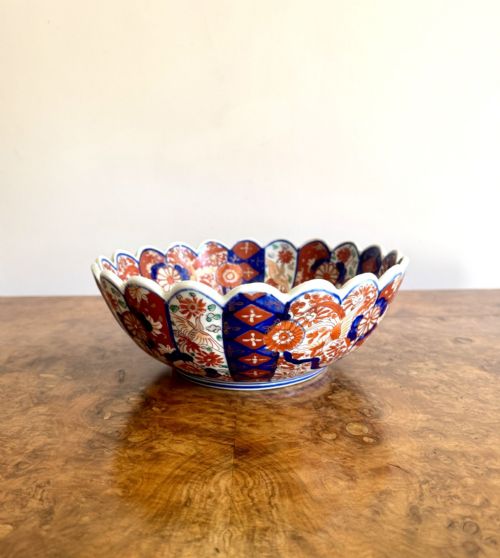
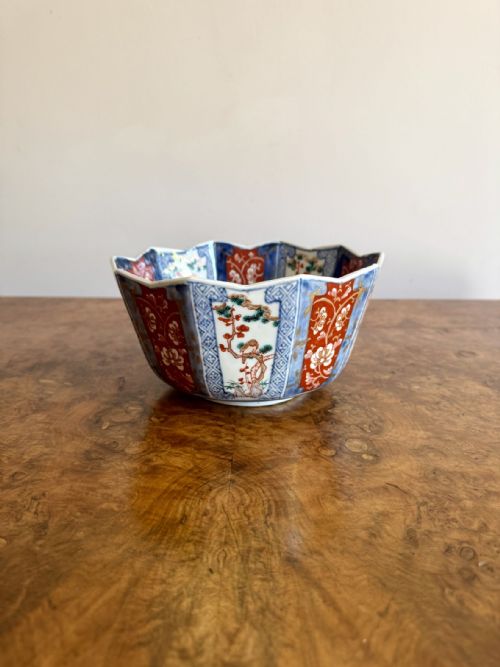


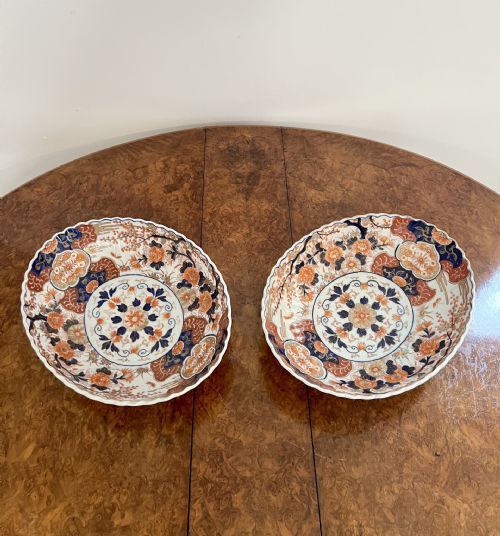


Scalloped Edge Bowl
A scalloped edge bowl brings an undulating rim to the table, and collectors prize these pieces for their rhythmic, patterned contours.
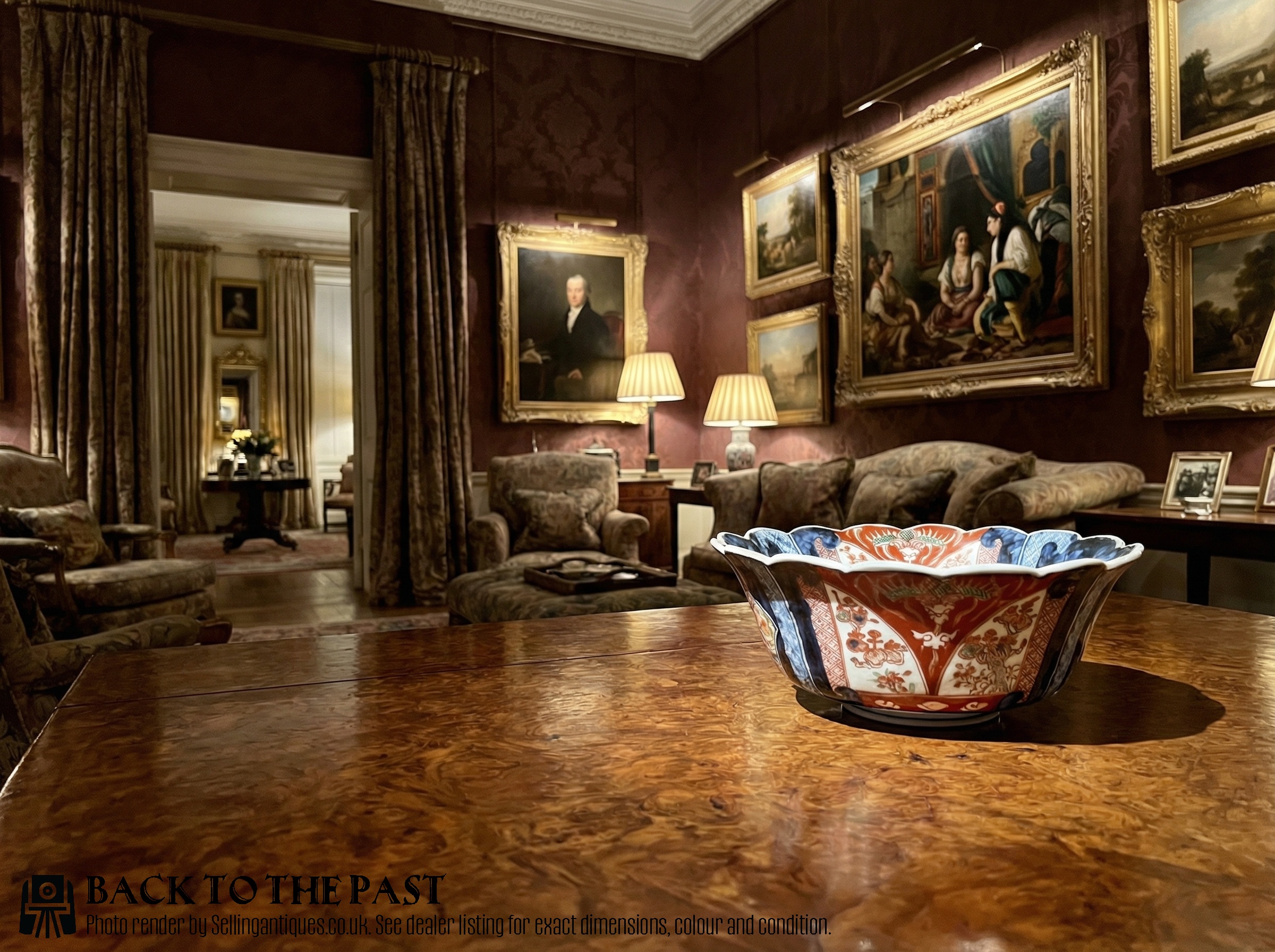
Scalloped Edge Bowl
When you search for a scalloped edge bowl, you encounter a variety of forms spanning porcelain, glass, silver, and brass. The selection draws heavily from 19th-century production, alongside pieces from the Georgian, Victorian, and Edwardian periods.
The Japanese Imari porcelain examples dominate the offerings, showcasing intricate painted patterns and lobed rims. Alongside these Asian ceramics appear English porcelain items, French opaline glass dishes, and substantial silver or silver-plated vessels.
Forms range from deep centrepiece bowls and serving dishes down to small decorative display plates and cabinet pieces. Each version uses the shaped border to catch the light and frame whatever sits within it.
Materials and methods
Ceramic pieces rely on porcelain bodies shaped with lobed or curved borders, often finished with underglaze cobalt blue and iron red pigments. Gilding and gold leaf frequently accent the rims and internal panels.
Glassware relies on lead crystal and opaline glass, shaped through cutting and pressing techniques. Metal items utilise sterling silver, silver-plating, brass, and painted toleware, sometimes incorporating chased decoration or cast elements.
Materials represented include porcelain, cut glass, sterling silver, brass, toleware, and opaline glass.
Distinctions in quality
Execution of the painted or modelled detail separates standard production from superior pieces. Crisp hand-painting on porcelain and precise cutting in glass indicate higher craftsmanship.
Condition of the surface decoration, including the preservation of gilding and enamel, dictates the standing of an item. Weight and balance in metal and ceramic vessels likewise signal better workshops.
The Scalloped Edge Bowl Glossary
- Imari
- A style of Japanese porcelain featuring a palette of cobalt blue, iron red, and gold. This technique originated in Arita and gained immense popularity in Europe.
- Monteith
- A type of scalloped bowl used in the 18th century for chilling wine glasses by their stems. The notched rim held the glasses securely in ice water.
- Opaline glass
- An opaque or translucent glass developed in France during the 19th century. It often appears in soft colours with applied gilt borders.
- Toleware
- Metalware that is lacquered and painted, frequently taking the form of decorative trays or vessels. The technique protects the iron or steel base while providing a smooth surface for ornamentation.
- Sifter spoon
- A perforated spoon designed for dusting sugar over fruit or pastry. The bowl often incorporates pierced patterns and shaped edges.
Scalloped Edge Bowl: Frequently Asked Questions
What is a scalloped edge bowl used for?
These vessels served various functions depending on their material and depth, ranging from table service to ornamental display.
Larger forms acted as centrepieces or wine coolers, while smaller dishes held fruit, sweets, or calling cards.
How do I date a Japanese Imari bowl?
Dating relies on examining the weight of the porcelain, the brightness of the pigments, and the characteristics of the foot ring.
Pieces from the Meiji period and the late 19th century generally show distinct potting traits compared to earlier examples.
Are all scalloped bowls antique?
The selection includes items from the 18th century through to mid-century modern productions.
Checking the manufacturing marks, wear patterns, and material composition helps establish the age of each piece.
How should I clean an antique porcelain bowl?
Careful washing in warm water with mild soap is usually sufficient for glazed ceramic surfaces.
Avoid abrasive sponges and harsh chemicals, particularly where gold leaf or overglaze enamel decoration is present.