


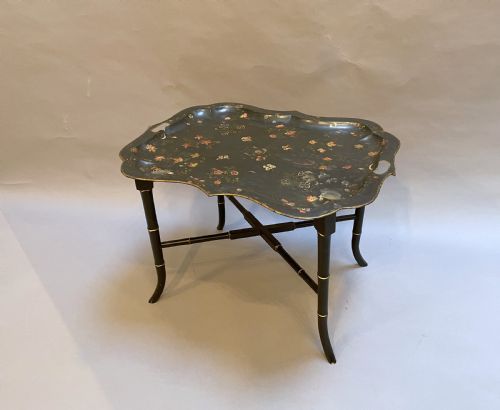


Scalloped Coffee Table
A scalloped coffee table brings subtle movement and refined curves to a room, offering a distinct alternative to standard straight-edged designs.
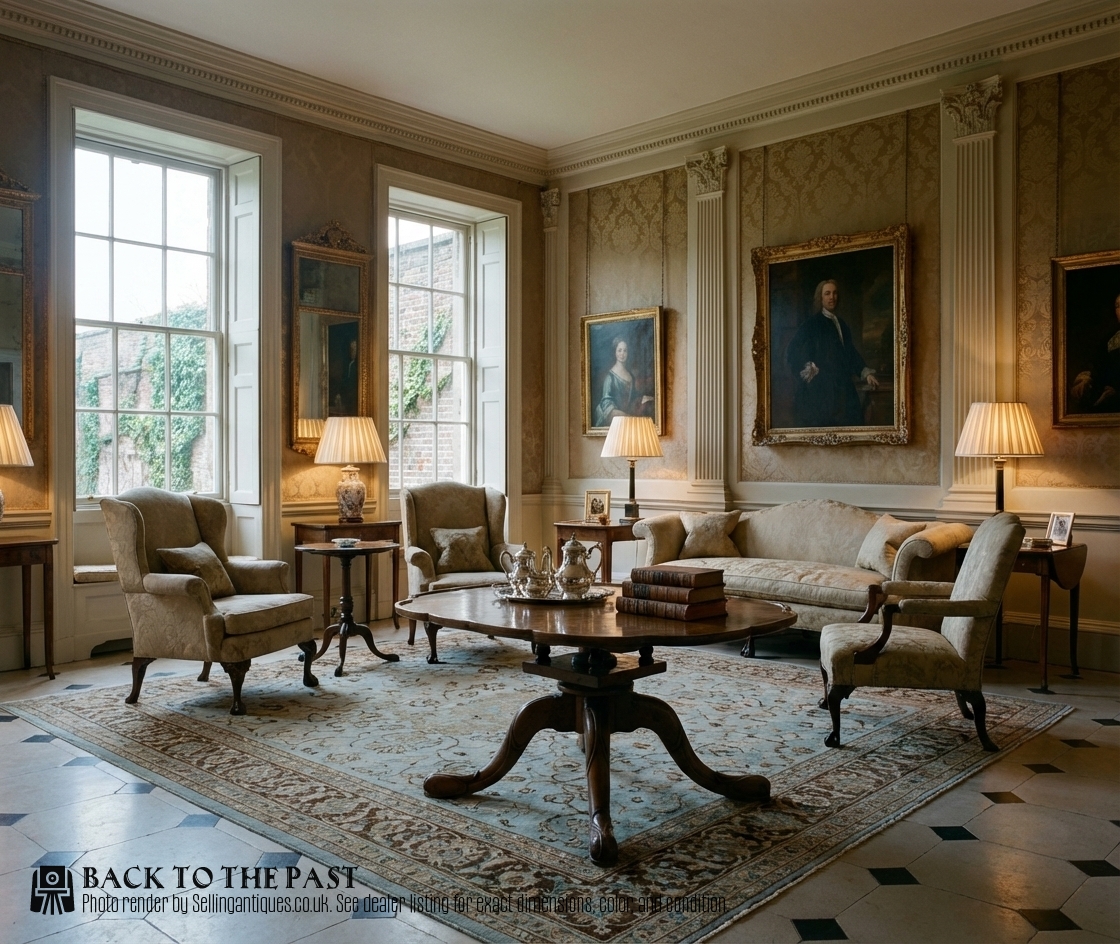
Scalloped Coffee Table
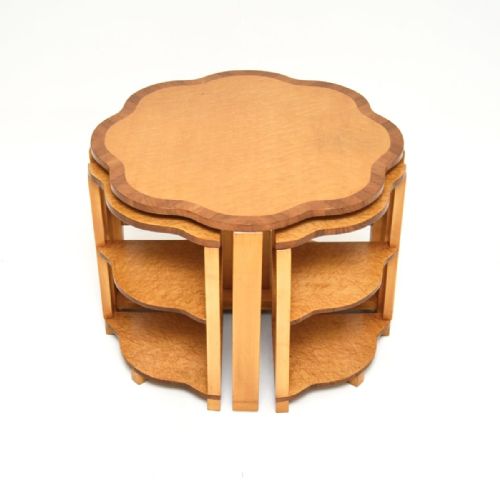
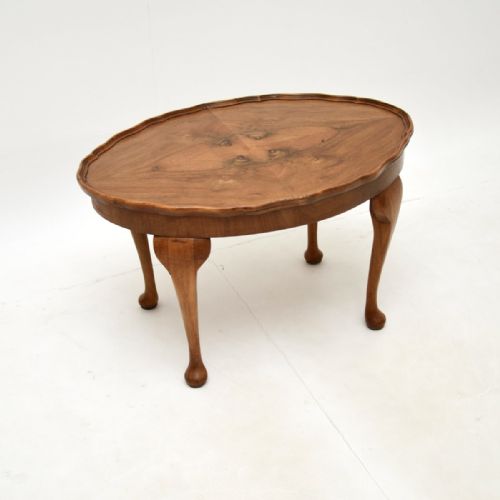
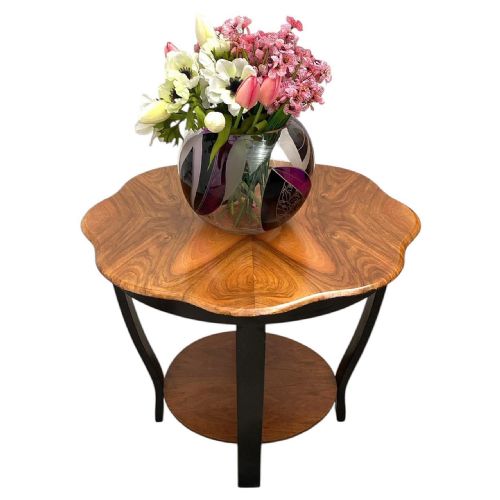
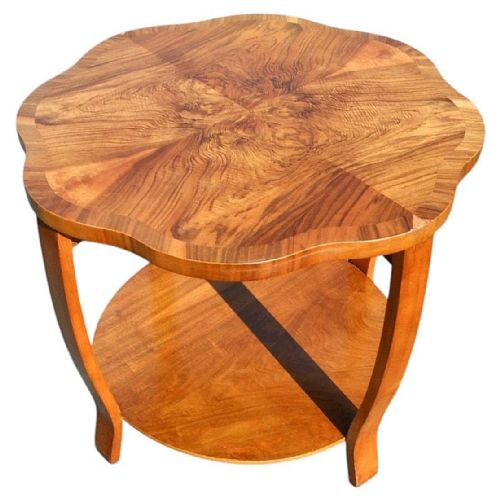
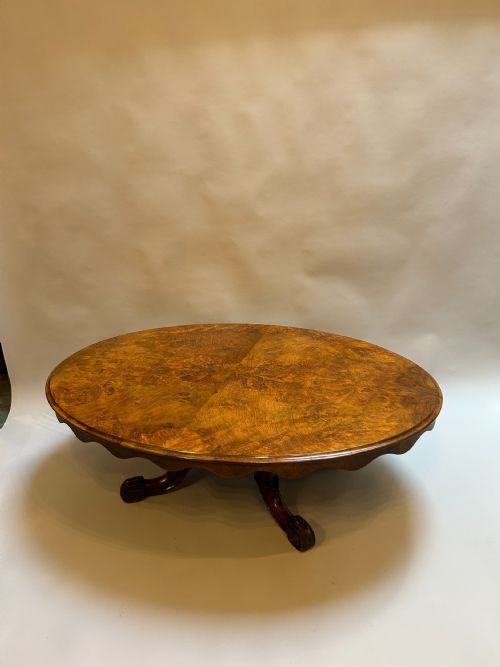
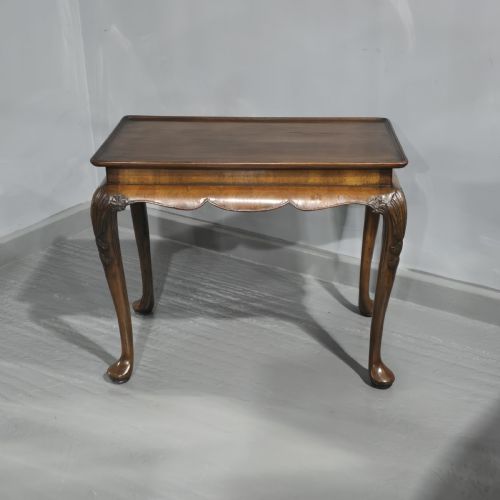
A scalloped coffee table typically adopts the form of an occasional, pie-crust or tray table adapted for low-level seating. These pieces span multiple eras, from George III and Victorian designs to Art Deco walnut iterations.
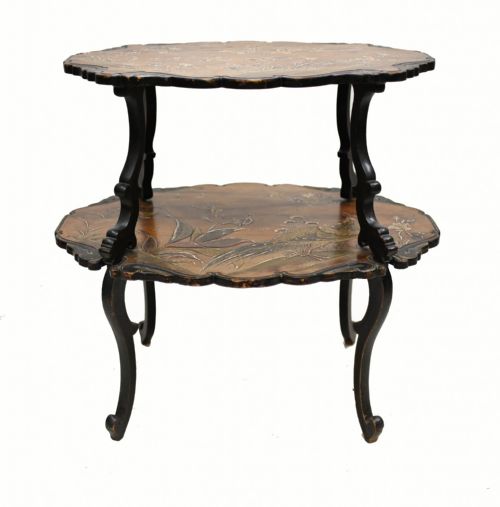
The profile often appears on circular or oval tops where shaped edges create undulating outlines. Walnut, mahogany and painted finishes dominate the selection, frequently paired with multi-tiered or nesting constructions.
How they were made
Cabinet makers utilised dense hardwoods like mahogany and walnut, frequently applying figured veneers or burr walnut to highlight natural grain patterns. Raised pie-crust borders were often carved directly from solid timber blanks or shaped meticulously around the perimeter.
Decorative surfaces include japanning, lacquer, and painted finishes on wood or papier-mâché, sometimes supported by turned wooden legs, iron stands or carved hardwood bases.
Listings feature walnut, mahogany, and papier-mâché materials spanning the eighteenth to the twentieth centuries.
What varies in quality
The precision of the edge profiling dictates the overall success of the piece, separating crisp hand-carved contours from softer, repetitive machine work. Cabinetmaking skill shows in the stability of the joints and the matching of veneer patterns across the top.
Materials range from standard domestic timbers to highly figured exotic veneers and specialised lacquering techniques. The harmony between the top and its supporting base, whether period or adapted, defines the integrity of the ensemble.
Whytock and Reid
The Scalloped Coffee Table Glossary
- Pie crust
- A raised, carved border with undulating or scalloped curves resembling traditional pastry edges on a table top.
- Japanning
- A European imitation of East Asian lacquerwork, utilising layered varnishes and metallic dust to create glossy decorative surfaces.
- Veneer
- A thin slice of figured wood applied over a secondary timber base to create decorative grain patterns without excessive weight or cost.
- Tray table
- A removable or fixed tray top set upon a folding or rigid stand, often utilised for serving or display.
- Papier-mâché
- A composite material made from paper pulp or layers of paper bound with glue, pressed into moulds and lacquered.
Scalloped Coffee Table: Frequently Asked Questions
Are these tables converted from older trays?
Many examples, particularly papier-mâché and brass-bound trays from the nineteenth century, were originally manufactured as portable serving trays and later mounted onto custom stands to function as tables.
This adaptive history is common and collectors evaluate the proportion and stability of the stand in relation to the top.
How do I care for walnut veneer?
Figured walnut requires protection from direct sunlight and excessive moisture to prevent fading and veneer lifting. Regular dusting with a dry cloth maintains the finish without chemical buildup.
Wax polishing should be applied sparingly and only to sealed wooden surfaces.
What periods are most common?
The selection spans the nineteenth and twentieth centuries, with significant representation from the Victorian era and the Art Deco period of the nineteen-thirties.
Earlier eighteenth-century pieces also appear alongside Edwardian and painted continental interpretations.
Can I use a nesting set as a coffee table?
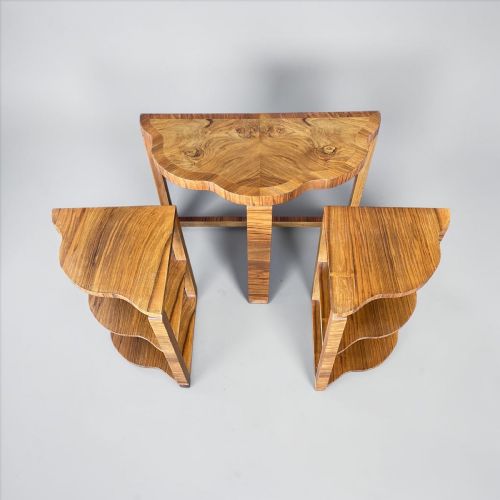
Art Deco nesting tables offer modular flexibility, allowing you to expand the surface area when entertaining or tuck the smaller tables away to save space.
They share the same decorative wood veneers and craftsmanship found in standard single-tier tables.