



Scagliola Column Plinth
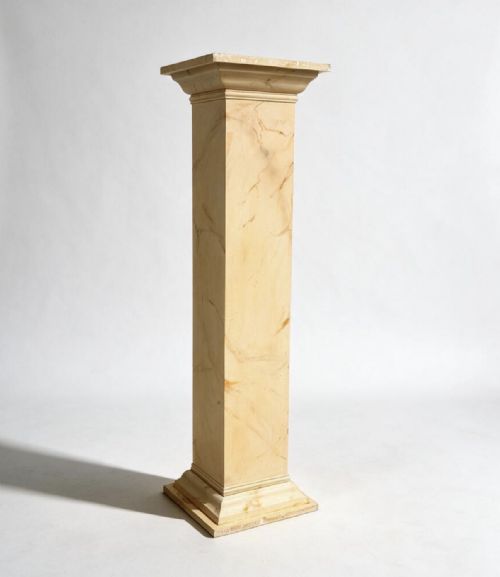
These scagliola column plinth pieces bring classical presence to a room, offering a sturdy architectural display for sculpture and decorative objects.
Scagliola Column Plinth
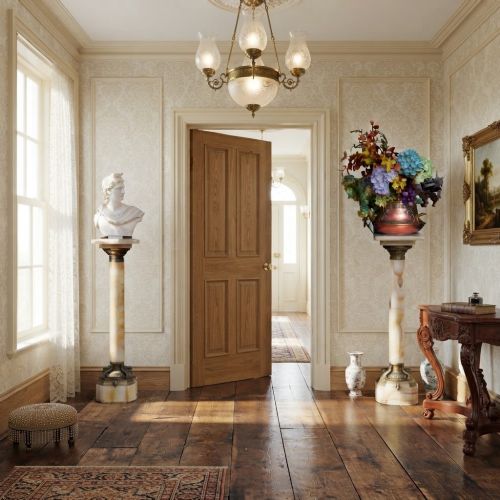
A scagliola column plinth serves as an elevated platform or support, drawing upon classical architecture to display decorative objects and urns within a room. When buyers search this phrase, they encounter architectural supports designed to lift art into the line of sight.
The pieces on this page span the nineteenth century, the Victorian era, and early decades of the twentieth century, reflecting enduring neoclassical tastes. Forms range from large square pedestals and tall display columns to paired supports with distinct base and collar details.
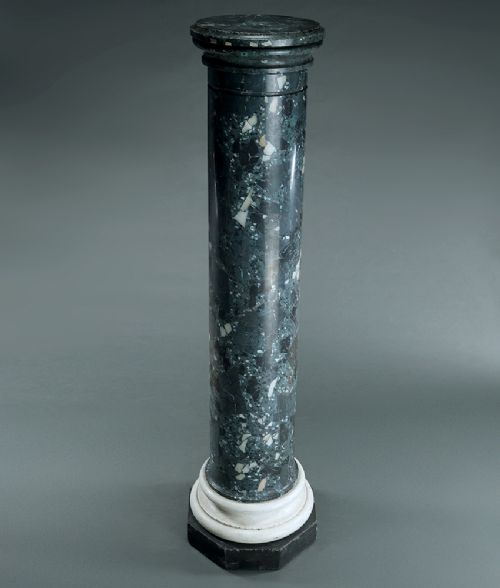
Origins and styling lean towards French chateau influences, Grand Regency interpretations, and neoclassical revivals. Buyers most frequently meet large faux marble columns and square pedestals finished to imitate prized stones like verde antico.
How they were made
Scagliola technique involves a composite material made from pigmented selenite, glue, and plaster, applied and polished to imitate natural marble and hardstones. This laborious process allows artisans to replicate complex mineral veining without carving solid stone blocks.
Maker construction often combines plaster, painted wood, and plaster cores finished with detailed paintwork or mounted ormolu collars. White socle bases and black marble plinths frequently anchor the primary column body to provide stable contrast.
Scagliola Column Plinth Retail Price Guide 2026
Typical asking prices for scagliola column plinth among the pieces listed under this phrase on Sellingantiques today, from the lower quarter to the upper quarter. They describe what is for sale here now, not the wider market.
Grand Tour travellers returned with miniature architectural aspirations, transforming humble plaster and glue into convincing marble illusions for the Victorian parlour.
What varies in quality
Quality rests in the fidelity of the faux marble finish and the depth achieved in the scagliola compound. Skillful artisans layer pigments to mimic the translucent quality of genuine verde antico and natural stone.
Structural integrity and the crispness of neoclassical moulding details differentiate standard utilitarian supports from finer decorative examples. Ormolu mounts and well-proportioned socle bases add distinct refinement to the composition.
The Scagliola Column Plinth Glossary
- Verde Antico
- A dark green breccia marble prized in classical design. Artisans frequently simulated this specific stone using scagliola and painted wooden techniques.
- Socle
- A short plain plinth or pedestal supporting a column or bust. It forms the stable ground base resting beneath the main shaft.
- Ormolu
- Gilded bronze applied as decorative mounts and collars on furniture and architectural elements. It provides bright metallic contrast against dark stone and faux marble surfaces.
- Neoclassical
- A style reviving classical antiquity forms, prevalent during the nineteenth century and subsequent revival periods. It governs the restrained architectural proportions seen across these pedestals.
Scagliola Column Plinth: Frequently Asked Questions
What is a scagliola column plinth used for?
These architectural supports serve to elevate decorative urns, sculptures, and art objects within an interior space. They place display items at an optimal height for viewing.
Beyond simple utility, the columns introduce classical symmetry and proportion to room corners and hallways.
How do I date a faux marble column?
Dating relies on observing material construction methods, such as painted wood cores versus solid plaster or scagliola. Stylistic cues like Grand Tour influences or Victorian proportions also help place pieces within the nineteenth or early twentieth century.
Changes in revival movements from Regency to later twentieth-century interpretations further narrow down the production era.
How do I live with a tall pedestal?
Tall pedestals require stable placement on level flooring to support heavier decorative urns and sculptures safely. Positioning them away from high-traffic pathways protects the delicate painted and polished surfaces.
Regular dusting with a soft cloth maintains the polished sheen of the scagliola or painted wood finish.