
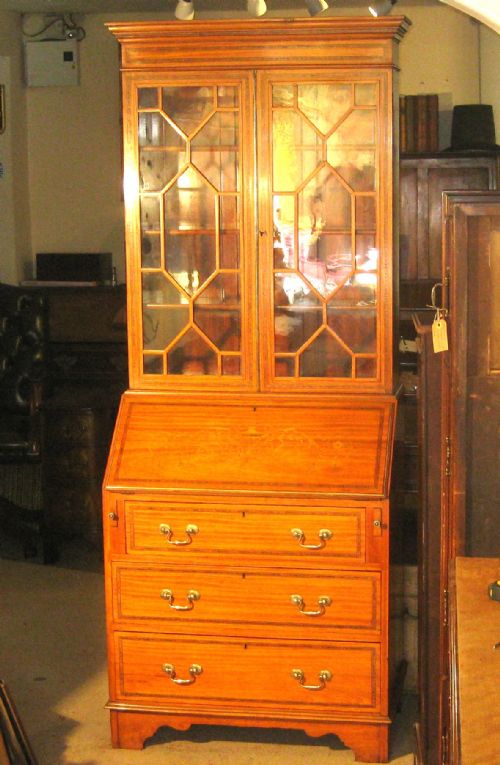
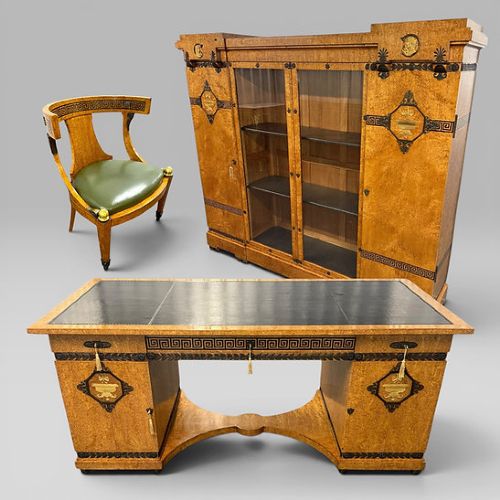
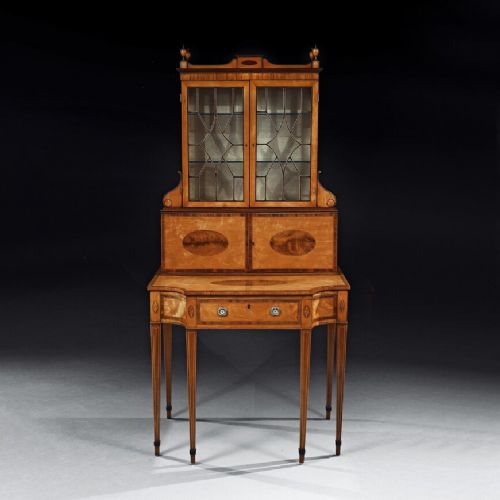
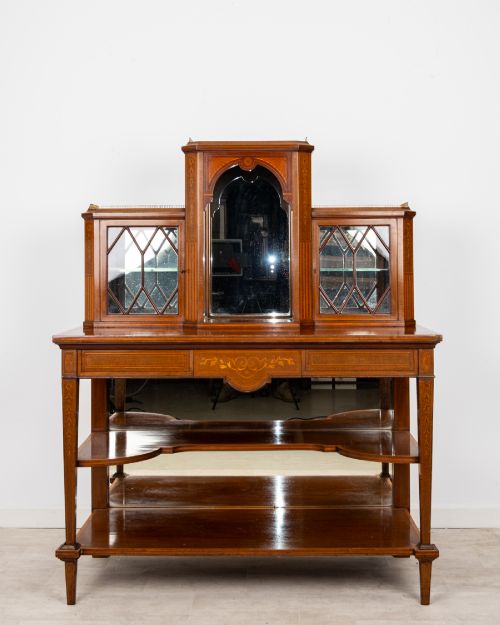
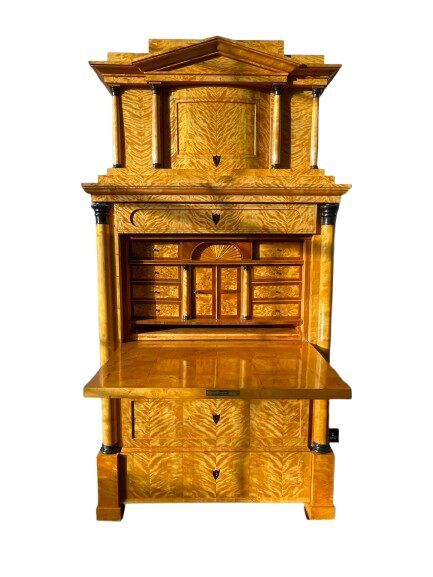
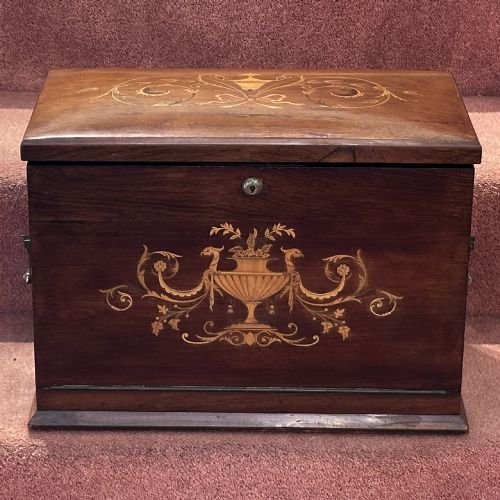

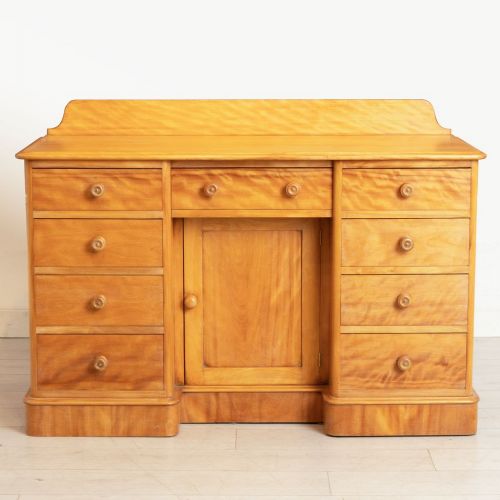


Satinwood Writing Cabinet
A satinwood writing cabinet offers pale timber surfaces and concealed drawers designed for correspondence, spanning styles from George III to Edwardian periods.
Satinwood Writing Cabinet
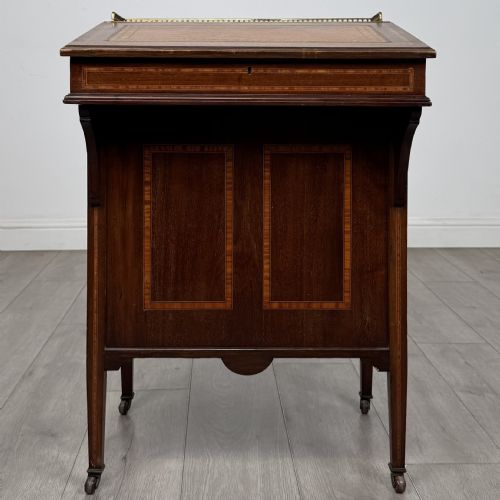
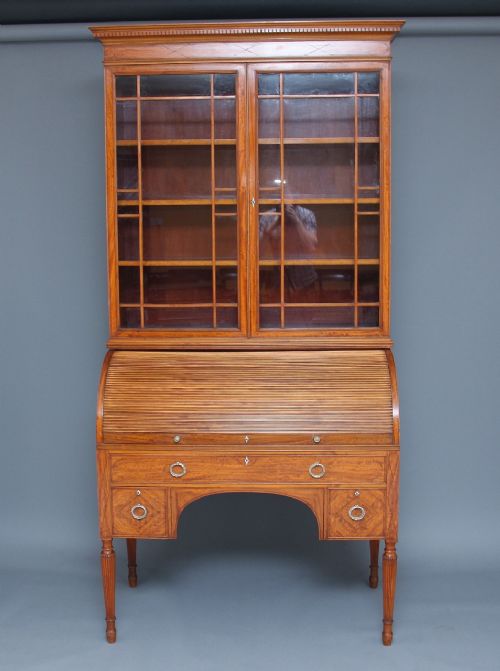
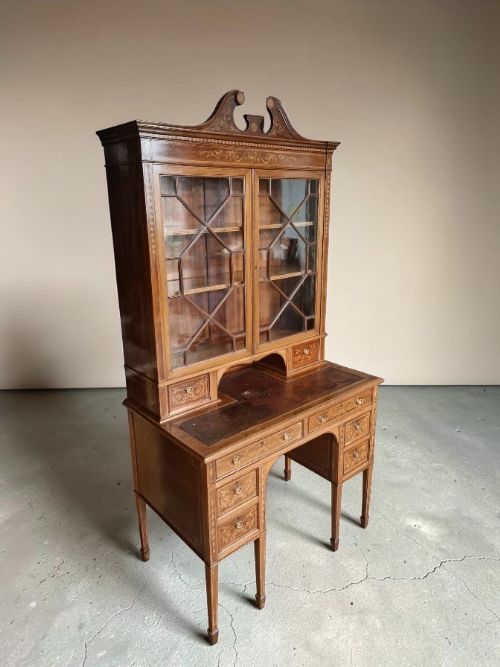
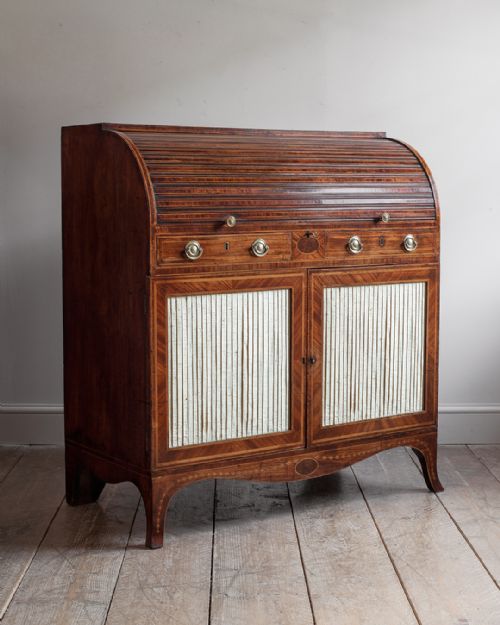
A satinwood writing cabinet combines a fitted writing surface with upper bookshelves or enclosed compartments, taking forms such as the cylinder bureau, the bonheur du jour, and the secretaire bookcase. These pieces emerge across the eighteenth, nineteenth, and early twentieth centuries, reflecting changing domestic habits for letter writing and bookkeeping.
The George III and Sheraton periods provide architectural bureau bookcases and refined cylinder cabinets featuring fine timber veneers and inlaid banding. Later Victorian and Edwardian examples lean towards lighter bonheur du jour writing desks and painted tables.
Buyers encounter timber combinations where satinwood panels pair with mahogany, rosewood, or sabicu framing. Interior compartments typically reveal small pigeonholes, sliding trays, and central doors designed for stationery.
Materials and construction
Cabinet makers construct carcasses using secondary timbers like mahogany or pine, applying finely figured satinwood veneers to exterior surfaces. Marquetry inlay, brass hardware, and ormolu mounts punctuate the timber grain on high-status examples.
Cylinder desks utilise curved timber shutters running on grooved tracks to conceal interior writing slides, while glazed doors on upper bookcases employ timber muntins holding individual glass panes.
Listings feature satinwood writing cabinets spanning the eighteenth century, Georgian period, Victorian era, and Edwardian Sheraton Revival.
Judging execution and finish
Quality rests in the selection of the satinwood veneer, where chatoyancy and natural figure create depth across flat surfaces. Workshops that matched grain patterns symmetrically across drawer fronts and cylinder curves achieve a unified aesthetic.
The crispness of marquetry inlay, the tightness of dovetail joints in hidden drawers, and the integration of secondary woods dictate the standing of individual pieces.
Edwards and Roberts·Mercier Frères·Shoolbred of London
The Satinwood Writing Cabinet Glossary
- Satinwood
- A lustrous hardwood native to Ceylon and the West Indies, prized for its golden colour and light-reflecting grain. Makers utilised it extensively for high-status neoclassical furniture.
- Cylinder desk
- A writing desk featuring a curved, quarter-circle wooden shutter that rolls backward into the body to reveal the desk interior. This mechanism conceals writing surfaces and pigeonholes when closed.
- Secretaire bookcase
- A tall case furniture piece combining a lower section with a drop-front writing drawer or desk compartment and upper shelving enclosed by doors. It serves dual functions for storage and correspondence.
- Marquetry
- The art of applying decorative veneer pieces in geometric or pictorial patterns onto a structural carcase. Craftspeople used contrasting timbers to build elaborate surface designs.
Satinwood Writing Cabinet: Frequently Asked Questions
What is a cylinder satinwood writing cabinet?
A cylinder cabinet encloses its writing compartment behind a curved wooden roll-top shutter. When pulled down, this mechanism covers the desk surface and interior drawers.
These pieces appeared frequently during the late eighteenth century and nineteenth century, offering a neat exterior profile while keeping writing materials secure.
How do I date a satinwood writing cabinet?
Dating relies on observing structural proportions, timber combinations, and decorative vocabulary. George III and Sheraton examples display classical symmetry and fine marquetry.
Edwardian pieces often incorporate painted floral motifs and lighter framing, reflecting the revival styles popular at the turn of the twentieth century.
Where should I place a bonheur du jour?
A bonheur du jour functions well as a freestanding desk or writing station in a reception room or study. Its compact proportions allow it to sit comfortably away from walls.
These small desks provide surface area for writing letters while maintaining an open feel in smaller spaces.
What woods are used alongside satinwood?
Makers frequently paired satinwood with mahogany, rosewood, and harewood to create contrasting borders and banding. Secondary structural elements often utilise pine or oak.
This combination of woods provided stability to the carcass while highlighting the golden grain of the primary satinwood veneers.