
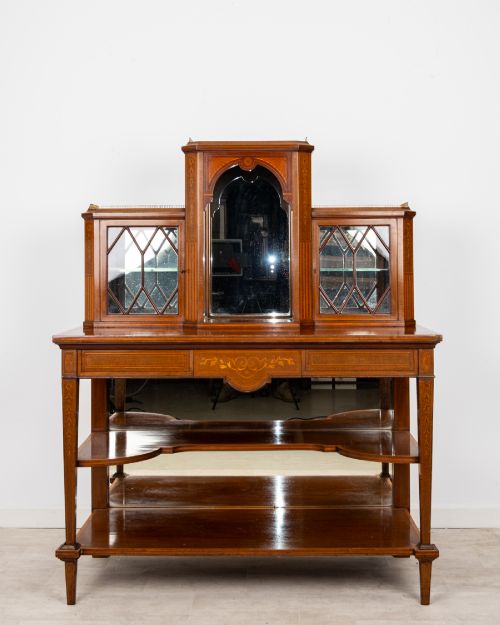


Satinwood Secretary Desk
A satinwood secretary desk brings together smooth timber and clever writing compartments, offering a refined workspace for daily correspondence.
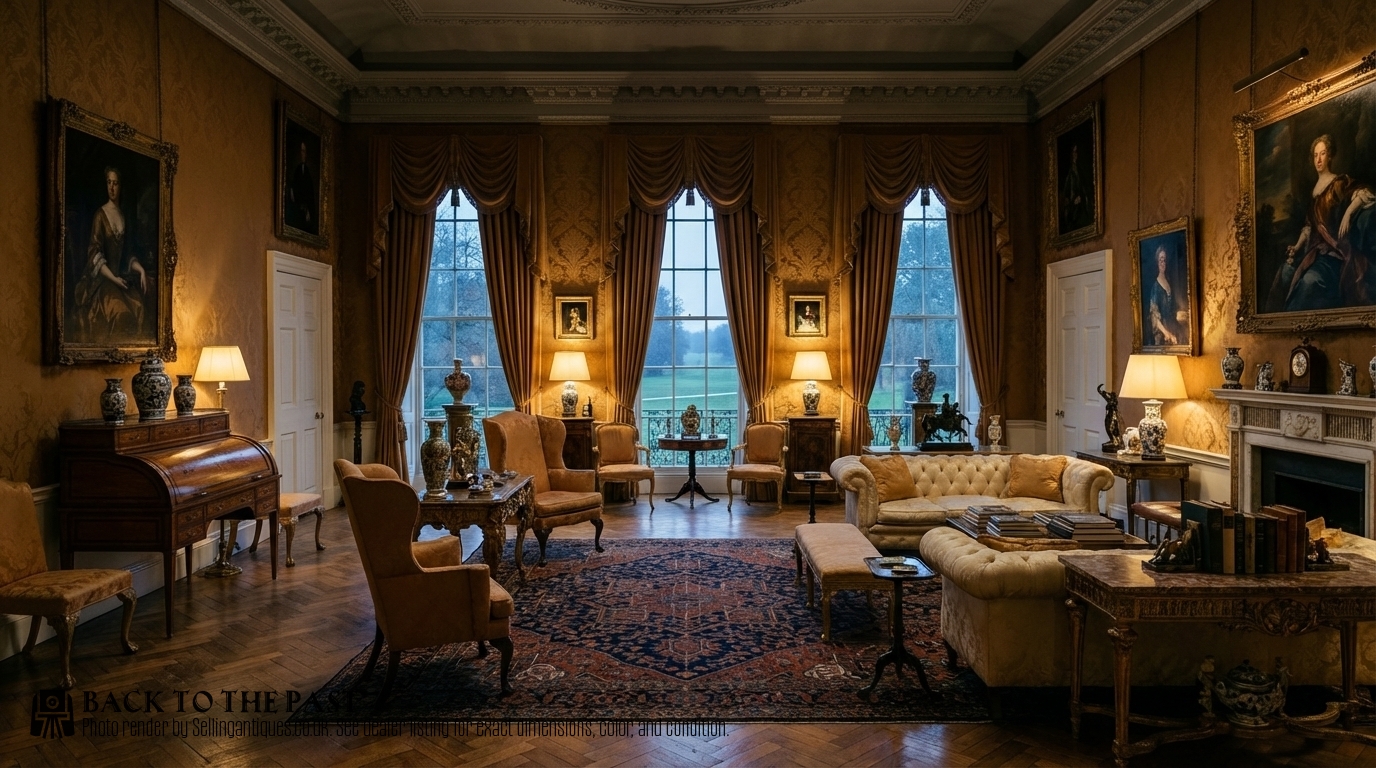
Satinwood Secretary Desk
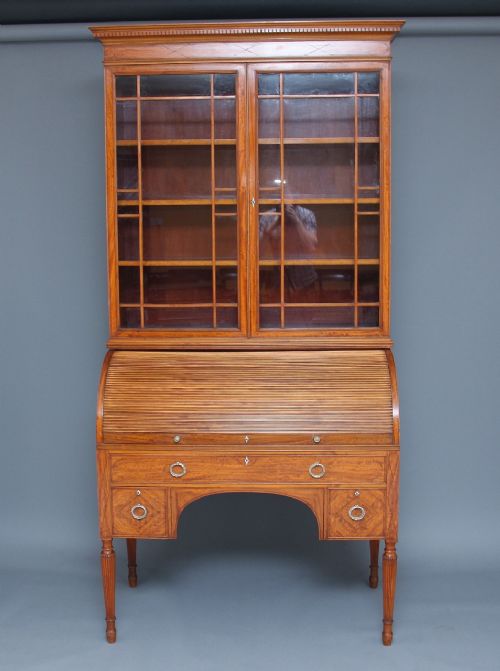
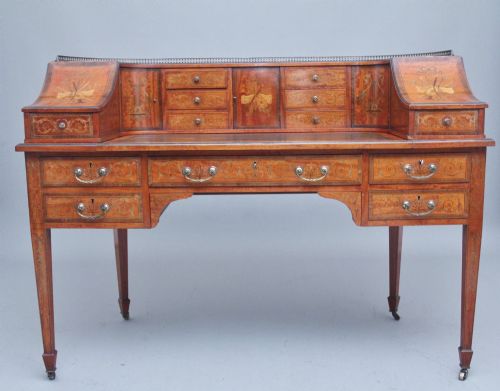
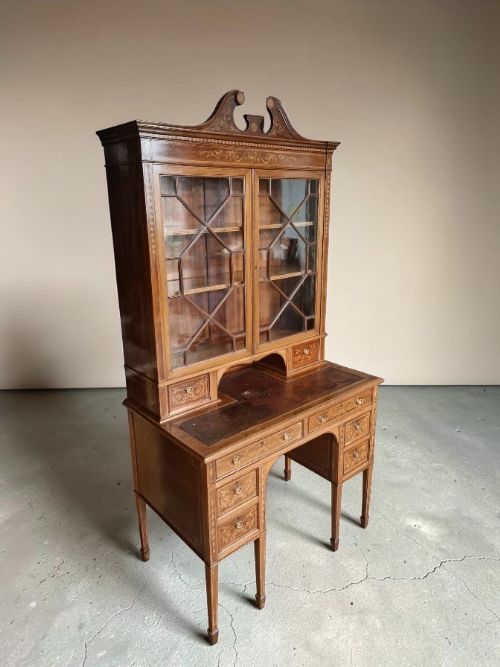
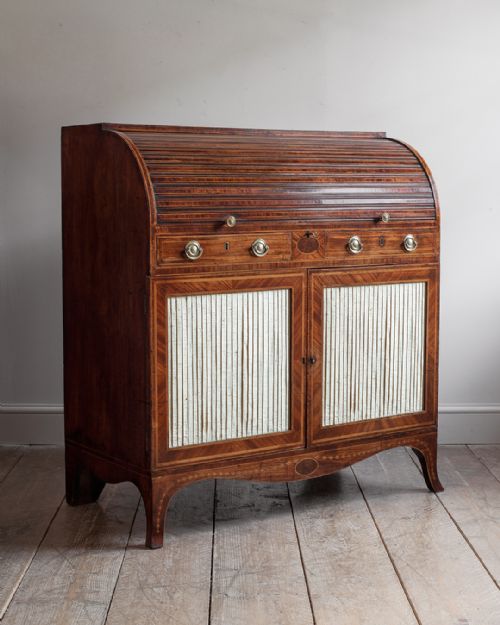
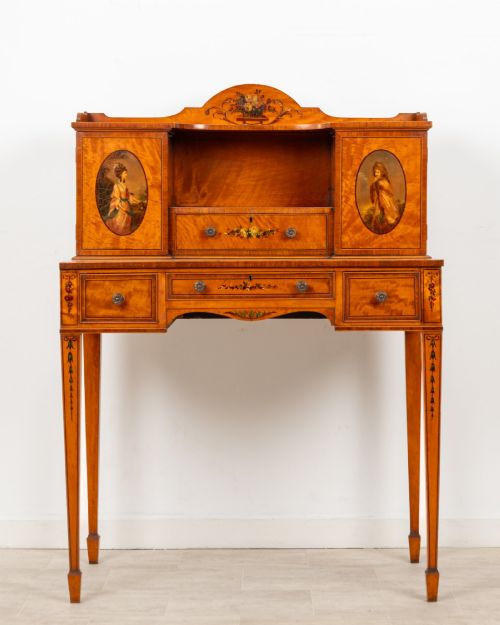
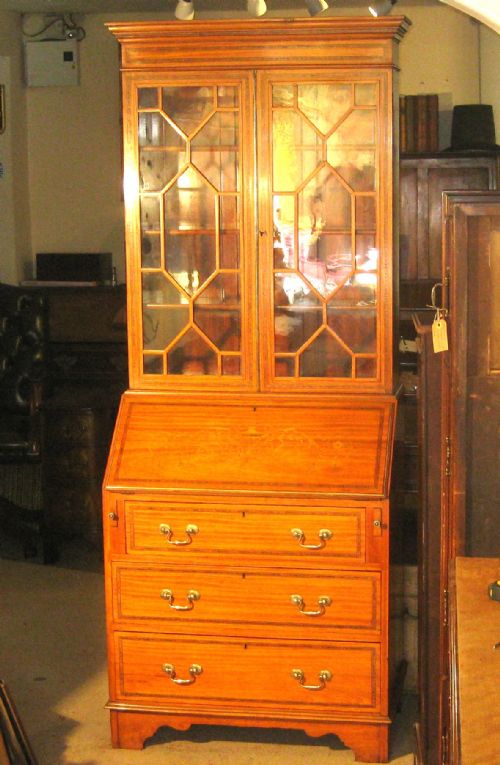
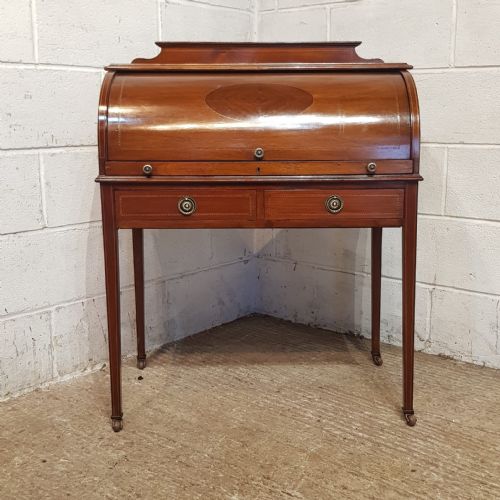
A satinwood secretary desk is a form of writing furniture designed with enclosed compartments, drawers, or a drop-front writing surface. These pieces appear in forms such as bureau bookcases, cylinder desks, and compact bonheur du jour writing desks.
Most examples found here date from the Georgian, late 18th century, and Edwardian Sheraton Revival periods. They range from large glazed secretaire bookcases to small ladies writing desks made for domestic parlours.
Makers utilised figured satinwood veneers alongside contrasting timbers like mahogany and rosewood to create practical writing furniture that also functioned as display cabinets.
How they were made
Cabinet makers constructed these pieces using solid and veneered satinwood, often supported by secondary timbers like oak for drawer linings. Surfaces frequently received marquetry or fine string-inlaid decoration.
Fittings included original brass handles, glazed glass doors, leather writing inserts, and ormolu mounts on French examples. Cylinder and tambour mechanisms allowed the writing surface to roll shut smoothly.
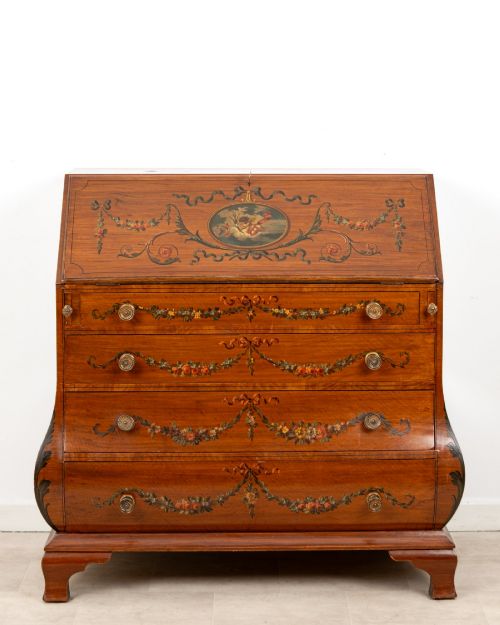
Some Edwardian ladies found that painting delicate floral ribbons directly onto their satinwood bureau made letter-writing feel less like homework.
What varies in quality
Quality depends upon the choice and figure of the satinwood veneer and the crispness of any inlaid marquetry work. Pieces attributed to recorded makers display superior internal drawer construction and heavier gauge brass hardware.
The complexity of the mechanism, such as cylinder actions or tambour shutters, separates standard writing desks from exhibition quality bureau bookcases and Carlton House desks.
Edwards and Roberts·Druce and Co
The Satinwood Secretary Desk Glossary
- Satinwood
- A dense, light-coloured tropical timber prized for its reflective sheen and smooth grain. It forms the primary surface veneer on many Georgian and Edwardian writing pieces.
- Secretaire bookcase
- A tall cabinet combining a shelved upper bookcase with a lower section containing a pull-out or drop-front writing drawer. These provide both storage and a dedicated desk space.
- Cylinder desk
- A writing desk featuring a curving roll-top lid that retracts to reveal internal pigeonholes and small drawers. The mechanism requires precise carpentry to operate correctly.
- Marquetry
- The art of forming decorative patterns using thin veneers of various coloured woods. It appears frequently on Sheraton Revival and late 18th century desk surfaces.
- Bonheur du jour
- A small, light ladies writing table featuring a raised tier of drawers and pigeonholes above the main desktop. These delicate tables emerged during the 18th century and returned in Victorian times.
Satinwood Secretary Desk: Frequently Asked Questions
What is a satinwood secretary desk?
A satinwood secretary desk is a piece of writing furniture veneered in light satinwood featuring a concealed or drop-front writing surface. They range from compact ladies writing desks to large bureau bookcases.
These desks often include internal compartments, drawers, and tambour or cylinder fronts designed to conceal paperwork when not in use.
How do I date a satinwood desk?
Dating relies on stylistic clues, timber combinations, and construction methods. Pieces from the George III and late 18th century typically feature hand-cut dovetails and subtle string inlay.
Edwardian Sheraton Revival pieces from around 1900 often employ machine-sawn elements alongside painted floral decorations and mahogany crossbanding.
Where were these desks used?
These desks served primarily in private libraries, drawing rooms, and boudoirs for managing correspondence and household accounts. Smaller bonheur du jour tables were designed specifically for ladies' private chambers.
Larger bureau bookcases combined a functional workspace with upper shelving to store and display bound volumes.
How do I care for satinwood furniture?
Satinwood furniture requires protection from direct sunlight and excessive humidity to prevent the light veneers from fading or lifting. Regular dusting with a soft, dry cloth preserves the polished finish.
Leather writing inserts benefit from occasional conditioning, and metal hardware should remain unpolished unless cleaning is strictly necessary.