



Satinwood Oval Inlay Tables
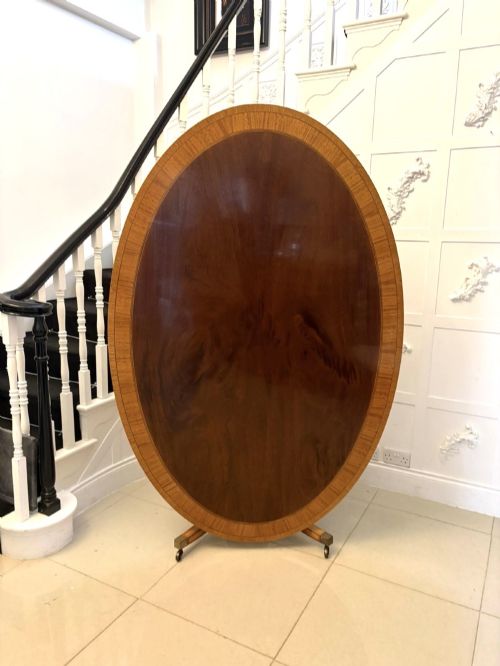
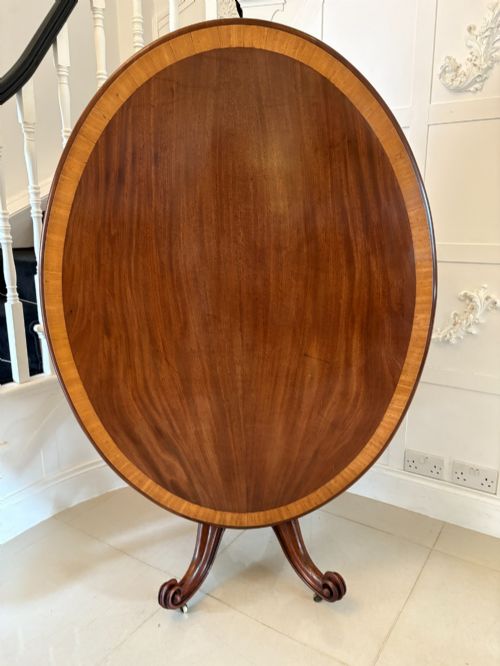
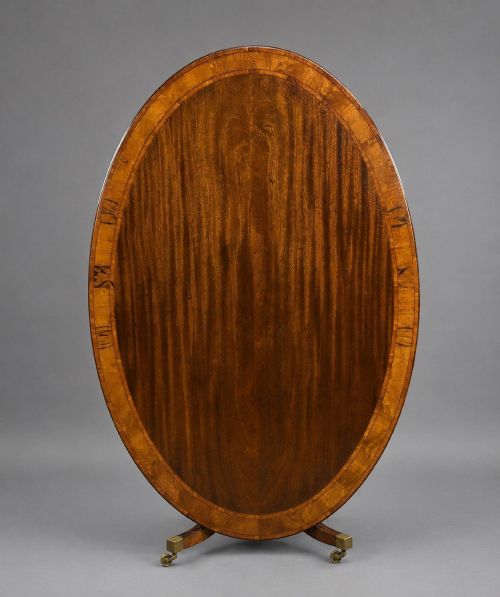
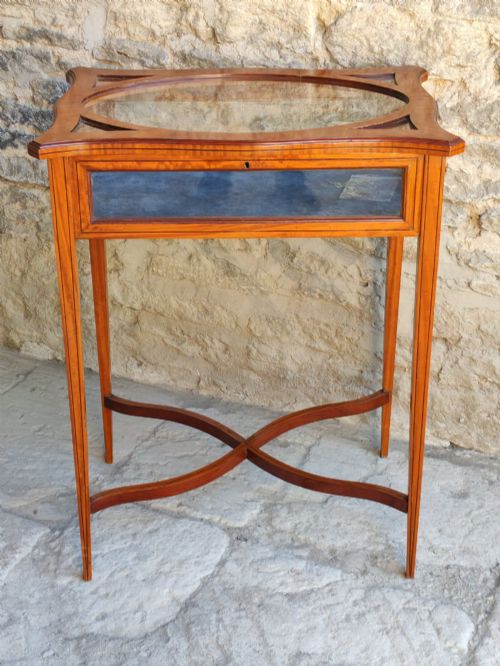
Satinwood oval inlay tables bring shimmering timber and delicate marquetry to drawing rooms, spanning Georgian elegance to Edwardian revival work.
Satinwood Oval Inlay Tables
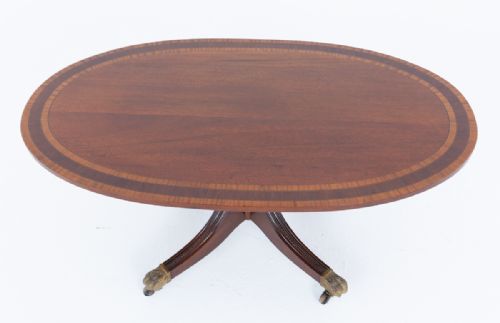
These pieces are primarily occasional tables, centre tables, and writing desks built with curved oval tops. A buyer seeking satinwood oval inlay tables encounters examples rooted in the 18th Century, George III, and Sheraton periods, alongside later Victorian and Edwardian interpretations.
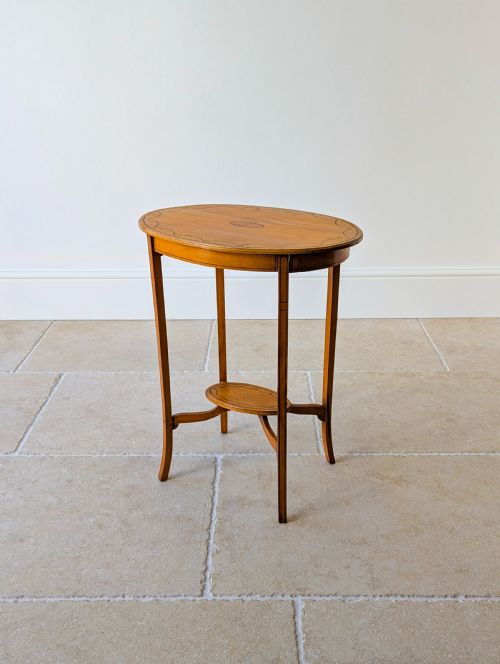
The Edwardian era and the Sheraton Revival generate a high proportion of the pieces seen today. Makers of these later decades drew heavily on 18th-century design vocabulary, producing occasional and coffee tables with slender tapered legs and decorated surfaces.
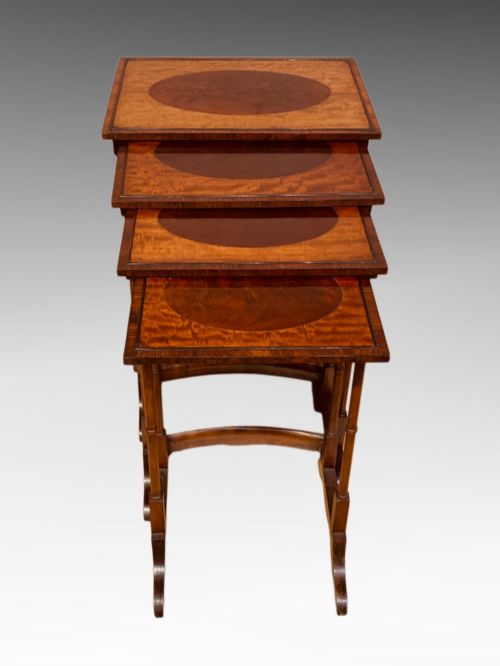
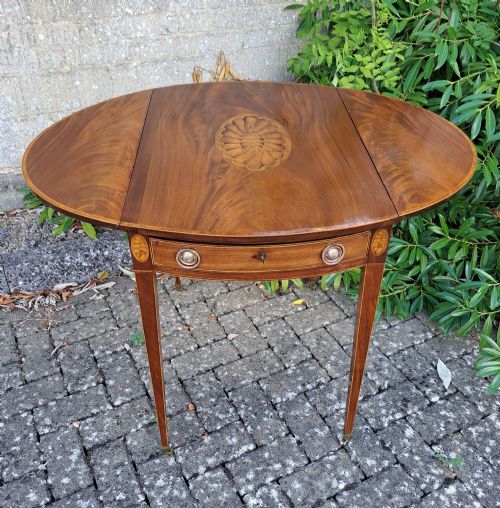
Form follows function in these tables, moving from compact writing desks and Pembroke tables to two-tier etageres and low coffee tables. The oval format softens room geometry while offering a distinct surface for display.
Materials and Construction
Cabinet makers utilised dense exotic timbers, pairing glowing satinwood with contrasting bandings of rosewood, kingwood, and boxwood. Mahogany and satin walnut frequently form the structural carcase or secondary framing beneath decorativeveneers.
Inlay and marquetry define the visual character of the surface, requiring precise hand-cut compartments of dark and light wood. Brass fittings, glass panels, and delicate painted details complete the construction of the finer examples.
Some tables hide compartments beneath their tops, perfect for keeping letters secret from curious house guests.
Markers of Quality
Execution of the marquetry and inlay separates standard production from exceptional work. Crisp, tight joints in the boxwood and rosewood banding indicate superior bench joinery.
The choice of timber grain governs the visual depth of the top. Highly figured satinwood exhibits a natural chatoyancy that catches light differently from flat, plain-stained substitutes.
Edwards and Roberts
The Satinwood Oval Inlay Tables Glossary
- Satinwood
- A hard, yellow-gold timber with a lustrous, reflective grain that forms the primary surface of these tables. It gained popularity during the Georgian period and remained a favourite for revival pieces.
- Marquetry
- The art of creating decorative patterns on furniture by fitting together small pieces of tinted wood, shell, or ivory. On these tables, floral or geometric motifs often adorn the centre of the oval top.
- Banding
- A narrow strip of contrasting timber inlaid around the perimeter of a table top or drawer front. Cabinet makers used rosewood and boxwood to frame the central satinwood panel.
- Sheraton Revival
- A late 19th and early 20th-century design movement that copied or reinterpreted the light, neoclassical furniture of Thomas Sheraton. Much of the Edwardian stock on the market belongs to this stylistic revival.
- Pembroke Table
- A small rectangular or oval table with hinged drop leaves on two opposing sides. Many examples combine satinwood veneers with mahogany framing.
Satinwood Oval Inlay Tables: Frequently Asked Questions
How do I date a satinwood table?
Dating relies on examining the secondary timbers, construction methods, and stylistic cues present in the piece. Georgian and 18th-century items often show hand-cut dovetails and older timber shrinkage, whereas Edwardian Sheraton Revival pieces display machine-standardised joints and lighter internal framing.
Hardware and finish also provide clues. Original brass handles, hand-polished shellac surfaces, and distinct marquetry techniques help separate authentic period furniture from later reproductions.
Where should I place an oval table?
An oval occasional or centre table works well in reception rooms where curved lines can soften rigid room layouts. Placing one beside a sofa or in the middle of a seating group allows the inlaid top to catch ambient light.
Because many examples feature delicate tapered legs and fine satinwood veneers, placing them away from direct heat sources and strong sunlight preserves the timber and prevents the polish from fading.
How do I care for satinwood surfaces?
Maintaining satinwood involves dusting regularly with a soft, dry cloth and avoiding silicone-based polishes that build up over time. Applying a traditional beeswax occasionally nourishes the timber and protects the antique finish.
Keeping the table away from radiators and damp environments prevents the wood from warping and stops the delicate boxwood and rosewood inlay from lifting out of its channels.
What is the difference between George III and Sheraton Revival?
George III pieces date from the second half of the 18th century and represent original neoclassical furniture design. They were built for contemporary homes using period-specific construction techniques and older growth timbers.
Sheraton Revival pieces date from the late 19th and early 20th centuries, copying the earlier aesthetic for a new generation of buyers. While they draw on the same decorative vocabulary, their internal structure and secondary woods reflect Victorian and Edwardian workshop practices.