


Satinwood Marquetry Clock
A satinwood marquetry clock brings inlaid floral and figurative timber work into domestic timekeeping, offering collectors decorative sophistication.
Satinwood Marquetry Clock
A satinwood marquetry clock combines light timber veneers with intricate inlaid designs, creating striking visual contrast on clock cases. Pieces matching this search phrase on this page span Victorian, Edwardian, and nineteen hundred periods, reflecting classic domestic horology.
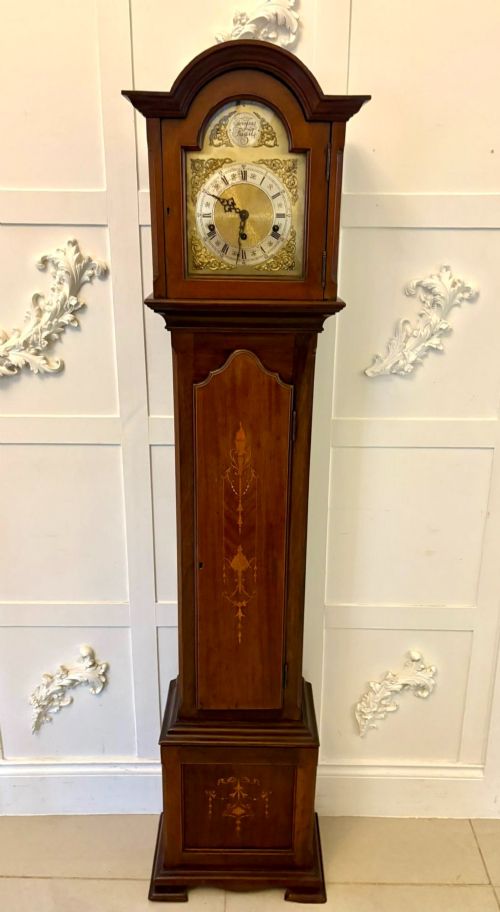
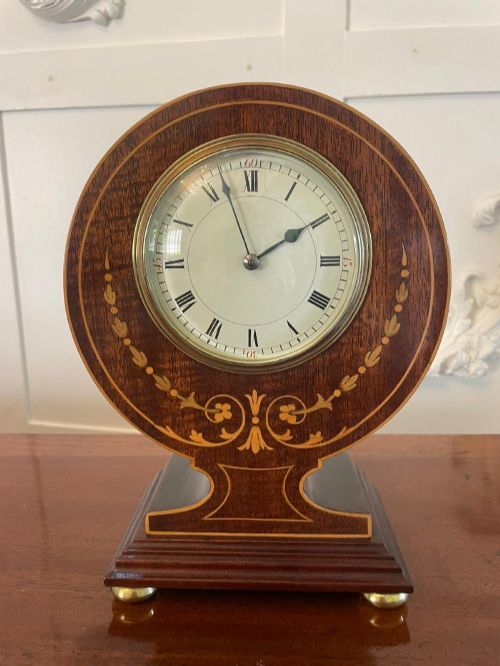
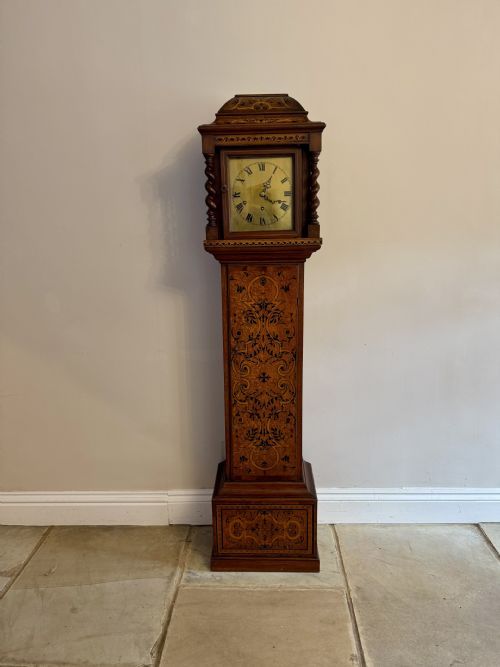
Mantel clocks and long case clocks dominate the forms available here, often incorporating boxwood inlay or contrasting woods like mahogany and rosewood. These timepieces display distinct stylistic influences, ranging from straightforward Edwardian craft to French Restoration and Art Nouveau motifs.
Decorative subjects on these clock cases include naturalistic poppy designs and figurative scenes such as a Dutch girl motif. Such ornamental details set these pieces apart from plain timber timepieces.
Materials and construction
Casework relies on solid timber carcases overlaid with satinwood and mahogany veneers, providing a stable foundation for delicate surface decoration. Marquetry panels utilise contrasting woods and boxwood inlay to build up pictorial and floral patterns across the front of the case.
Internal movements operate behind glass doors, often paired with enamel dials and brass fittings for clear time reading. Musical components or complex long case architecture appear in larger examples from nineteen hundred.
A cheerful Dutch girl finds herself permanently immortalised in wood veneer, keeping watch over the ticking seconds on an Edwardian mantel.
Assessing quality and execution
The precision and complexity of the marquetry define the upper tier of these clocks, where detailed floral or figurative inlay demands expert craftsmanship. Simpler geometric banding sits lower in the range, lacking the pictorial ambition seen in pieces featuring poppies or figural subjects.
Timber selection and veneer preservation heavily influence overall desirability, with rich satinwood and contrasting rosewood accents creating a more balanced composition. The integration of musical movements or architectural long case proportions adds mechanical complexity that elevates the piece.
The Satinwood Marquetry Clock Glossary
- Marquetry
- A decorative technique applying pieces of veneer to a structure to form ornamental designs and pictures. This method allows for detailed pictorial work across clock cases.
- Satinwood
- A durable, lustrous timber native to India and Ceylon, prized for its yellow colour and reflective sheen. It serves as the primary ground for high-status inlaid furniture and clock faces.
- Mantel clock
- A portable timekeeper designed to stand on a fireplace mantel or shelf. These domestic pieces became popular decorative items in Victorian and Edwardian interiors.
- Portico clock
- A monumental clock style featuring side columns supporting an architectural entablature, often associated with French nineteenth-century design. This form frequently employs contrasting veneers like rosewood and satinwood.
- Boxwood inlay
- Fine linear contrasting inserts used to outline panels and frame marquetry scenes. It provides sharp definition against darker mahogany and satinwood grounds.
Satinwood Marquetry Clock: Frequently Asked Questions
What is a satinwood marquetry clock?
A satinwood marquetry clock is a timepiece housed in a wooden case decorated with contrasting timber veneers arranged in pictorial or floral patterns. These pieces primarily date from the Victorian and Edwardian eras.
Craftsmen used light satinwood as a background to make inlaid details like boxwood, mahogany, and rosewood stand out visually.
How do I care for my clock?
Keep wooden clock cases away from direct sunlight and steady heat sources to protect the delicate veneers and natural timber finishes. Regular professional servicing ensures the mechanical movement remains in proper working order.
Dust the marquetry surfaces gently with a dry, soft cloth rather than using liquid polishes that might damage old finishes.
Where were these clocks placed?
Smaller mantel clocks sat prominently on drawing room shelves, sideboards, or fireplace mantels as both timekeepers and decorative art objects. Larger long case or grandmother clocks stood in hallways and principal rooms.
Their ornate wooden surfaces were designed to complement high-status domestic interior decor of the period.
How do I identify the period?
Examine the stylistic cues, such as Art Nouveau curves or Edwardian floral motifs, which align with the manufacturing dates recorded in the evidence. Materials like enamel dials and brass fittings also offer clues to the era of production.
Construction methods and timber choices help distinguish late nineteenth-century Victorian examples from early twentieth-century pieces.