
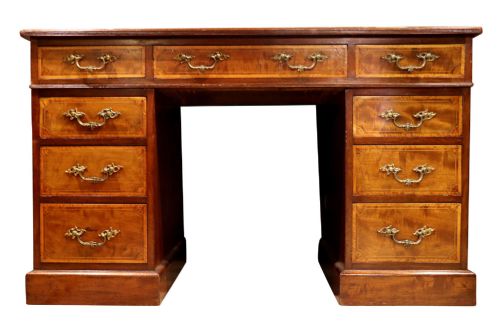
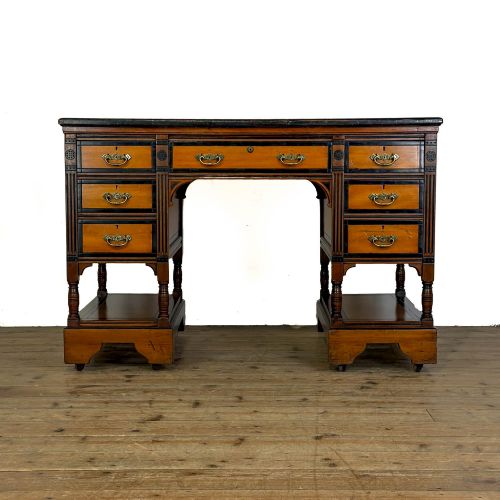
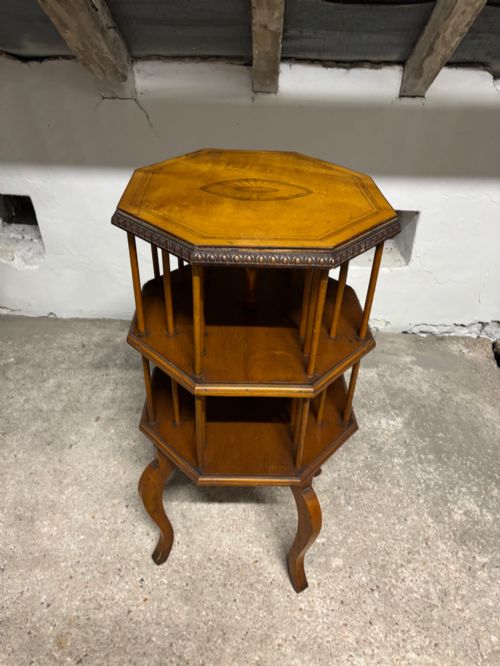
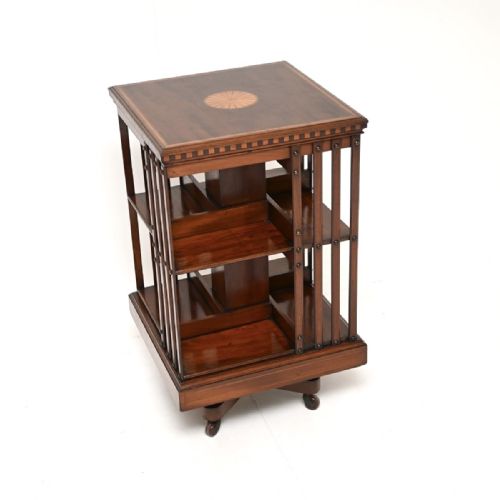


Satinwood Library Table
A satinwood library table brings a pale, luminous timber and refined grain to a study, offering a stable surface for writing and research.
Satinwood Library Table
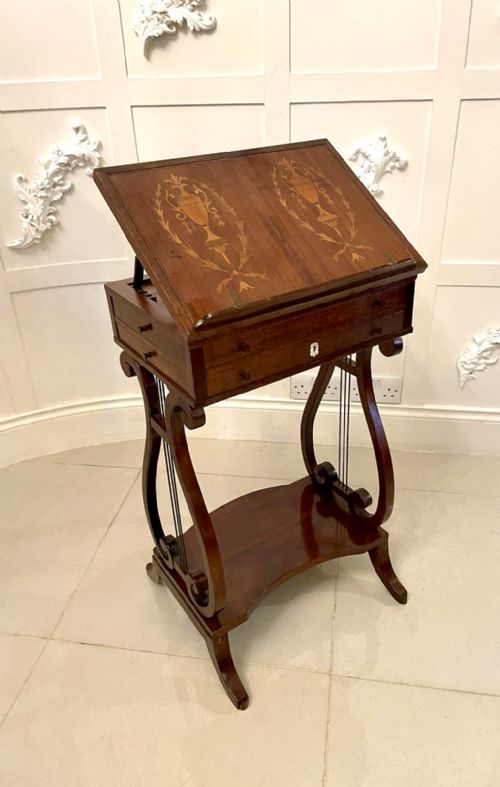
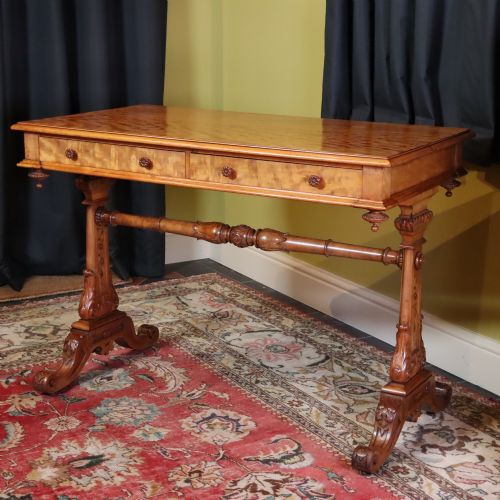
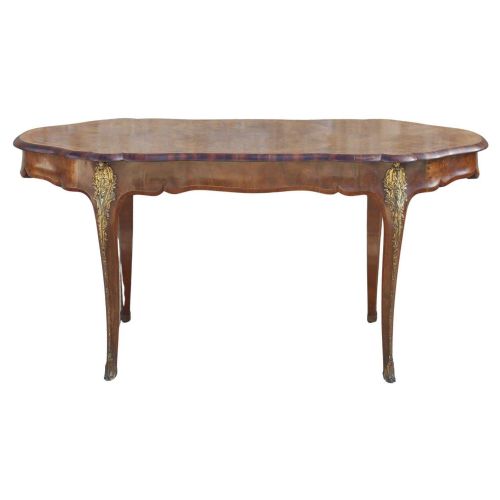
When you search for a satinwood library table, you encounter freestanding writing desks, partners desks, and centre tables designed for scholars and readers. These pieces date principally from the eighteenth and nineteenth centuries, spanning the Georgian, Regency, and Victorian eras.
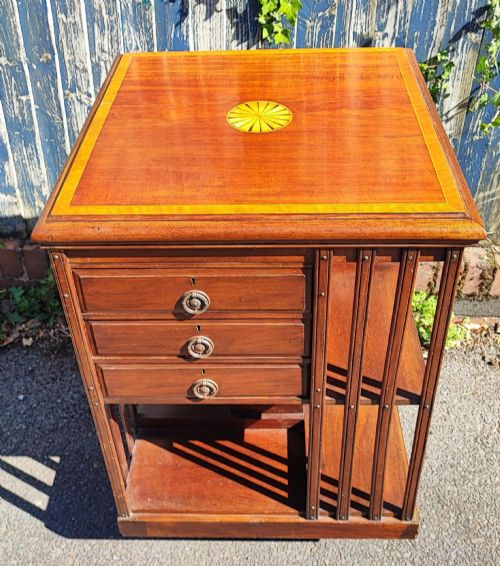
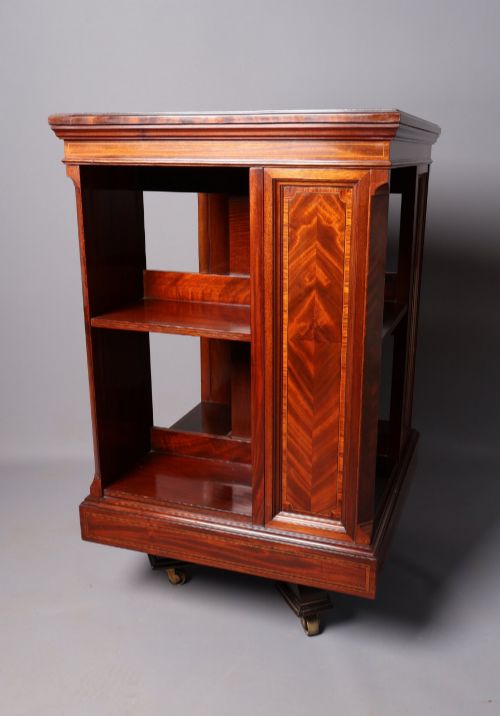
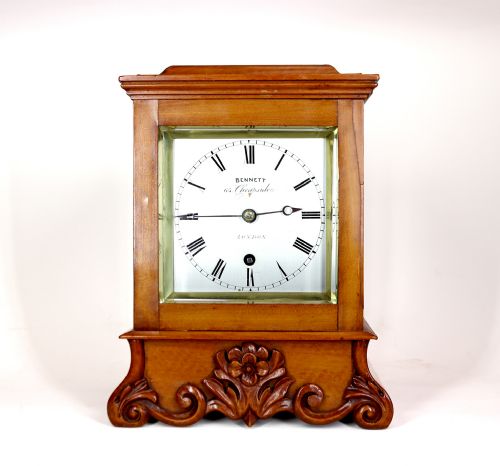
The version you are most likely to meet on this page combines a rich carcase of mahogany or rosewood with figured satinwood veneers and intricate inlay. Many examples serve double duty as writing desks or display surfaces, occasionally accompanied by revolving bookcases or small library clocks.
Originating in formal libraries and grand parlours, these tables rely on balanced proportions for placement in the middle of a room. Their freestanding nature requires finished backs and sides, distinguishing them from simple writing desks pushed against a wall.
How they were made
Cabinet makers utilised dense timbers such as mahogany, rosewood, and satin birch as foundational carcases, applying thin veneers of figured satinwood to the primary visual surfaces. This technique protected scarce exotic woods while creating large expanses of pale, shimmering grain.
Inlay work involved contrasting strips of dark wood, brass line inlay, and marquetry motifs set flush into the timber. Joinery relied on traditional dovetailed drawers and secure mortise and tenon frames, ensuring structural longevity without modern adhesives.
Listings feature satinwood combined with mahogany, rosewood, and calamander across the 18th century, 19th century, Victorian, and Edwardian periods.
What varies in quality
The distinction between ordinary and exceptional tables rests upon the selection and matching of the satinwood veneer. Master workshops chose timber with strong chatoyancy and complex natural figuring, ensuring the surface catches the light from every angle.
Execution of the marquetry and crossbanding separates workshop standards, with finer pieces displaying razor-sharp joints and seamless transitions between contrasting woods. Original hardware, intact leather writing surfaces, and branded maker stamps elevate a piece's integrity.
Edwards & Roberts·Donald Ross·James Shoolbred·Howard & Sons·Heal & Son·Gillows
The Satinwood Library Table Glossary
- Satinwood
- A hard, yellowish timber prized for its lustrous, light-reflecting grain. It takes a high polish and serves as the primary veneer for decorative furniture.
- Crossbanding
- A border of veneer laid perpendicular to the grain of the main surface. This technique frames panels and adds visual depth to tabletops.
- Marquetry
- The art of forming decorative patterns using thin veneers of various woods. Artisans cut and fit these pieces together like a puzzle before gluing them to the substrate.
- Chain fusee movement
- A mechanical clock mechanism utilising a chain and conical pulley to maintain constant driving force as the mainspring unwinds. It ensures accurate timekeeping in library clocks.
- Partners desk
- A large double-sided writing table designed for two people to sit opposite each other. These desks feature drawers and cupboards accessible from both sides.
Satinwood Library Table: Frequently Asked Questions
How do I care for satinwood?
Keep the timber away from direct sunlight and excessive heat sources to prevent the pale veneer from darkening or splitting over time. Dust gently with a dry, soft cloth and apply a microcrystalline wax sparingly to protect the polished finish.
Avoid using modern liquid polishes or silicone sprays, as these substances can penetrate hairline fractures in the old varnish and damage the wood beneath.
Are these tables suitable for daily writing?
Many of these pieces were built precisely for daily correspondence and scholarly work, possessing sturdy frames and ample drawer space. Original leather inserts can be delicate, so some owners place a blotter on top for everyday tasks.
Checking the drawer runners and leg joints will confirm the table remains structurally sound for regular use in a modern study or office.
How do I distinguish Regency from Victorian examples?
Regency pieces often display restrained neoclassical lines, architectural proportions, and subtle brass stringing influenced by classical antiquity. They frequently date around the early nineteenth century and prioritize clean geometric shapes.
Victorian tables tend to introduce heavier proportions, exuberant marquetry, or revivalist influences such as Sheraton Revival and Aesthetic styles, reflecting evolving nineteenth-century tastes.
What is a library clock?
A library clock is a compact timepiece designed to sit quietly among bookshelves or on a desk without disturbing readers. They typically feature high-precision movements like a chain fusee to ensure reliable timekeeping in a quiet room.
Enclosed in polished satinwood or brass-mounted cases, these clocks coordinate visually with the larger desk and bookcase furniture in the room.