

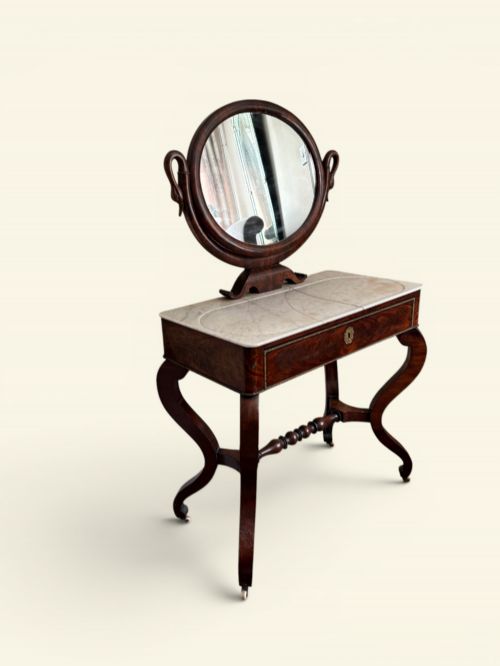
Antique Oval Desk
An antique oval desk offers a distinct writing surface, combining curved timber work with period craftsmanship for a functional workspace.
Antique Oval Desk
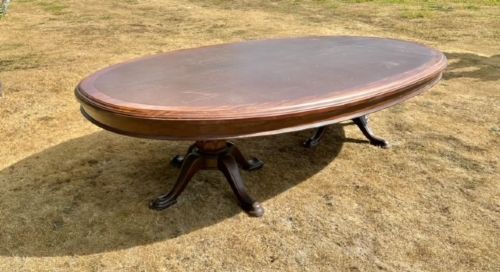
An antique oval desk provides a curved working platform distinct from standard rectangular tables, appearing across various periods including the eighteenth century and the Edwardian era. These pieces function primarily as writing tables or library tables, offering generous proportions suited to central room placement rather than sitting flush against a wall.
The materials recorded in these forms include mahogany, walnut, and satinwood, frequently paired with inset leather working surfaces. Surviving examples range from Georgian and George III creations to later Victorian and Edwardian interpretations.
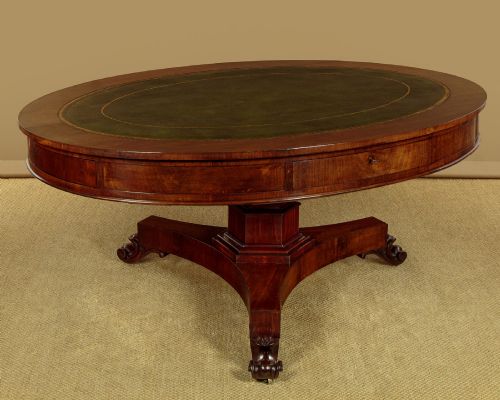
Buyers seeking an antique oval desk encounter library drum tables and writing tables constructed in mahogany or walnut. These forms reflect the decorative priorities of their respective periods, utilising Sheraton styling or simpler Edwardian inlays.
Construction and materials
Makers utilised solid timbers such as mahogany and walnut for the foundational carcases and legs, applying figured veneers to large flat surfaces and tabletops. Cabinetmakers shaped curved rails and aprons to support the characteristic rounded perimeters.
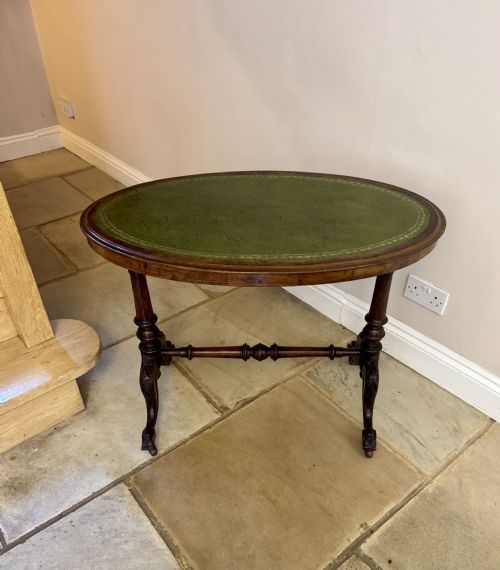
Writing surfaces frequently incorporated inset tooled leather bordered by gilt tooling, fixed to timber sub-decks. Joinery techniques included precise mortise and tenon frames, ensuring stability across wide spans without relying on central wall supports.
Current listings feature furniture and decorative objects from the 18th Century, 19th Century, Edwardian, and Victorian periods, constructed in mahogany, walnut, and satinwood.
Judging quality and finish
Quality rests in the selection of timber grain, particularly the choice of figured mahogany or matched walnut veneers across the curved top. Superior examples demonstrate crisp carving to the legs or restrained inlay work that follows the perimeter without distortion.
The integrity of the structural joints and the retention of original surface patination distinguish finer pieces from later alterations. Smooth operation of drawers and the preservation of secondary timbers underneath reveal the standard of workshop execution.
The Antique Oval Desk Glossary
- Patina
- The surface sheen and deep colour developed by timber through age, handling, and light exposure over decades. This quality indicates genuine period age rather than modern chemical finishing.
- Satinwood
- A pale, hard timber native to Ceylon and India, used extensively for fine veneers and stringing during the eighteenth and nineteenth centuries. It provides a luminous, contrasting colour against darker woods like mahogany.
- Drum table
- A circular or oval library table featuring a deep frieze containing alternating drawers and dummy drawers around the entire circumference. These pieces typically stand on a central pillar with splayed legs.
- Inlay
- A decorative technique where pieces of contrasting wood, shell, or metal are inserted into recesses cut into the primary timber surface. This creates flush geometric or floral patterns across the top and legs.
Antique Oval Desk: Frequently Asked Questions
What is an antique oval desk used for?
These tables served primarily as freestanding writing or library desks where paperwork and reading took place in the centre of a room. Their curved perimeters allowed easy movement around them in grand domestic spaces.
Today, they function effectively as standalone workspaces or centre tables in studies and living areas, accommodating laptops and writing materials while providing visual presence.
How do I identify the period of an oval desk?
Dating relies on examining the secondary timbers underneath, the construction methods used for the drawers, and the style of the leg supports. Georgian and George III pieces often show dense mahogany and hand-cut dovetails.
Later Edwardian versions frequently feature lighter satinwood framing and delicate line inlays. Comparing the wood species and decorative motifs to established historical styles clarifies the date of manufacture.
Where should I place an oval desk?
An oval desk works best positioned away from walls so the curved timber top and finished back can be appreciated from all angles. Placing it in the middle of a room highlights its freestanding design.
Ensure adequate clearance around the perimeter for chairs, as the curved shape alters the space required for seating compared to rectangular desks.
Are these desks suitable for daily work?
Most period examples provide sturdy working surfaces, though writing heights and drawer configurations vary according to their original nineteenth or early twentieth-century function. Leather inserts offer a suitable texture for writing.
Protecting the leather and polished timber surface with appropriate desk pads ensures the antique finish remains undamaged during regular daily use.