

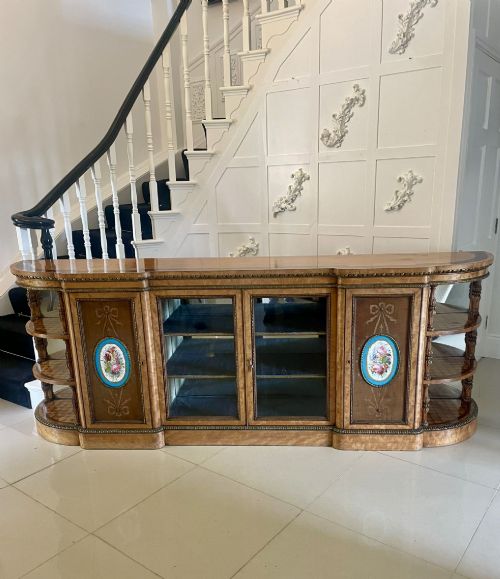
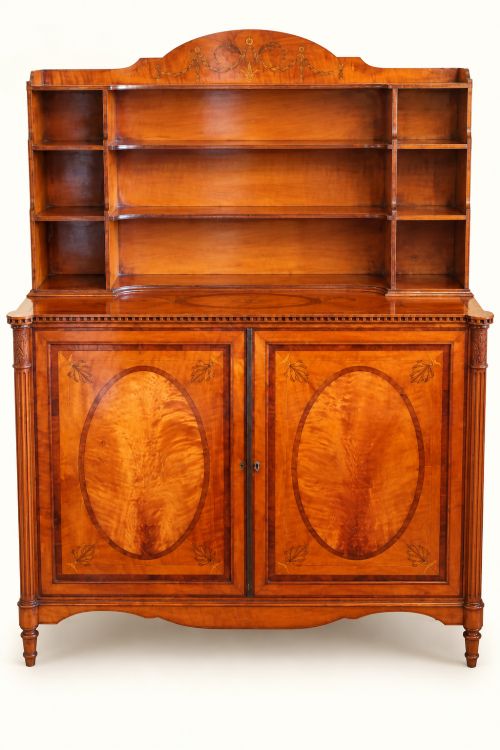
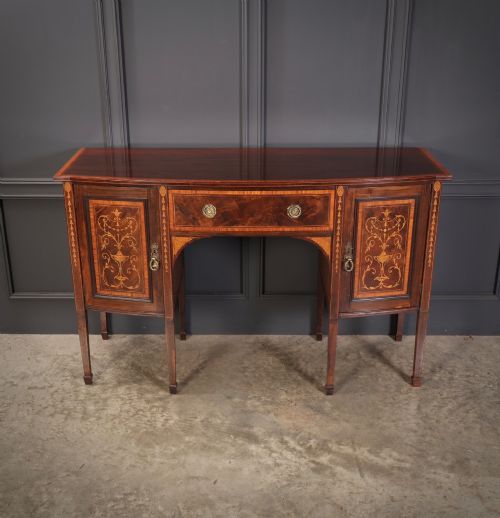
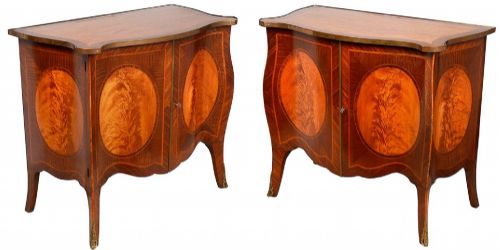
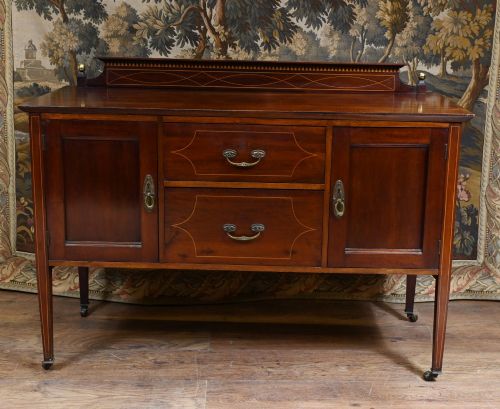
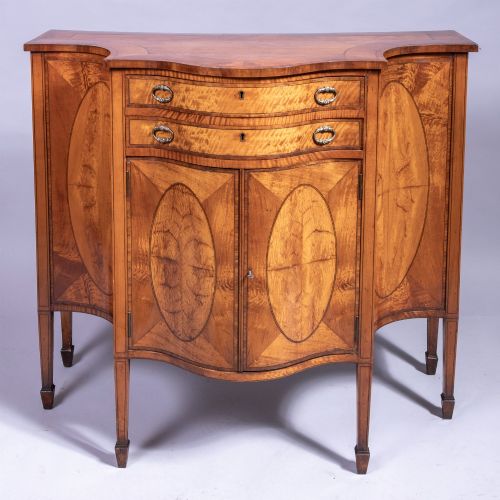


Satinwood Inlay Credenza
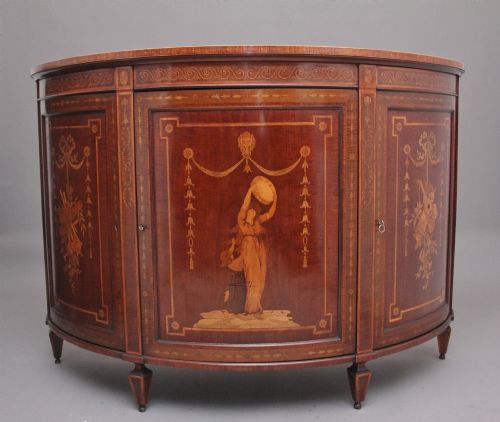
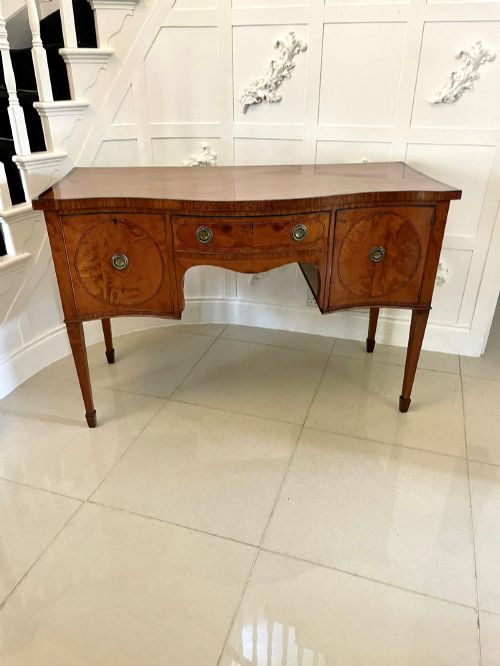
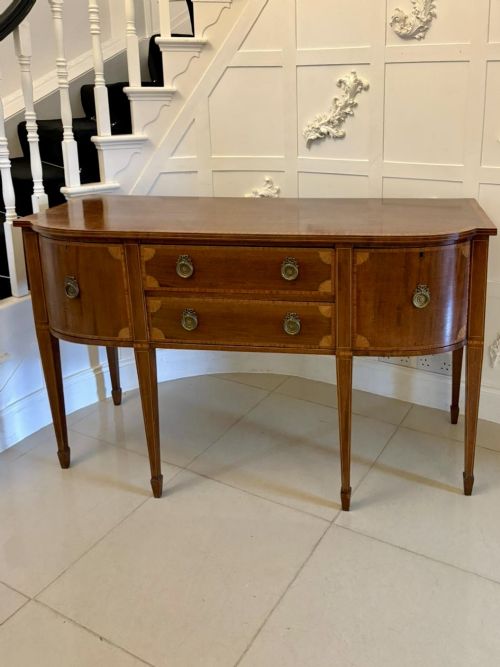
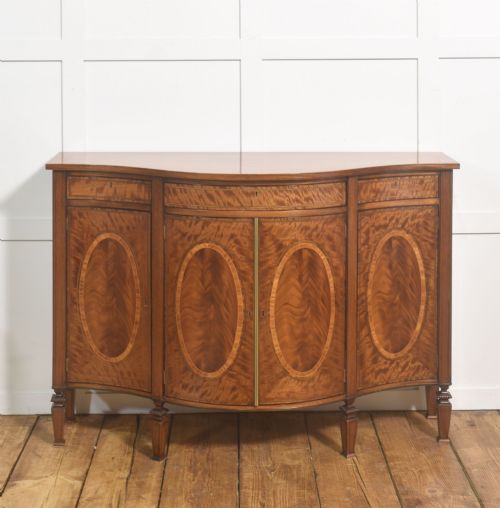
A satinwood inlay credenza brings light woods and delicate marquetry to a room, offering both display space and practical storage.
Satinwood Inlay Credenza
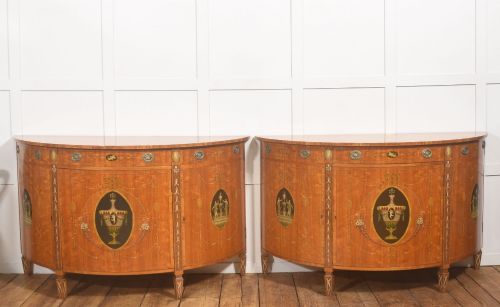
A satinwood inlay credenza is a sophisticated form of storage furniture designed to anchor a principal room, appearing frequently alongside related side cabinets, commodes and sideboards.
The pieces on this page span several key periods, reaching from the eighteenth century through the Victorian and Edwardian eras into the early twentieth century.
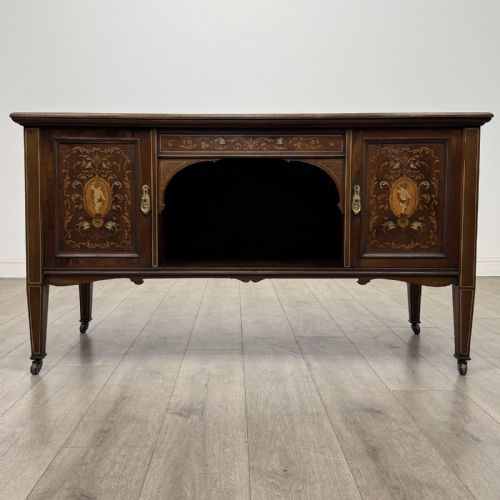
Stylistically, many examples draw on Sheraton and Neo-classical traditions, often constructed with mahogany or satinwood carcasses enriched by boxwood and contrasting timber details.
What varies in quality
Quality rests on the precision of the marquetry and the depth of figure in the chosen woods, such as flame mahogany, burr elm or satinwood.
Refined pieces show careful attention to proportions, balanced grain patterns and the integration of secondary elements like hand-painted floral panels or gilt bronze mounts.
Satinwood Inlay Credenza Retail Price Guide 2026
Typical asking prices for satinwood inlay credenza among the pieces listed under this phrase on Sellingantiques today, from the lower quarter to the upper quarter. They describe what is for sale here now, not the wider market.
Design revivals dominate the selection, with Sheraton Revival and George III styles appearing alongside Edwardian interpretations.
James Hicks·Gillows·Edwards and Roberts
The Satinwood Inlay Credenza Glossary
- Satinwood
- A hard, lustrous timber with a golden sheen, frequently used as a veneer or primary wood in fine cabinetmaking. It forms the visual core of many pieces on this page.
- Marquetry
- The art of applying decorative pieces of veneer to a structure to form intricate pictorial or geometric designs. This technique defines the surface decoration of many cabinets here.
- Crossbanding
- A strip of veneer applied across the grain of the main surface to create a contrasting border. It frames panels on drawers and tabletops.
- Ormolu
- Gilded bronze used for decorative mounts, feet and gallery rails on nineteenth-century furniture. It adds a metallic contrast to the timber surfaces.
- Demi-lune
- A half-moon shape characteristic of commodes and side cabinets designed to sit flat against a wall. This form allows the furniture to project less into the room.
Satinwood Inlay Credenza: Frequently Asked Questions
What is a satinwood inlay credenza used for?
These cabinets serve as focal points in dining rooms, drawing rooms or hallways, providing surface space for display and enclosed shelving for storage.
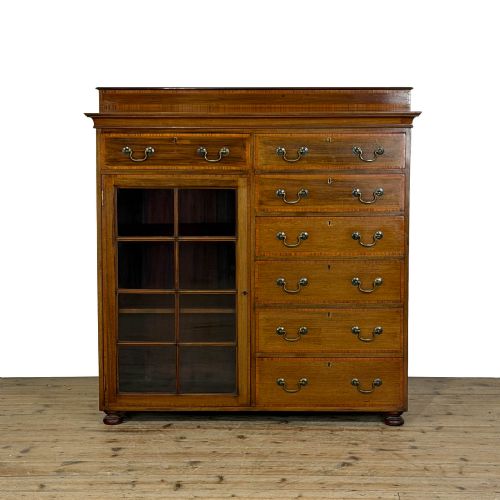
They combine decorative presence with practical utility, housing porcelain, silver or household linens behind timber or glass doors.
How do I date an inlaid credenza?
Dating relies on combining the overarching style, such as Sheraton Revival or Neo-classical, with the construction methods and secondary timbers visible inside.
Eighteenth-century examples differ in carcass assembly and timber selection from the later nineteenth-century revival pieces and Edwardian productions listed here.
Where should I place a credenza?
A credenza suits large wall spaces in formal rooms where its detailed marquetry and reflective wood surfaces can catch the light.
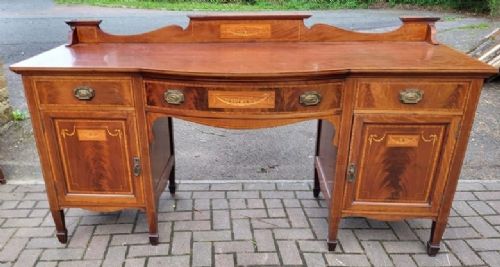
Because many examples feature finished backs or serpentine and bow-front profiles, they anchor a room well when positioned away from direct traffic routes.
What is the difference between a credenza and a sideboard?
A credenza often emphasises enclosed cabinet space and display potential, sometimes incorporating glass doors and ormolu mounts alongside wood inlay.
Sideboards frequently prioritize a long surface for serving food, paired with a combination of drawers and lower cupboards.