
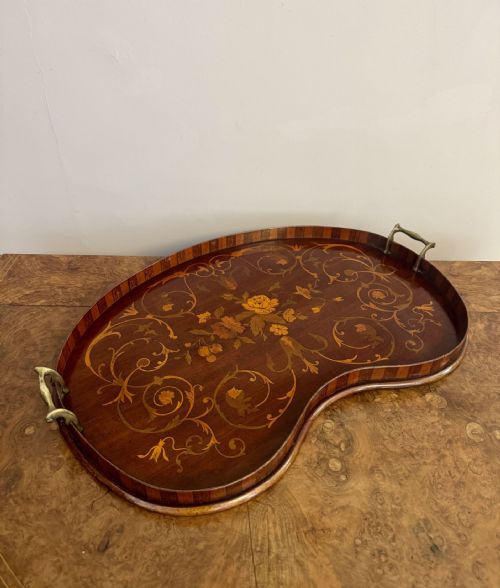

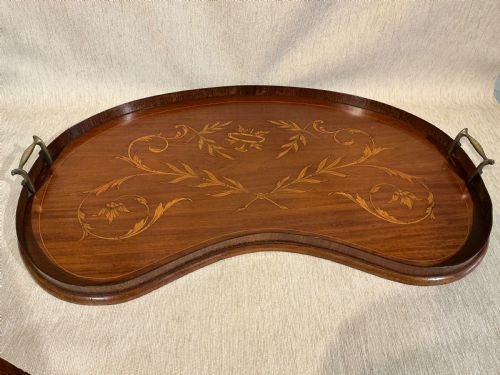


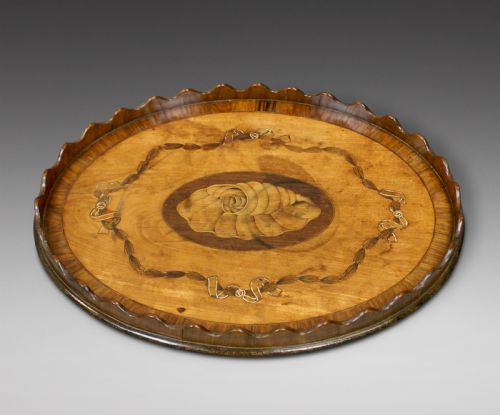


Satinwood Inlaid Tray
A satinwood inlaid tray brings crisp timber contrast and delicate period detail to a room, offering both decorative presence and a functional surface.
Satinwood Inlaid Tray
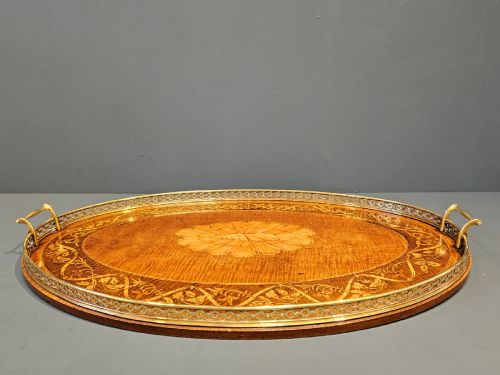
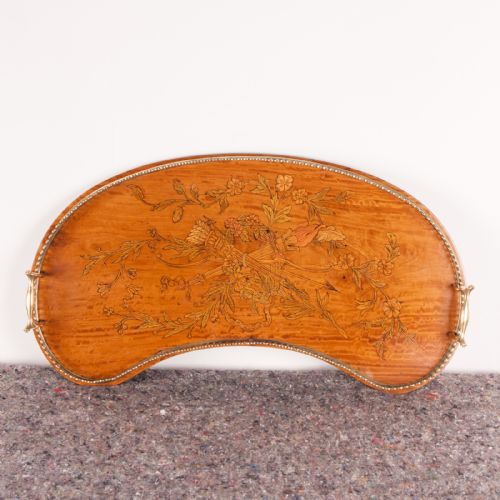
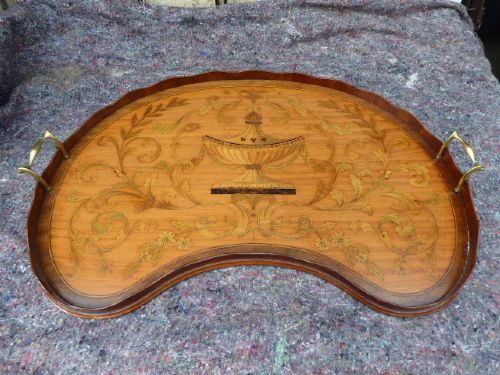
A satinwood inlaid tray combines a pale golden timber ground with contrasting wood veneers to create striking geometric or floral decorative patterns. The pieces appearing most frequently take oval and kidney shapes, often fitted with carrying handles or mounted galleries.
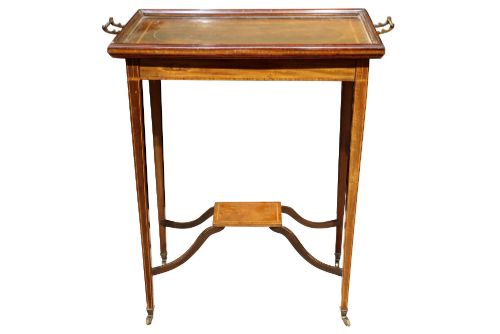
The selections span the eighteenth, nineteenth, and twentieth centuries, encompassing Victorian, Edwardian, and Sheraton Revival styles. Alongside pure serving trays, the inventory includes tray top occasional tables and etageres where the tray forms a removable top.
These items were designed to serve tea, display glassware, or sit atop a table stand as a distinct furniture element. Their construction bridges decorative arts and practical household use from the Georgian era through to the Edwardian period.
Materials and construction
Makers utilised satinwood as a primary timber or veneer, paired frequently with mahogany and coromandel to establish strong tonal contrasts. Inlays and marquetry incorporate harewood and various dyed woods to render intricate floral sprays, urns, and neoclassical ribbon motifs.
Many examples feature structural additions such as brass galleries, silver mounts, or brass handles secured to the perimeter of the timber base. Wood veneer is applied over a secondary wood core, relying on precise cabinetmaking techniques to prevent warping across the flat tray surface.
One signed nineteenth century piece accommodates pen and ink alongside silver mounts, proving that correspondence required a dedicated portable stage.
What separates the best from the rest
The precision of the marquetry and the crispness of the timber contrast determine the visual merit of an individual tray. Superior pieces display tightly fitted veneers without visible gaps or excessive filler, maintaining sharp edges along the inlaid motifs.
The choice of secondary materials and structural hardware marks the distinction between standard production and top tier pieces. Finely cast brass galleries, substantial weight, and documented maker attributions elevate certain trays into significant examples of period cabinetwork.
Edwards and Roberts·Waring and Gillow·Rupert Favell
The Satinwood Inlaid Tray Glossary
- Satinwood
- A hard, durable tropical timber known for its lustrous, golden-yellow sheen and smooth grain. It serves as the primary face veneer on many decorative trays and cabinet surfaces.
- Marquetry
- The art of applying pieces of veneer to a structural structure to form decorative patterns and pictorial designs. This technique allows makers to combine various tinted and natural woods.
- Gallery
- A raised ornamental border or railing fitted around the edge of a tray or table top. It typically consists of pierced brass, silver, or carved wood designed to prevent items from sliding off.
- Sheraton Revival
- A late nineteenth and early twentieth century design movement inspired by the neoclassical furniture of George III designer Thomas Sheraton. Pieces from this revival heavily feature satinwood, classical urns, and fine inlay.
- Etagere
- A piece of furniture consisting of a set of open shelves or trays for displaying small objects. In the context of these listings, it often combines a removable tray top with a supporting stand.
Satinwood Inlaid Tray: Frequently Asked Questions
How were satinwood trays used?
These trays served primarily for carrying tea ware, displaying decanters, or holding letters in affluent nineteenth century drawing rooms. Many versions were also placed onto folding stands or dedicated tables to function as permanent display surfaces.
Over time, their role shifted from domestic utility to purely decorative display pieces. Today, collectors utilise them on coffee tables, sideboards, or mounted on stands to showcase the figured timber.
How do I date a satinwood tray?
Dating relies on examining the timber preparation, the style of the inlay, and the construction of the base board. Eighteenth century examples tend to feature hand-sawn secondary woods and simpler, understated neoclassical motifs, while Victorian and Edwardian pieces often display machine-cut veneers and heavier brass mounts.
Makers' stamps or brass plaques, where present, provide direct confirmation of the workshop and production era. Comparing the marquetry style against known Sheraton Revival patterns also helps narrow the manufacturing decade.
Are these trays suitable for daily use?
While structurally sound, antique satinwood trays feature delicate nineteenth century veneers and polished finishes that react poorly to moisture and heat. Placing hot teapots or spilled liquids directly onto the surface can lift the old glue and stain the wood.
Gentle use for display or light service is appropriate provided coasters or liners are employed. Regular dusting with a dry cloth keeps the satinwood lustre intact without risking the historic finish.
What is the difference between a tray and an etagere?
A tray is a portable flat surface with raised edges designed for carrying or placing items. An etagere incorporates multiple tiers or a dedicated stand designed to remain stationary as a piece of furniture.
Several listings feature tray top tables where the tray lifts off its stand entirely. This dual functionality allowed owners to use the top independently for serving before returning it to the frame.