


Satinwood Inlaid Console
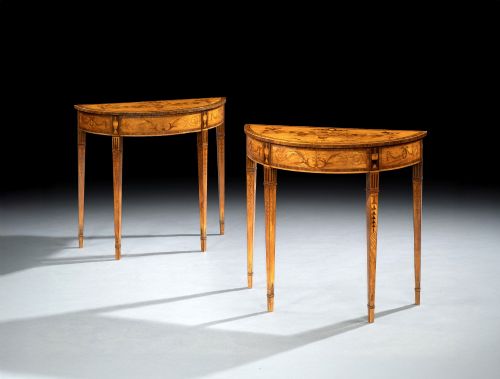
A satinwood inlaid console brings light, finely figured timber and delicate neoclassical ornament into a room.
Satinwood Inlaid Console
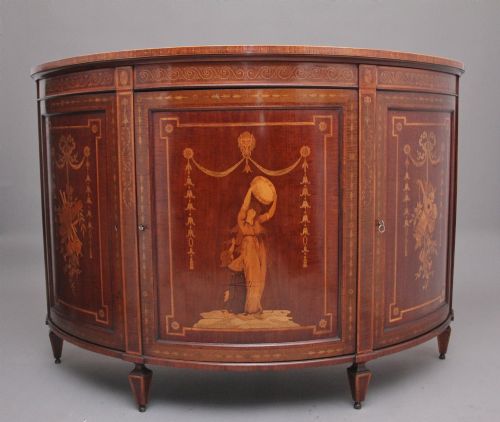
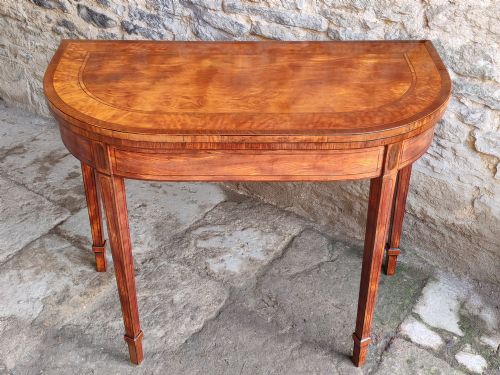
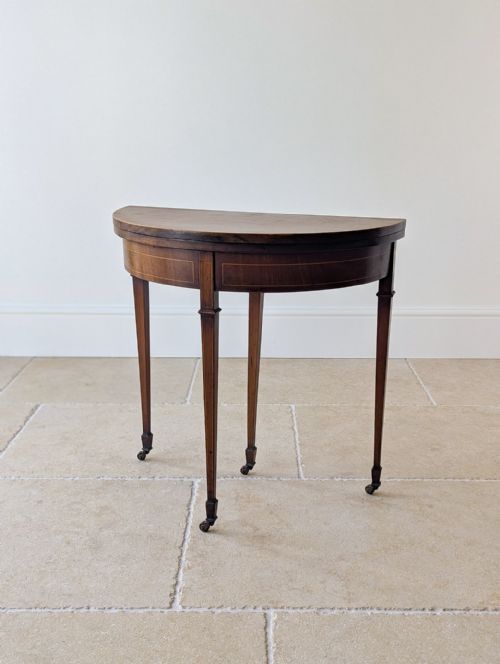
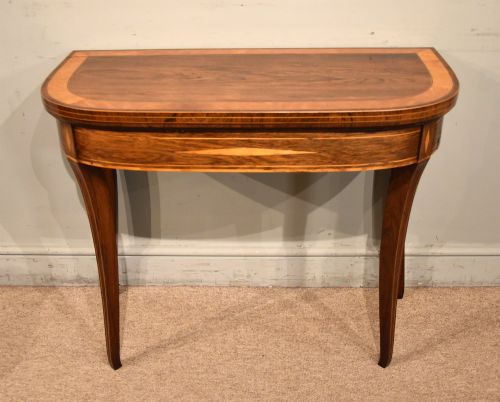
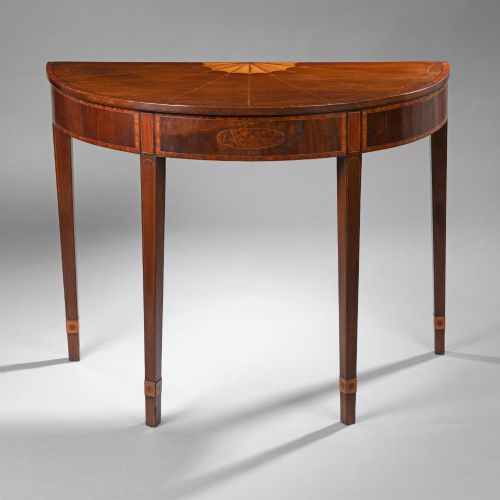
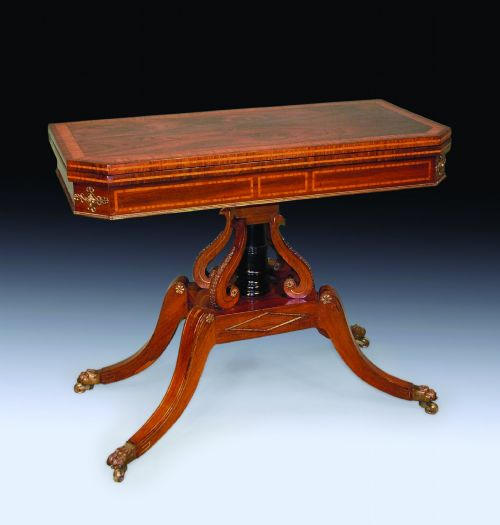
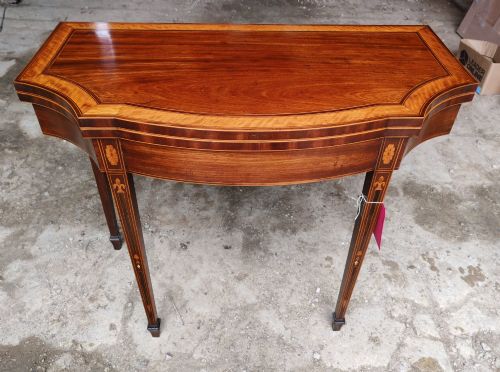
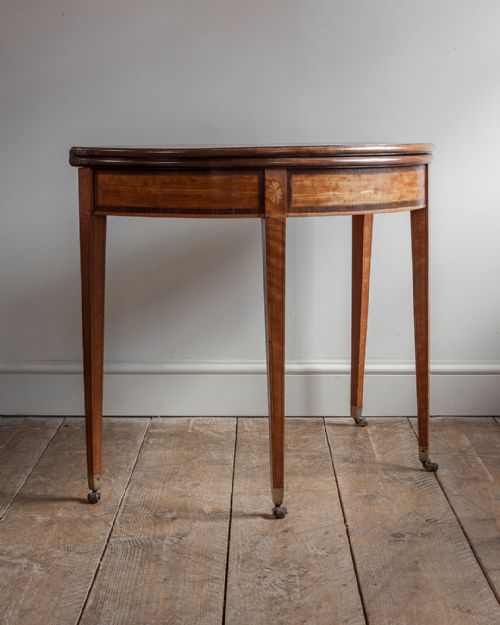
When searching for a satinwood inlaid console, buyers encounter a refined category of antique furniture spanning the Georgian, Regency, and Edwardian periods. These pieces frequently take the form of demi-lune or semicircular tables designed to stand flat against a wall, though many double as functional card, tea, or games tables with fold-over leaves.
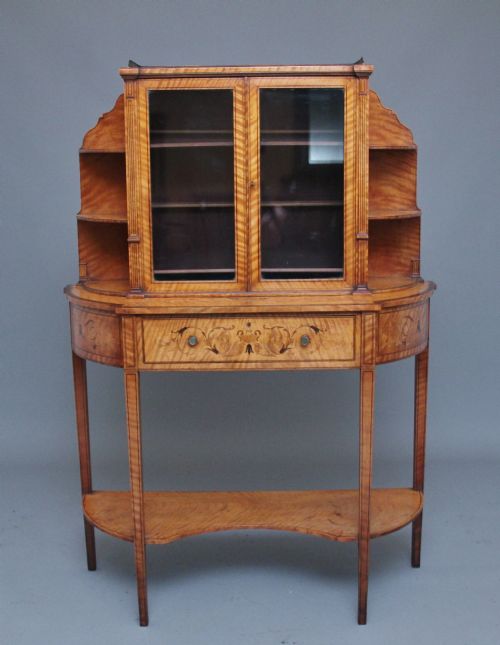
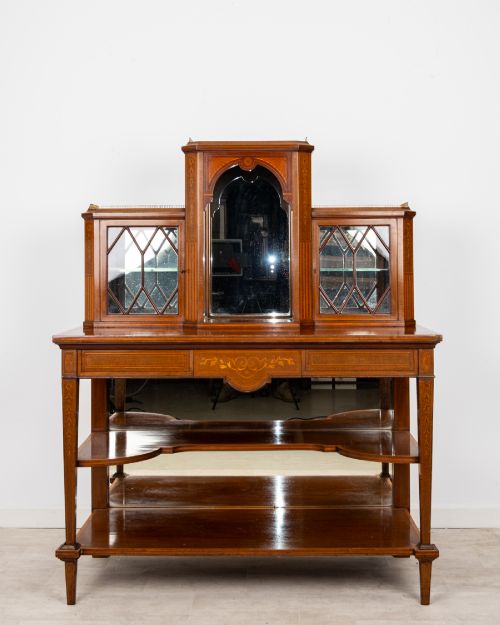
The selections on this page are dominated by 18th-century George III pieces and later Edwardian Sheraton Revival interpretations. Alongside standard console and side tables, the listings include related forms such as display cabinets, washstands, and writing desks that share the same characteristic use of satinwood and marquetry.
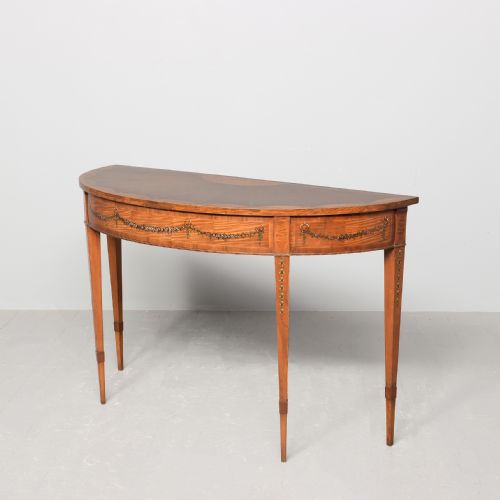
Originating primarily from British workshops, these tables showcase the transition from heavy dark woods to lighter, more decorative surfaces. The semicircular demi-lune shape remains the most common format, offering a compact footprint paired with elaborate inlaid decoration across the top and apron.
Materials and Construction Techniques
Cabinetmakers built these pieces using a foundation of solid mahogany or pine, overlaid with finely figured satinwood veneers. The primary timber is frequently enhanced by contrasting border woods such as rosewood, ebony, boxwood, and padouk, which frame the main panels.
Surface ornament relies heavily on marquetry and parquetry inlays, creating floral, classical, or geometric motifs embedded directly into the wood. Crossbanding and stringing lines divide the top surfaces into orderly geometric sections, while occasional examples incorporate hand-painted details alongside the wood inlay.
The listings span the 18th Century, 19th Century, Georgian, Regency, Victorian, and Edwardian periods, uniting satinwood, mahogany, rosewood, and ebony.
Determinants of Quality and Craftsmanship
Quality in these pieces rests upon the precision of the cabinetwork and the selection of the timber veneers. Superior examples display tightly figured, shimmering satinwood matched symmetrically across the top, coupled with crisp, uninterrupted inlay work using contrasting hardwoods like boxwood and ebony.
The structural integrity of the folding mechanisms on card and tea tables also dictates the tier of the piece. Fine tables feature snug joints, balanced pedestals or sturdy swing legs, and original brass hardware that integrates cleanly with the surrounding woodwork.
Edwards and Roberts
The Satinwood Inlaid Console Glossary
- Demi-lune
- A half-moon or semicircular shape common in console and card tables designed to sit flush against a wall.
- Crossbanding
- A narrow strip of veneer applied to the border of a table top, run with the grain running perpendicular to the centre panel.
- Marquetry
- Decorative patterns formed by the insertion of different coloured woods, veneers, or shell into a solid wood backing.
- Stringing
- Thin, contrasting lines of inlay used to outline drawers, table edges, and geometric panels.
- Fold-over table
- A table featuring a hinged top that opens to double its surface area, frequently concealing a baize-lined games surface underneath.
Satinwood Inlaid Console: Frequently Asked Questions
What is a satinwood inlaid console?
A satinwood inlaid console is a decorative wall table constructed from or veneered in light satinwood, featuring contrasting wood inlays and geometric stringing. These tables date primarily from the Georgian, Regency, and Edwardian eras.
They were designed primarily for formal reception rooms, often doubling as card or tea tables with folding leaves to accommodate guests.
How were these tables used historically?
Historically, console tables served a decorative and display function in grand hallways and drawing rooms, holding lamps, vases, or ornaments. Versions with fold-over tops were opened up in the evening for card games or social tea service.
Their slim profile allowed them to occupy narrow wall spaces without obstructing foot traffic in formal interiors.
How do I date a satinwood console?
Dating relies on examining the underlying construction timber, the style of the inlay, and the overall proportions of the piece. George III and Sheraton pieces from the late 18th century tend to feature hand-cut dovetails, subtle classical motifs, and dense mahogany secondary woods.
Edwardian Sheraton Revival pieces from around 1900 often show machine-cut precision, lighter secondary timbers, and brighter, more uniform satinwood veneers.
How do I care for satinwood furniture?
Satinwood furniture requires protection from direct sunlight and extreme humidity fluctuations to prevent the delicate veneers from fading or lifting. Regular dusting with a soft, dry cloth maintains the finish without stripping the historical polish.
Waxing should be done sparingly using a traditional beeswax formulation to nourish the timber and preserve the subtle lustre of the wood.