
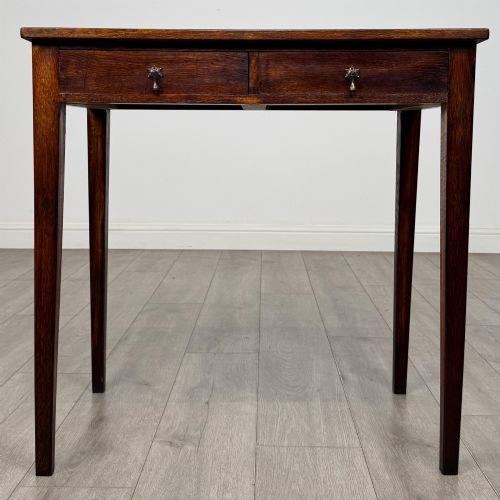
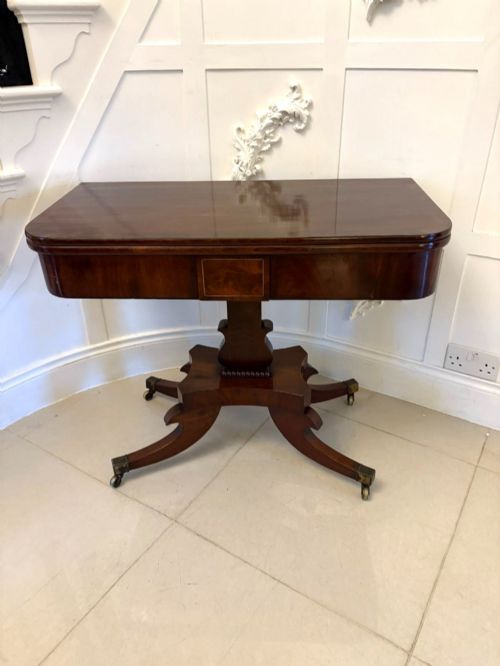
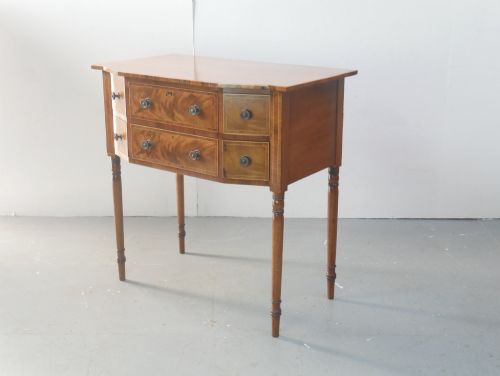
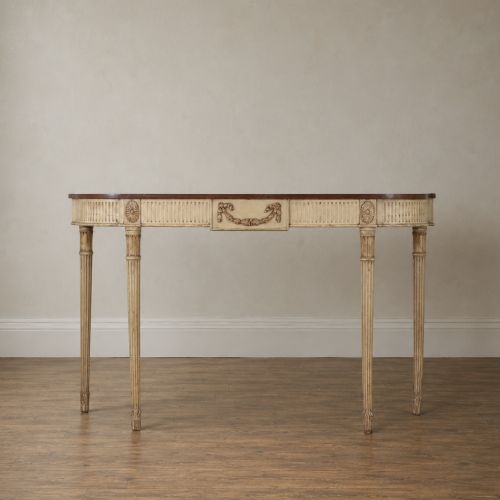
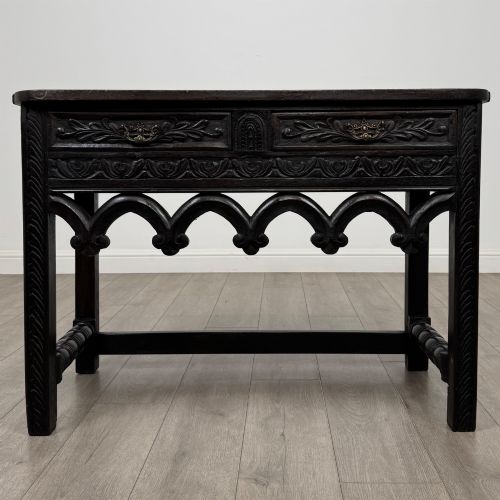
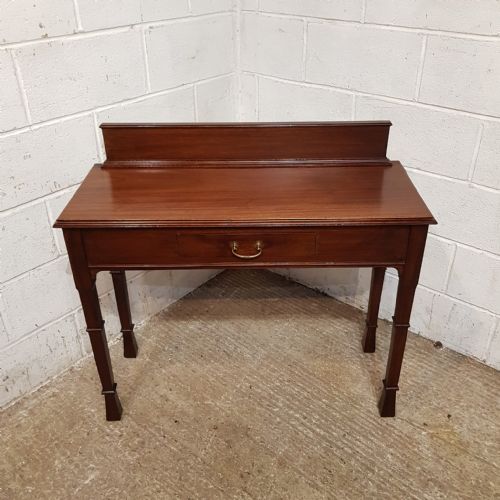
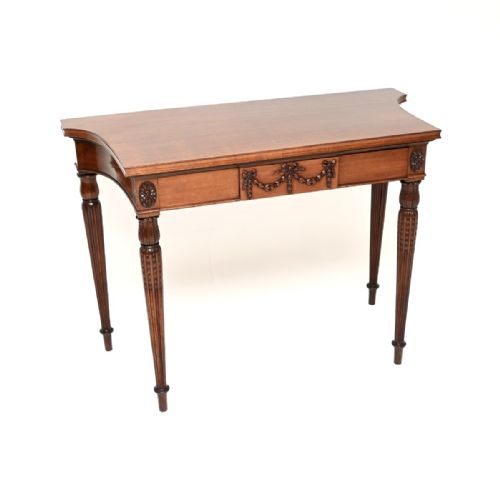
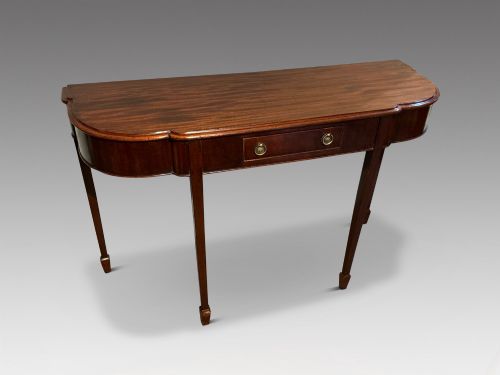
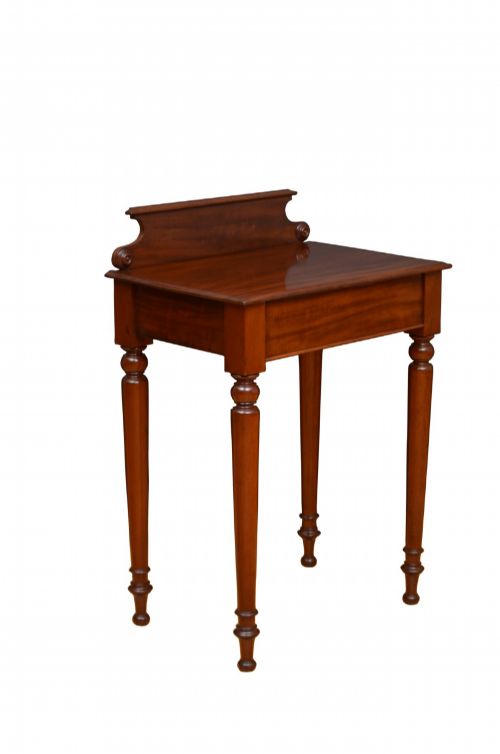
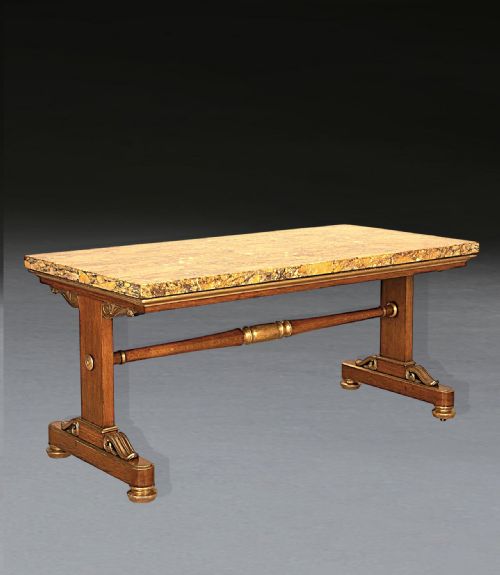
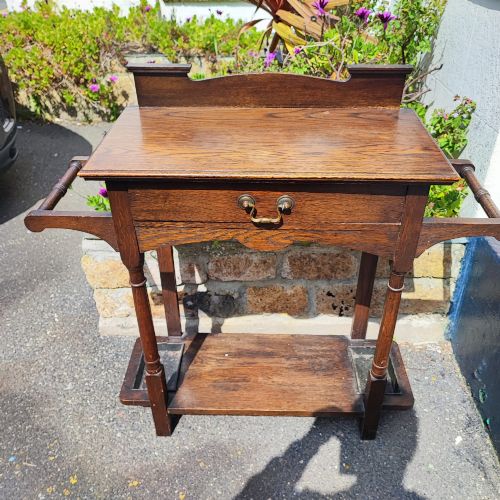
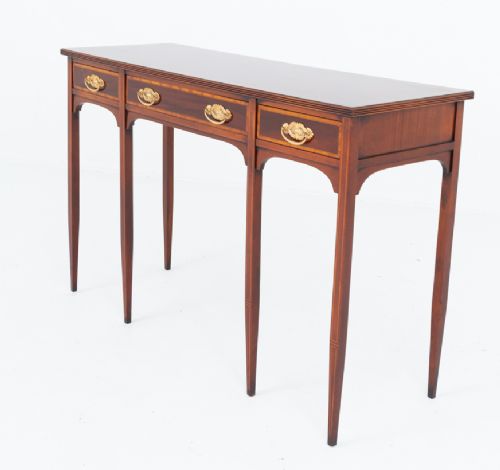


Edwardian Entry Table
An edwardian entry table is a slender hall or console piece designed to stand neatly against a wall.
Edwardian Entry Table
The edwardian entry table search phrase brings together narrow console tables, hall tables, and side pieces designed for narrow spaces. Pieces matching this description appear across periods including the nineteenth century and the Edwardian era, alongside revival styles like Sheraton Revival and Georgian Style.
You will most frequently meet mahogany, oak, and satinwood examples, often constructed as console or hall tables with drawers. Formats range from demi-lune shapes to rectangular surfaces, sometimes paired with matching wall mirrors or integrated as hall stands.
Materials and construction
Makers utilised solid timbers and veneers such as mahogany, burr walnut, satinwood, and oak, frequently adding intricate marquetry and inlay work. Marble tops appear alongside timber surfaces, supported by brass fittings and giltwood elements.
Structural methods involve classical revival joinery, incorporating carved details, painted finishes, and gilt accents. Pieces reflect specific design revivals, drawing on Georgian, Regency, and Gothic traditions.
Listings feature mahogany, oak, satinwood, walnut, and rosewood, alongside marble tops and brass hardware.
Distinctions in quality
Quality rests upon the selection of timber figures, such as figured mahogany or burr walnut, and the precision of inlaid marquetry. Finer examples display crisp hand-carving and careful integration of secondary materials like marble and brass.
The distinction between standard production and top-tier workshop output lies in the crispness of the joinery and the restraint of the revival styling. Maker attribution, such as labels or stamps from established firms, separates standard pieces from notable commissions.
Druce and Co·Maple and Co·Edward and Roberts
The Edwardian Entry Table Glossary
- Console table
- A table designed to be fixed against a wall, frequently supported by front legs or brackets.
- Demi-lune
- A half-moon shape commonly utilised for tabletops and cabinets intended to sit flush against a wall.
- Marquetry
- Decorative patterns formed by inserting pieces of wood, veneer, or shell into a timber surface.
- Satinwood
- A lustrous yellow-brown timber utilised for fine cabinetmaking and decorative inlay work.
Edwardian Entry Table: Frequently Asked Questions
Where should an entry table be placed?
These narrow tables suit hallways, corridors, and reception spaces where floor space is limited. Their shallow depth allows them to sit against walls without obstructing passage.
They often function as a surface for small items like keys or correspondence, and many are paired with matching wall mirrors to complete a hall arrangement.
What woods were used for these tables?
Mahogany, oak, satinwood, and walnut form the primary timber framework of these pieces. Cabinetmakers frequently selected figured variations and burr walnut for decorative impact.
Inlay work in contrasting timbers and delicate stringing details are common across Edwardian and revival examples.
How do I identify the style?
Stylistic clues include decorative motifs drawn from Georgian, Regency, and Sheraton revivals. Look for characteristics such as painted surfaces, giltwood accents, and neoclassical details.
Construction methods and timber selection help distinguish period pieces from later revival interpretations.
Do these tables include storage?
Many examples feature a single drawer or twin drawers integrated into the frieze beneath the top surface. Others take the form of open console tables or hall stands incorporating umbrella storage.
Drawer configurations vary depending on whether the piece was designed strictly as a display console or a functional hall table.