



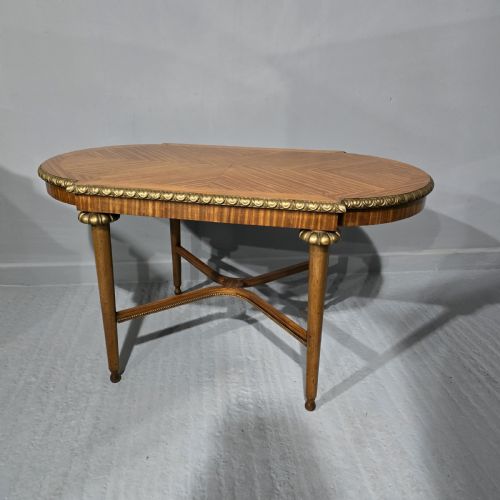

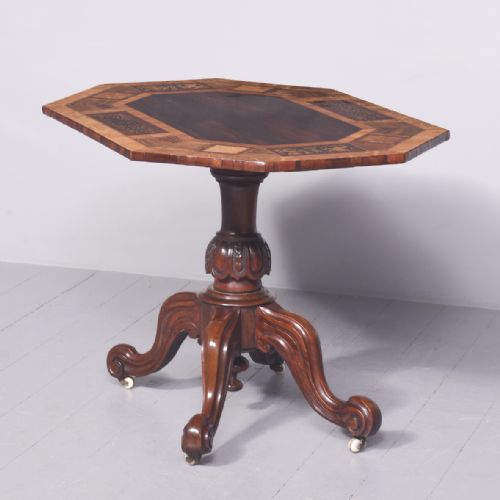

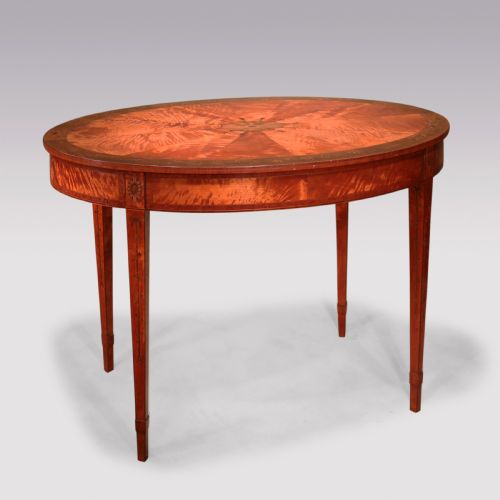

Satinwood Inlaid Centre Table
A satinwood inlaid centre table brings a bright, figured timber surface into a room, offering both display space and refined period character.
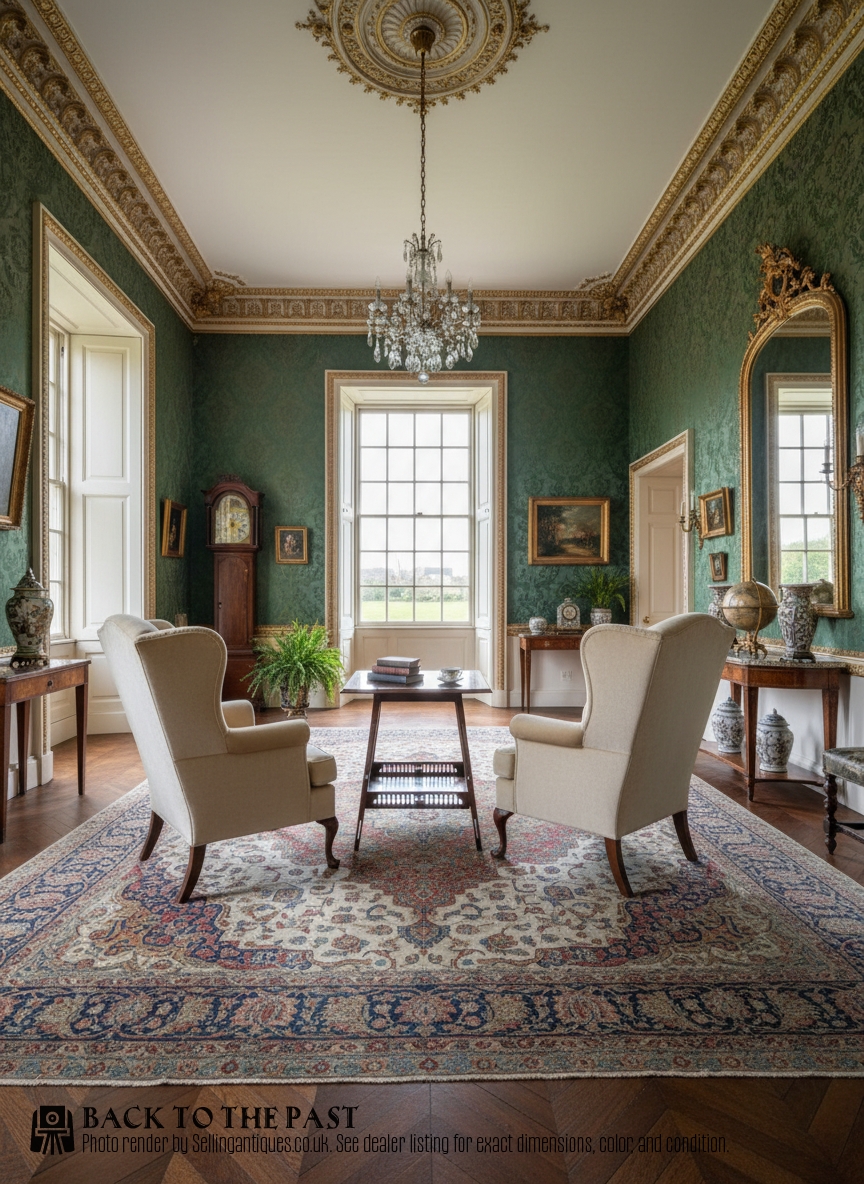
Satinwood Inlaid Centre Table
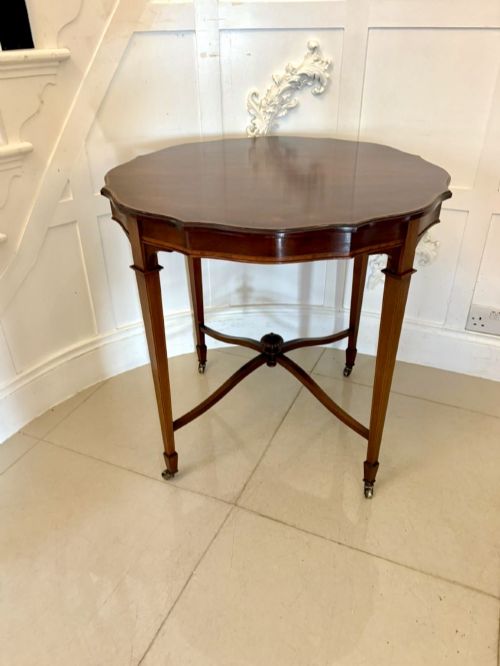
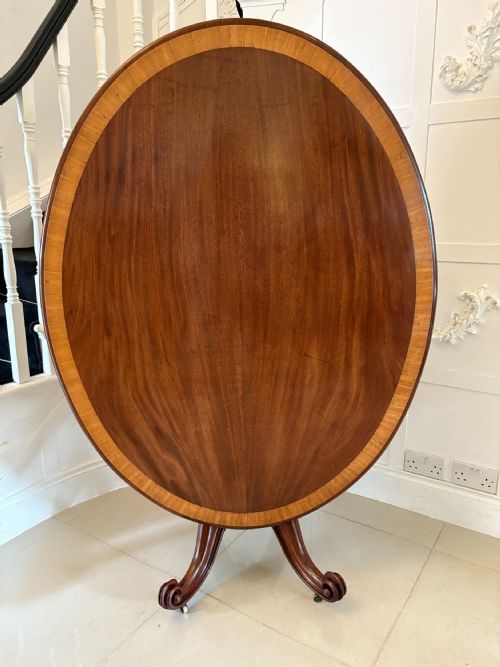
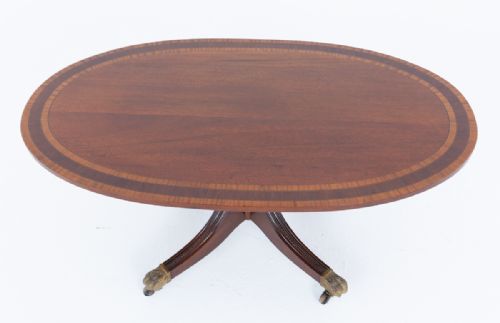
A satinwood inlaid centre table is a freestanding piece designed to sit centrally within a room rather than against a wall. These tables appear frequently from the Victorian, Edwardian, and Regency periods, often taking circular, oval, or octagonal forms.
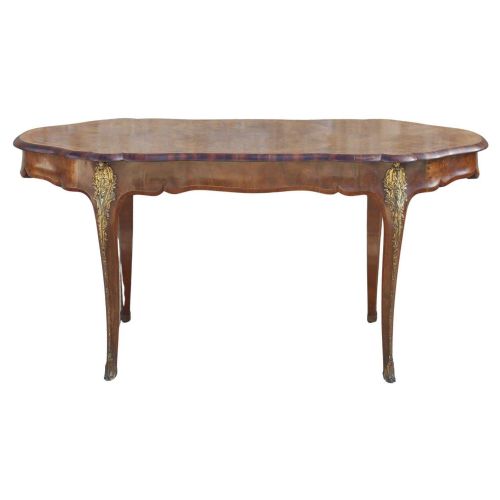
Makers produced these items in various styles, including Sheraton Revival, French Louis XV, and Regency Revival. Common variations include occasional tables, lamp tables, and larger library or exhibition pieces constructed with distinct timber tops.
Materials and construction methods
Cabinet makers utilised satinwood and mahogany as primary timbers, frequently combining them with rosewood, fruitwood, and boxwood for contrasting banding. Marquetry inlay techniques introduced intricate floral or geometric patterns onto the table surfaces.
Additional ornamentation involved brass, ormolu mounts, and ebony stringing to accentuate the edges and legs. Structural supports range from cabriole legs to pedestals and multi-tiered frameworks.
Makers occasionally hid their stamps inside drawer runners, leaving a tiny signature for future finders to discover.
Assessing craftsmanship and finish
Quality rests upon the selection of timber figures, where heavily figured satinwood and finely executed marquetry distinguish superior pieces from plain examples. The precision of the inlay work and the integration of secondary woods indicate the skill of the workshop.
Exhibition quality items display refined details such as gilt bronze mounts, hand-painted decoration, or stamped maker details on drawers. The stability of the frame and the crispness of the carving on cabriole or tapered legs further separate standard production from high-grade commissions.
Collinson & Lock
The Satinwood Inlaid Centre Table Glossary
- Satinwood
- A durable hardwood known for its golden-yellow colour and lustrous, satin-like sheen. Cabinet makers prized it for decorative veneers and stringing.
- Marquetry
- The art of applying pieces of veneer to a structure to form decorative patterns and pictures. Craftsmen used contrasting timbers like boxwood and fruitwood for shading.
- Sheraton Revival
- A late nineteenth and early twentieth-century design movement inspired by the neoclassical furniture of George Sheraton. It relies on light satinwood, painted details, and tapered legs.
- Ormolu
- Gilded bronze used for decorative mounts and feet on nineteenth-century furniture. It provides a bright metallic contrast against dark or figured timber.
- Guerridon
- A small freestanding occasional table, often supported by a central column or figures. Originating in seventeenth-century France, the form persisted into later revival periods.
Satinwood Inlaid Centre Table: Frequently Asked Questions
Where should a centre table go?
A centre table stands freely in the middle of a room, allowing access from all sides. It functions well in large hallways, libraries, or living spaces as a focal point.
Historically, these pieces held lamps, books, or decorative objects rather than serving heavy daily dining use.
How do I date a satinwood table?
Dating relies on combining stylistic clues with construction methods and timber choices. Edwardian pieces often show Sheraton Revival influences, while nineteenth-century versions incorporate denser marquetry or ormolu mounts.
Examining the secondary timbers underneath and inside drawers provides further chronological evidence.
What is the difference between satinwood and mahogany?
Satinwood offers a pale, golden-yellow tone with a natural sheen, whereas mahogany provides a deeper reddish-brown hue. Makers frequently combined both timbers, using mahogany for the main structure and satinwood for contrasting veneers.
This pairing became a hallmark of late Victorian and Edwardian revival furniture.
Can I use an antique table daily?
These tables withstand normal everyday use, provided owners protect the polished timber surfaces from moisture and heat. Using coasters and table runners preserves the delicate marquetry and polish.
Regular polishing with appropriate wax maintains the lustre of the satinwood veneer.