

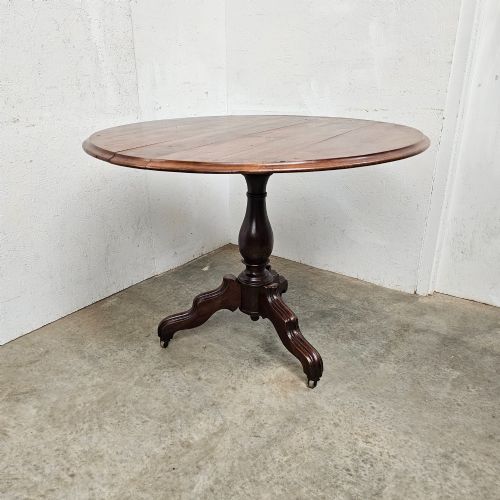


Edwardian Mahogany Centre Table
An edwardian mahogany centre table brings freestanding elegance to a room, offering a functional surface designed to be appreciated from every surrounding angle.
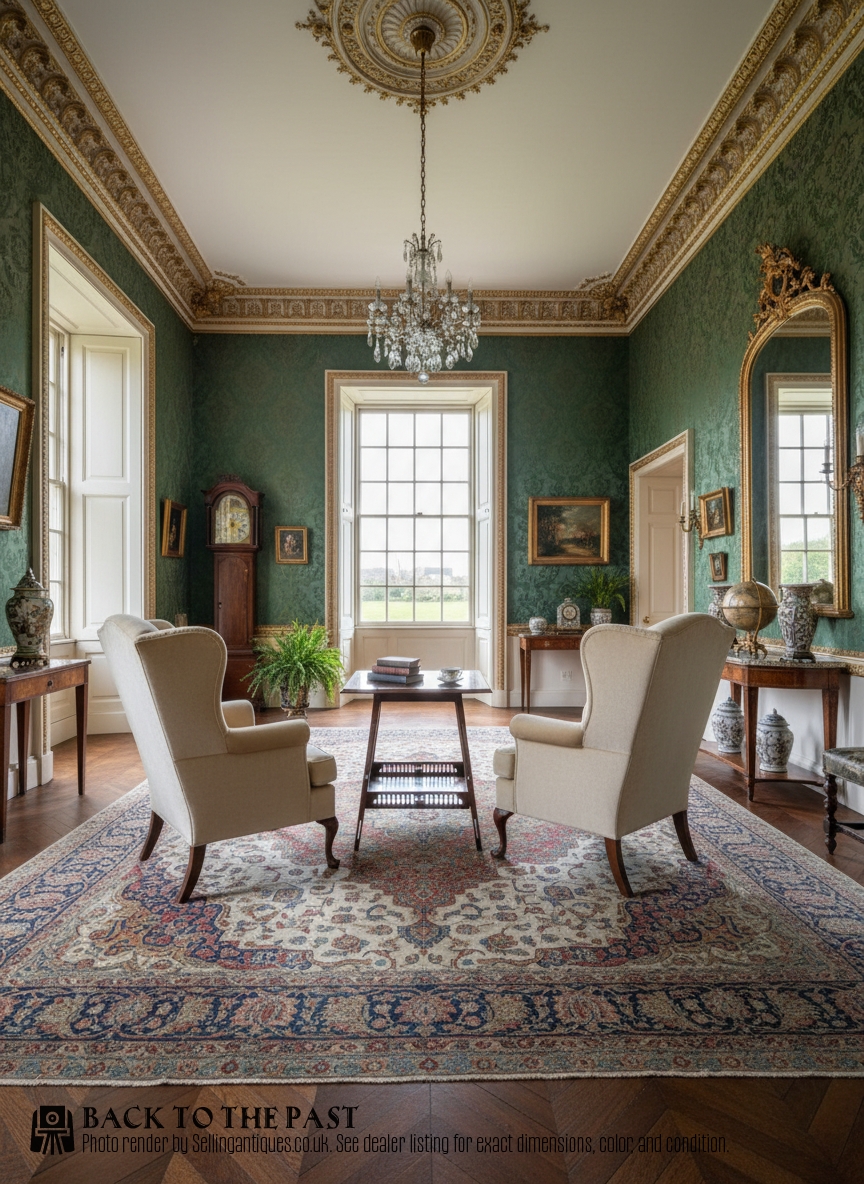
Edwardian Mahogany Centre Table
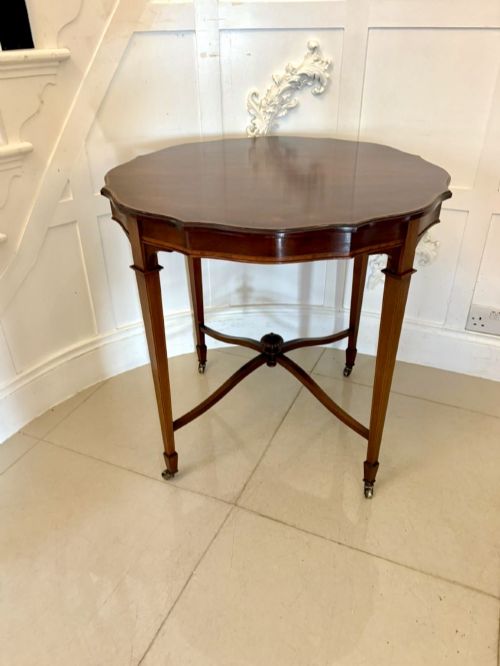
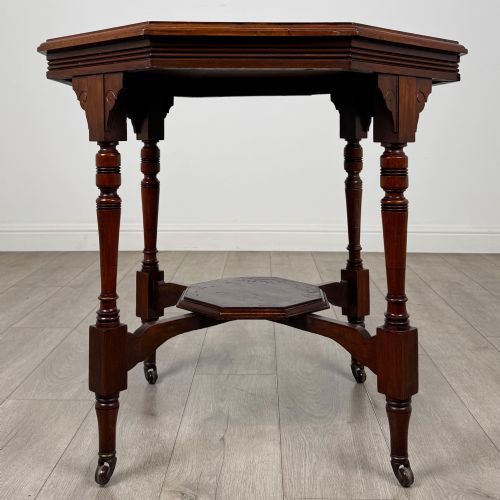
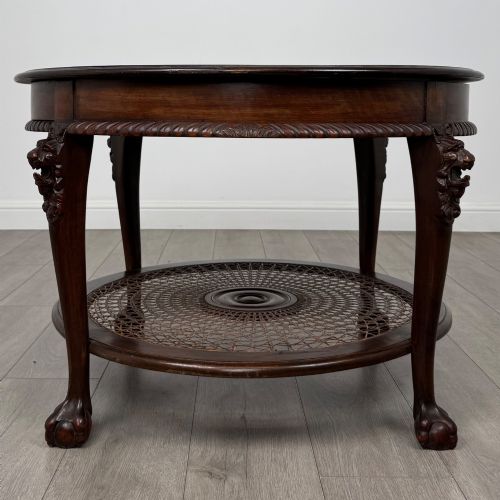
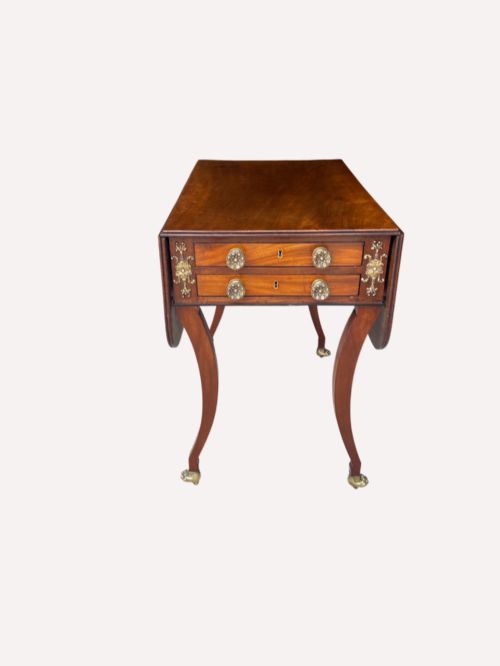
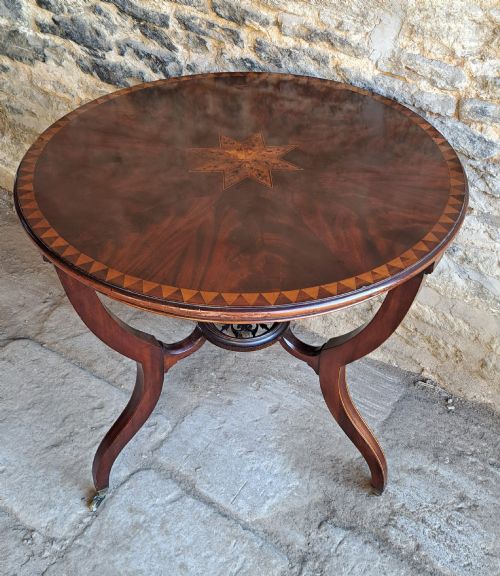
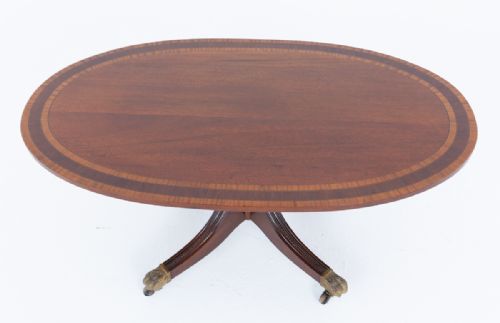
An edwardian mahogany centre table represents a versatile form designed to sit independently in open space rather than against a wall. The pieces appearing most frequently across these records combine Edwardian manufacture with earlier stylistic revivals, taking circular, square, oval or octagonal shapes.
Makers of the period produced these pieces primarily for principal reception rooms, utilising rich mahogany timbers often accented with lighter wood inlays. Buyers encounter forms ranging from compact lamp tables to large library and drum tables equipped for central placement.
How they were made
Cabinet makers built these tables using solid mahogany and figured mahogany veneers applied to stable secondary timbers. Construction frequently incorporates contrasting stringing and marquetry in satinwood, boxwood and ebony.
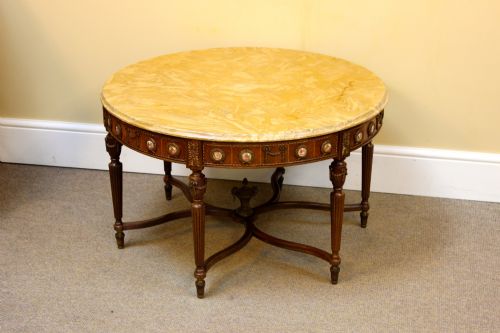
Surface enrichment often includes brass mounts, leather inserts and marble tops, supported by turned pedestals, tripod legs or tapering square supports characteristic of revival idioms.
Some Edwardian tables incorporate revolving tops, allowing books or tea services to pivot gracefully toward whichever seated guest requires them.
What varies in quality
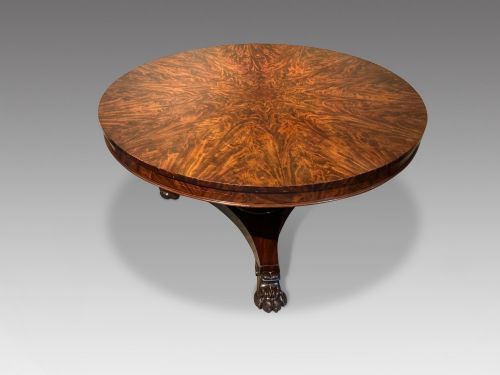
Quality separates ordinary utility pieces from exhibition-standard works through the selection of timber and the precision of enrichment. Figured flame mahogany veneers, finely executed satinwood inlay and hand-carved details elevate certain examples far above plain production models.
Structural integrity and the crispness of joinery further distinguish the tier of craftsmanship. Superior proportion and integrated brass or marble elements demonstrate the deliberate attention given by high-tier workshops.
Edwards & Roberts·Maples & Co
The Edwardian Mahogany Centre Table Glossary
- Crossbanding
- A border band of veneer laid so the grain runs perpendicular to the main surface. This technique frames the top of a table with contrasting grain direction.
- Marquetry
- Elaborate pictorial or geometric inlay using various coloured woods. Artisans assemble thin veneer pieces to form decorative motifs on table tops.
- Drum table
- A circular library or centre table with a deep skirt containing drawers. These heavy pieces typically rest on a central pillar and splayed legs.
- Tripod table
- A small freestanding table supported by a pillar above three radiating legs. This form gained popularity for occasional use in sitting rooms.
- Satinwood
- A durable, lustrous yellowish timber used for contrasting inlay. It provides bright detail against darker mahogany surfaces.
Edwardian Mahogany Centre Table: Frequently Asked Questions
Where should a centre table go?
A centre table belongs in the middle of a room where it can be approached from all sides. Unlike side or console tables, these pieces lack a flat back designed to hug a wall.
Placing one centrally allows the grain, inlay and carved details to catch light and serve as a focal point for the space.
How do I spot Sheraton revival style?
Sheraton revival pieces echo the delicate neoclassical furniture popular during the late eighteenth century. Look for tapering square legs, symmetrical proportions and contrasting satinwood inlays.
Makers working around nineteen hundred utilised these lighter geometries to create refined occasional and centre tables.
Can I use an antique table daily?
These tables served active domestic lives in period homes and tolerate standard daily use with appropriate care. Using coasters and protective pads preserves polished mahogany and delicate inlaid borders.
Freestanding tables benefit from occasional wax polishing to maintain the lustre of the timber.