

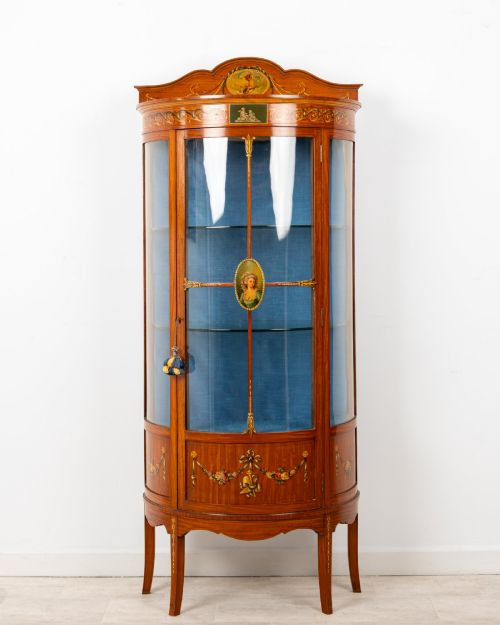
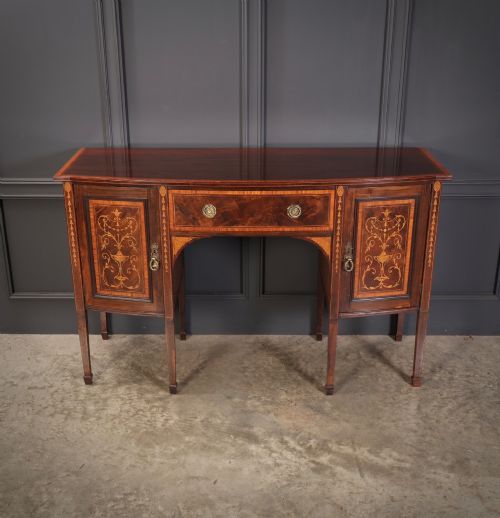
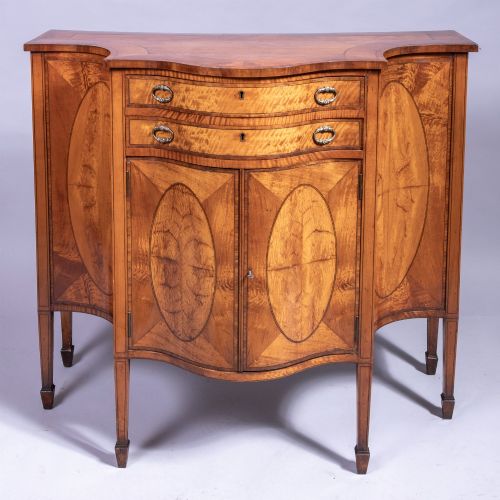
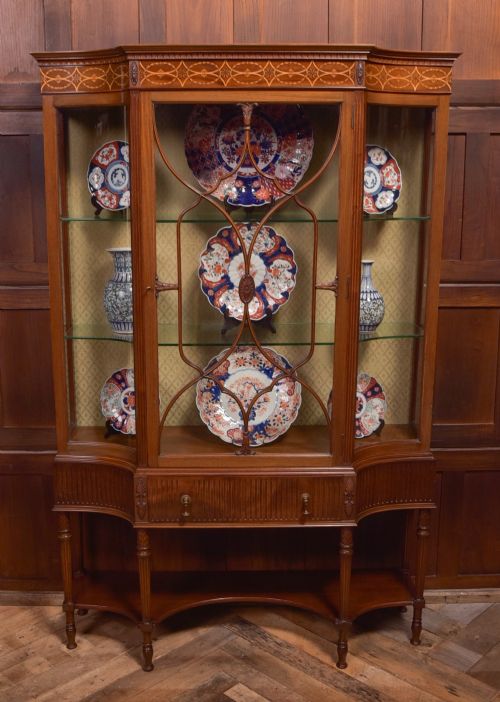
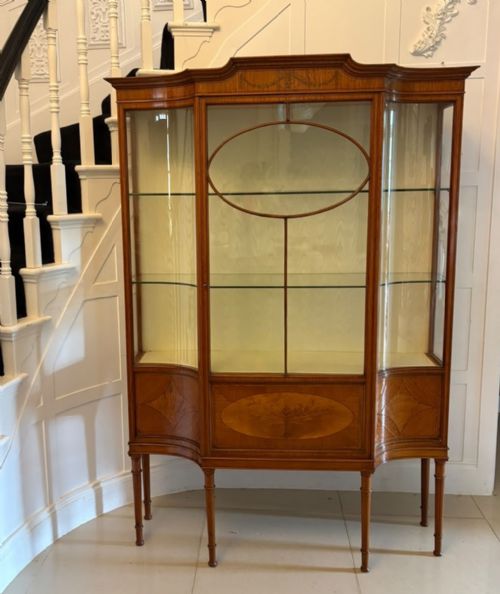
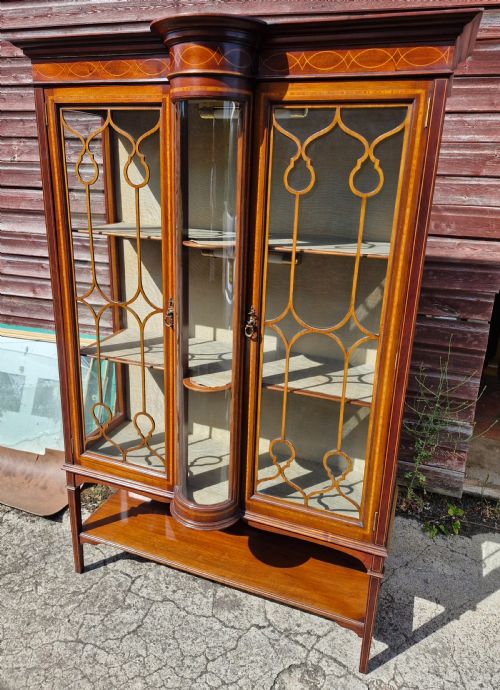
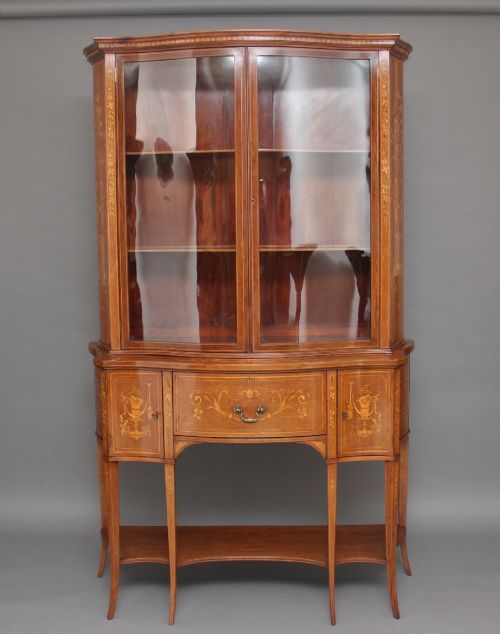
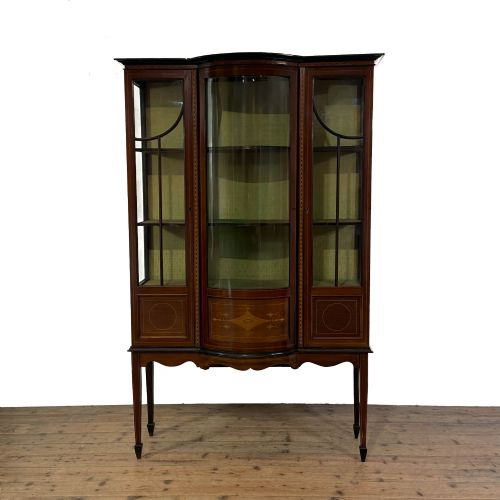
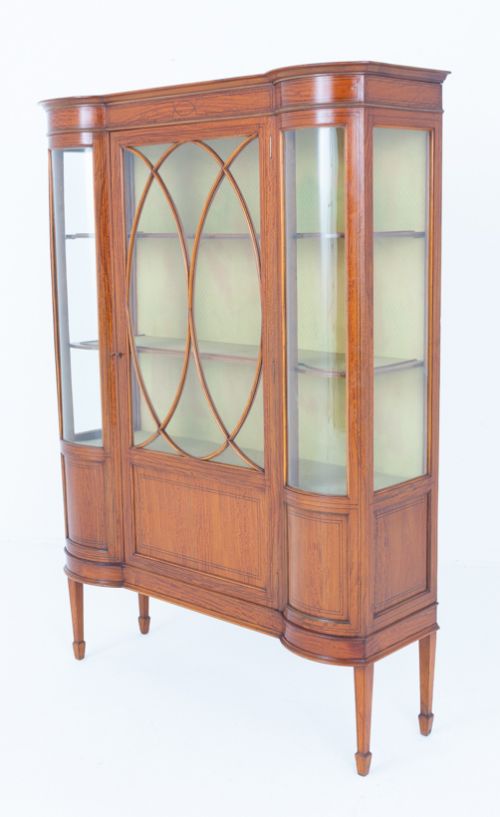


Satinwood Bow Front Cabinet
These satinwood bow front cabinet pieces bring a luminous grain and curved silhouette to a room, offering refined storage that collectors prize.
Satinwood Bow Front Cabinet
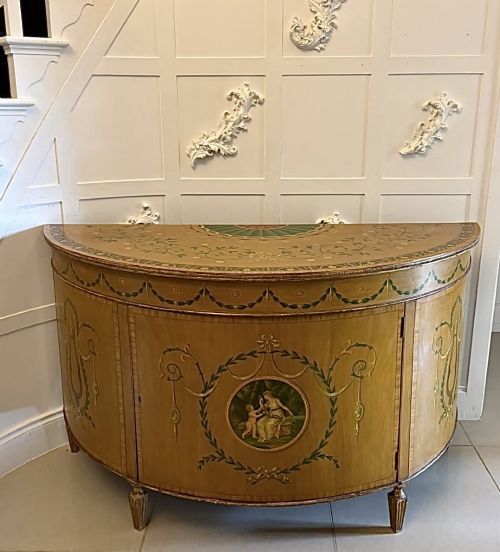
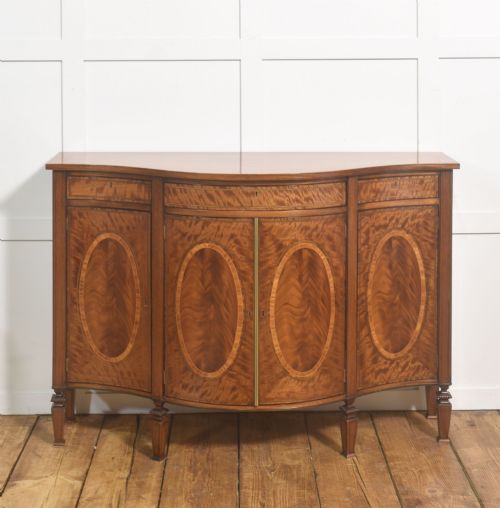
A satinwood bow front cabinet presents a curved timber facade finished in pale, figured veneer, frequently enriched with delicate marquetry and stringing. The inventory ranges widely across the nineteenth and early twentieth centuries, capturing periods from late Georgian origins to the Edwardian Sheraton Revival.
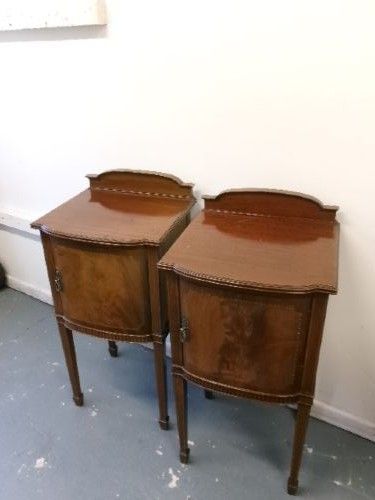
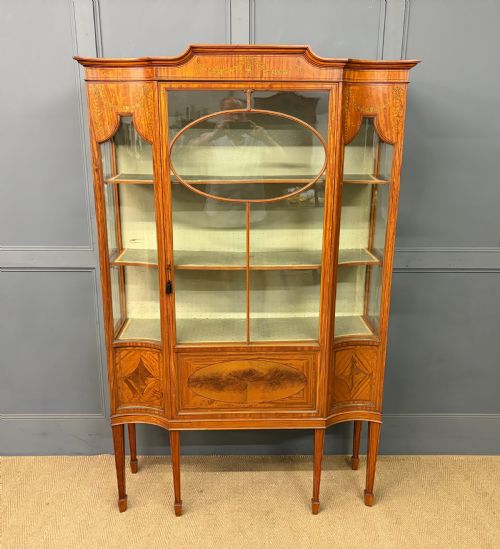
Buyers will encounter various forms spanning display cabinets, vitrines, side cabinets, and compact bedside tables. The Edwardian era and the Sheraton Revival period dominate the current selection, reflecting a strong Edwardian taste for lighter woods and classical neoclassical revival motifs.
Makers and workshops of the late nineteenth and early twentieth centuries utilised the distinctive golden sheen of satinwood to elevate domestic interiors. These pieces served both decorative and utilitarian roles, housing books, porcelain, or personal collections behind glazed or panelled doors.
How they were made
Craftsmen built these carcases using substantial timber foundations, such as mahogany or pine, onto which they applied fine satinwood veneers. The curved bow front required careful steam bending or block construction before the final grain could be laid down.
Surface decoration relies on contrasting stringing and banding utilising boxwood and fruitwood, often paired with hand painted floral details. Brass fittings, glass panes, and intricate marquetry complete the construction of these refined storage items.
Satinwood Bow Front Cabinet Retail Price Guide 2026
Typical asking prices for satinwood bow front cabinet among the pieces listed under this phrase on Sellingantiques today, from the lower quarter to the upper quarter. They describe what is for sale here now, not the wider market.
Makers hid secret compartments behind faux bookspines within fine secretaire bookcases.
What varies in quality
Quality rests significantly on the choice of timber and the precision of the veneer work across the curved facade. Master cabinetmakers selected satinwood with intense figure and tight grain, ensuring the light catches the curved surface evenly.
The sophistication of the inlay and the crispness of any hand painted decoration separate standard production from exceptional examples. Furthermore, the originality of the brass hardware, glass panels, and internal shelving dictates the piece's standing among collectors.
Maple and Co.·Edwards and Roberts
The Satinwood Bow Front Cabinet Glossary
- Satinwood
- A hard, durable timber with a natural golden lustre and a fine grain, highly prized for high-end furniture veneers. It takes a brilliant polish and forms the primary visual surface of these cabinets.
- Bow Front
- A convex, outward-curving cabinet front that softens room angles and demands advanced woodworking skill to veneer accurately. This curved profile defines the silhouette of the pieces.
- Sheraton Revival
- A late nineteenth and early twentieth century design movement that reinterpreted the neoclassical lightness and classical motifs of eighteenth-century designer Thomas Sheraton. Pieces from this period frequently feature satinwood and delicate marquetry.
- Marquetry
- The art of applying small pieces of veneer to a structure to form decorative patterns and pictorial designs. Craftsmen utilised contrasting woods like boxwood and fruitwood to create floral or geometric motifs.
- Vitrine
- A glass-fronted display cabinet specifically designed for exhibiting porcelain, curiosities, or fine books. These cabinets often feature glazed side panels to maximise interior illumination.
Satinwood Bow Front Cabinet: Frequently Asked Questions
Where should I place a satinwood cabinet?
These cabinets suit drawing rooms, studies, or reception spaces where their curved lines and pale grain can catch natural light without direct exposure to harsh sun.
Keep them away from direct heat sources and radiators to prevent the delicate satinwood veneer from drying out or lifting over time.
How do I care for satinwood veneer?
Dust the surface gently with a soft, dry cloth and avoid commercial silicone polishes that can build up a residue over the antique finish.
Apply a traditional beeswax sparingly if the timber appears dry, buffing it gently along the direction of the grain to maintain the natural lustre.
Are these cabinets suitable for everyday storage?
Most pieces provide functional shelving behind wooden or glazed doors, making them practical for books, glassware, or tableware.
Care should be taken not to overload historical shelves, and items placed inside should be free from excessive moisture to protect the interior timber.
How can I tell an Edwardian revival piece from an original Georgian one?
Examine the secondary timbers inside the carcase, the construction of the drawer linings, and the style of the hardware, which often reveal the later nineteenth or twentieth century manufacturing methods.
Sheraton Revival pieces from the Edwardian era generally display machine-sawn internal components and brighter, more uniform satinwood veneers than their eighteenth-century predecessors.