




Satin Birch Table
Satin birch table search results present bright, figured timber items spanning Victorian English workshops to Scandinavian Art Deco design.
Satin Birch Table
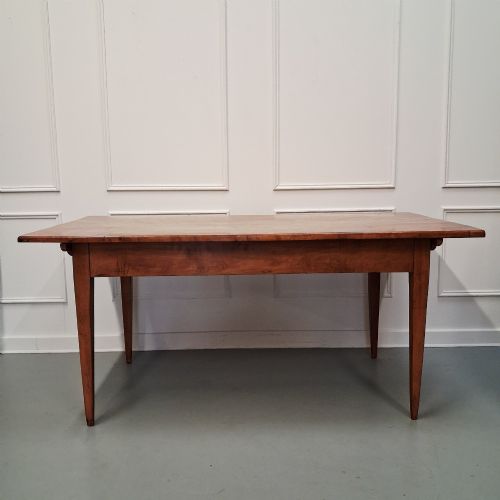
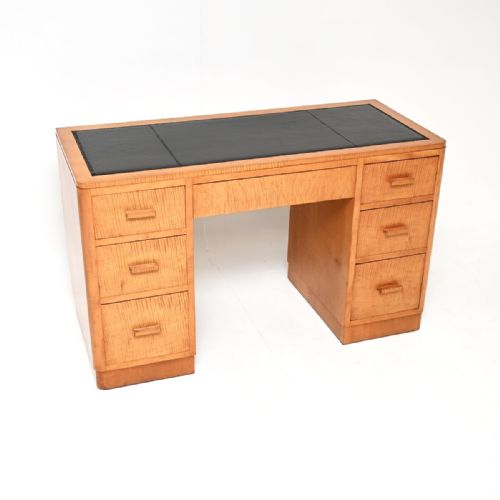
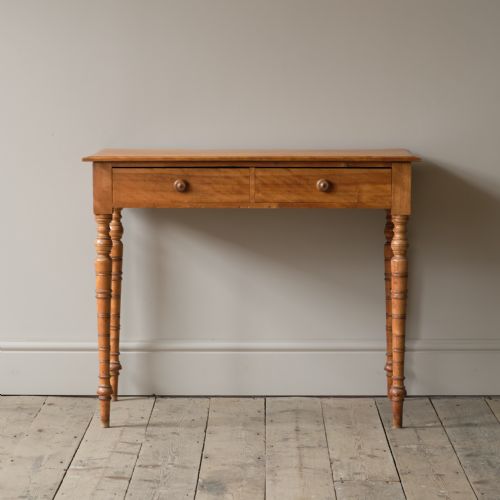
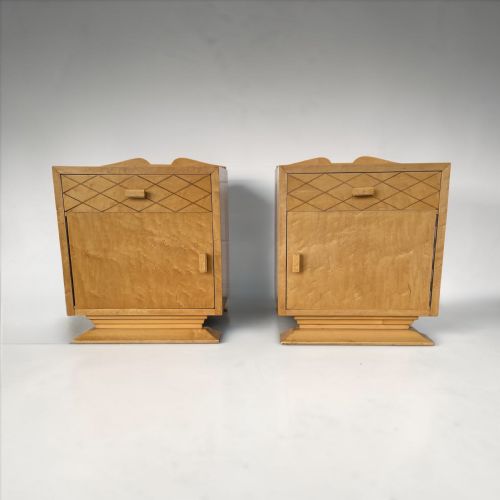
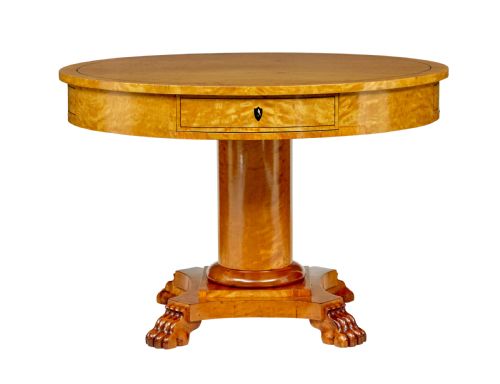
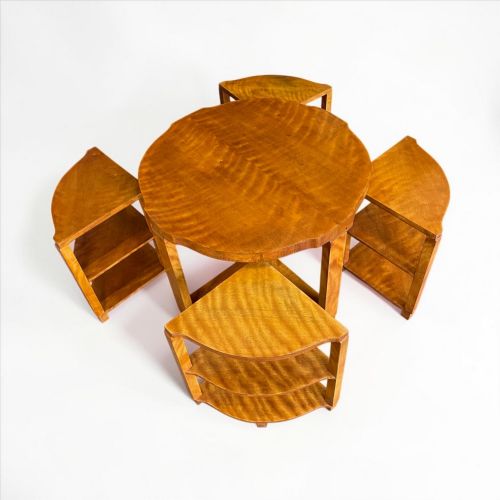
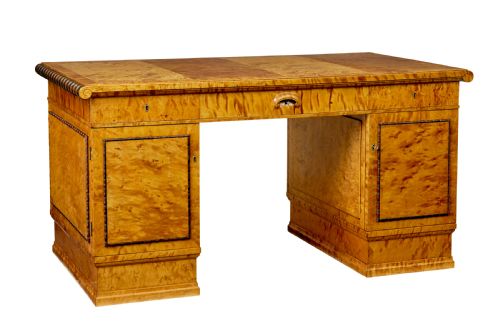
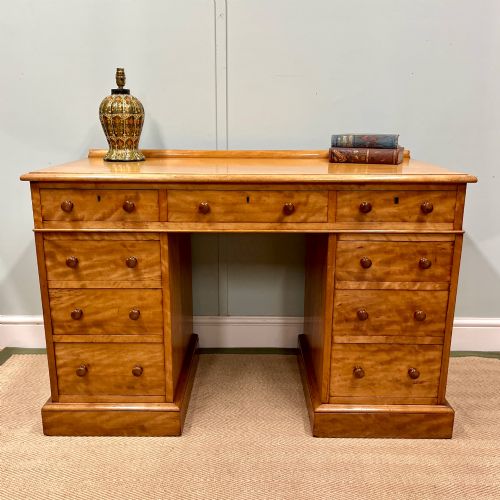
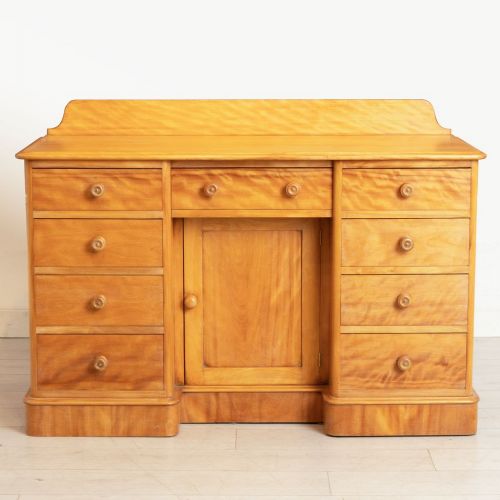
A satin birch table encompasses forms ranging from Victorian pedestal desks and writing tables to Swedish Biedermeier occasional pieces and Art Deco coffee tables. Buyers searching for a satin birch table frequently encounter mid to late nineteenth century English library furniture and twentieth century Scandinavian designs defined by pale, luminous wood grain. The selection includes dining tables, bedside cabinets, dressing chests, and tea tables alongside compact writing desks.
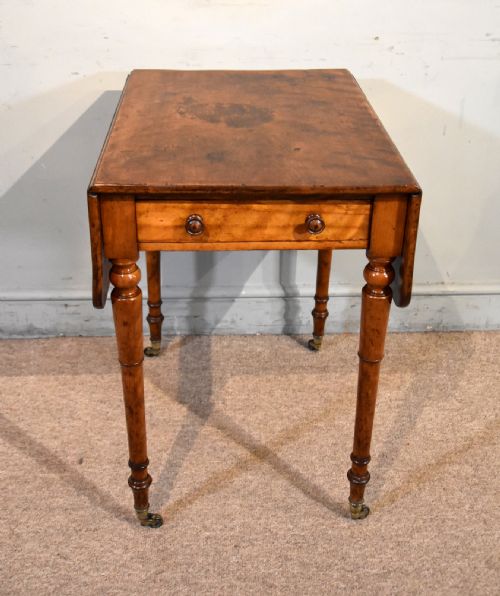
Origin and period heavily dictate the form, with nineteenth century British pieces often taking the shape of kneehole desks or Pembroke tables while Swedish items incline toward architectural coffee and sofa tables. Art Deco examples introduce geometric nesting sets and streamlined pedestals paired with contrasting veneers like walnut. Whatever the specific function, these items share a distinctive golden shimmering timber surface that catches light across domestic interiors.
Materials and construction
Makers utilised solid birch and decorative birch veneer over secondary construction woods, frequently selecting timber sections displaying natural chatoyancy to achieve the characteristic satin sheen. Structural integrity often relied on dense hardwoods for frames while highly figured birch veneers were laid symmetrically across tabletops and drawer fronts.
Secondary elements incorporate brass hardware, leather writing inserts, marble tops, and glass inserts depending on the piece's function and period. English workshops favoured traditional joinery like dovetailed drawers for desks and Pembroke tables, whereas Scandinavian makers integrated curved empire revivals and clean geometric lines.
A golf club dining table once shared room with gentleman's desks and candle-sconced dressing chests.
What separates the best from the rest
Quality rests in the intensity and natural movement of the wood grain, with superior pieces displaying an exceptionally fiery, undulating figure across every visible surface. Master cabinetmakers aligned veneer sheets symmetrically so the shimmering patterns met seamlessly down the centre of tabletops and desk lids.
Construction precision and maker attribution elevate certain examples above standard domestic furniture. Workshops known for rigorous standards, such as those operating in London and Sweden, applied refined proportions, crisp carving, and robust internal framing that outlasts simpler provincial items.
Johnstone and Jeanes·Heal and Son·J Shoolbred·Howard and Sons
The Satin Birch Table Glossary
- Satin birch
- A timber derived from the birch tree exhibiting a natural grain that catches the light with a silky sheen. It was widely utilised by nineteenth and twentieth century cabinetmakers for formal furniture.
- Figured timber
- Wood possessing an accidental pattern or grain distortion that creates visual depth and luminescence. Highly figured sections were reserved for primary tabletops and drawer fronts.
- Biedermeier
- A central European style spanning the early to mid nineteenth century characterised by utilitarian comfort, clean lines, and minimal ornamentation that let the birch grain dominate.
- Pedestal desk
- A freestanding writing table supported by two banks of drawers or cabinets reaching down to the floor. These items provide generous storage while maintaining a finished appearance on all sides.
- Pembroke table
- A small occasional table featuring drop leaves supported by hinged brackets on either side. It serves as a versatile surface that expands when extra space is required.
Satin Birch Table: Frequently Asked Questions
Are these tables suitable for daily dining?
Many historical pieces function well for daily use provided sensible precautions are maintained against heat and moisture. Using placemats and coasters safeguards the vintage polished surfaces from rings and direct thermal shock.
Smaller occasional tables and antique writing desks require more gentle treatment than robust dining variants. Assessing the sturdy construction of each individual piece helps determine its capacity for heavy domestic routines.
How do I date a satin birch table?
Examine the construction methods, secondary woods, and hardware to establish a reliable chronological bracket. Dovetail joints on drawers, screw types, and overall design vocabulary offer clear clues regarding whether a piece originates from the Victorian era or the Art Deco period.
Maker stamps, paper labels, and regional stylistic markers also aid in pinpointing origin. Swedish pieces often display distinct neoclassical or minimalist tendencies compared to ornate British Victorian equivalents.
What rooms suit a satin birch table?
The pale, luminous quality of the wood allows these pieces to brighten dark hallways, compact bedrooms, and sophisticated sitting rooms alike. A pedestal desk integrates naturally into a home study, while smaller lamp tables fit beside living room seating.
Coffee tables and occasional stands offer functional surfaces that complement contemporary and traditional interior schemes. Their neutral golden tones harmonize easily with diverse colour palettes.