



Satin Birch Commode
These satin birch commode pieces offer exceptional timber grain and clean proportions, making them a sophisticated choice for any interior.
Satin Birch Commode
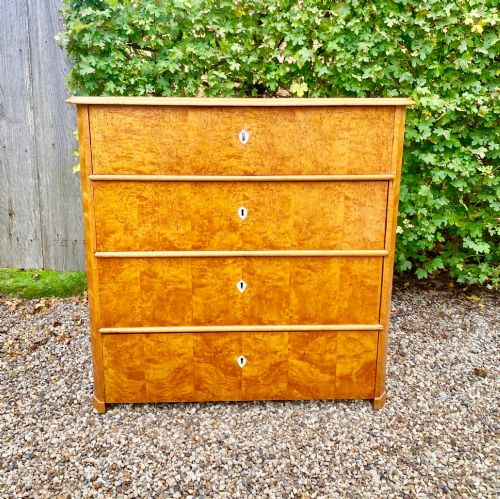
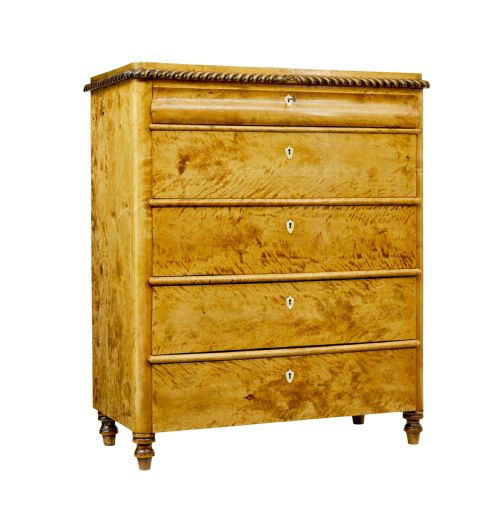
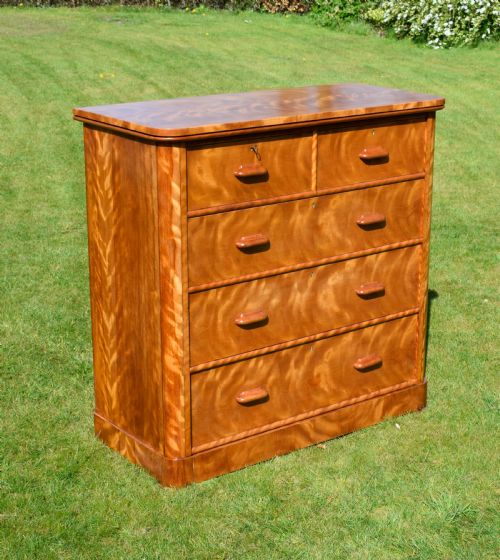
When you search for a satin birch commode, you encounter a selection of refined storage furniture originating primarily from Victorian Britain, Sweden, and France. These pieces typically take the form of chests of drawers, secretaire chests, washstands, or bedside tables.
The version you are most likely to meet on this page is a nineteenth-century Scandinavian chest of drawers or a Victorian example displaying the characteristic pale, figured timber. Styles range from restrained Swedish Biedermeier and Empire Revival to English Victorian and Scandinavian Country.
Buyers look for these chests to introduce a pale, luminous wood tone into a bedroom or reception room while retaining practical drawer capacity. The diverse origins span nineteenth-century workshops where cabinetmakers utilised native and imported birch veneers.
Materials and construction
Makers constructed these commodes using solid pine or birch for the primary carcases, applying striking flame birch veneer or satin birch to the exterior surfaces. This technique allowed craftsmen to showcase the dramatic, shimmering grain patterns of the timber across wide drawer fronts.
Metal hardware such as brass handles and escutcheons often punctuate the pale timber, while occasional pieces incorporate bone details. Secondary woods like pine provide structural stability behind the decorative birch veneers.
Some nineteenth-century bedside commodes cleverly disguised their practical origins behind impeccably matched flame birch veneer.
Judging quality in satin birch commodes
Quality rests upon the selection and matching of the birch veneer across the drawer fronts, where superior examples exhibit a continuous, highly figured flame pattern. The crispness of carved details and the proportional harmony between the carcase and drawers further distinguish finer pieces.
Construction methods also separate standard items from superior ones, visible in the precision of the drawer joints and the retention of original brass or metal hardware. The handling of secondary timbers like pine inside the drawers reflects the original workshop standards.
The Satin Birch Commode Glossary
- Satin birch
- A timber featuring a natural golden sheen and distinctive grain used extensively for high-end nineteenth-century furniture. It is prized for its luminous, reflective surface qualities.
- Commode
- A low chest of drawers or cabinet. In the context of nineteenth-century European furniture, it often denotes a decorative storage piece.
- Biedermeier
- A dominant Central and Northern European style from the first half of the nineteenth century. It emphasises utilitarian comfort and clean lines with minimal ornamentation.
- Secretaire chest
- A chest of drawers featuring a fitted writing drawer that pulls down to reveal a desk surface and small compartments. This form combines storage with a compact writing space.
- Veneer
- A thin layer of finely figured wood applied to a secondary wood base such as pine. This technique creates decorative exterior surfaces while maintaining structural stability.
Satin Birch Commode: Frequently Asked Questions
How do I clean satin birch?
Dust regularly with a soft, dry cloth to prevent surface build-up. Avoid using harsh chemical sprays or excessive water on the polished wood and veneer.
Apply a microcrystalline wax occasionally to nourish the timber and maintain its natural lustre. Keep the piece away from direct sunlight and strong heat sources to prevent the veneer from drying out.
Where were these commodes made?
The pieces originate primarily from nineteenth-century Britain, Sweden, and France. Scandinavian workshops produced a significant proportion of the Biedermeier and Empire Revival chests seen here.
British makers also utilised satin birch during the Victorian era for chests of drawers and washstands. Each region brought distinct regional proportions and decorative traits to the furniture.
How do I spot a Biedermeier commode?
Biedermeier pieces are defined by restrained neoclassical lines, smooth surfaces, and an absence of excessive carving. The emphasis rests entirely on the natural beauty of the birch grain.
They often feature dark contrasting wood stringing or simple geometric drawer arrangements. This style prioritises domestic comfort and architectural clarity.
Can I use a washstand as a bedside table?
Washstand cabinets and bedside commode tables adapt easily to modern bedroom layouts. Their compact footprint makes them suitable for placing next to a bed.
Cupboard sections and drawer space provide convenient bedside storage for books and personal items. The durable surfaces originally designed for washing facilities handle everyday items well.