


Blond Wood Dressers
Blond wood dressers offer bright, pale surfaces and practical storage, bringing Scandinavian and Victorian character to a room.
Blond Wood Dressers
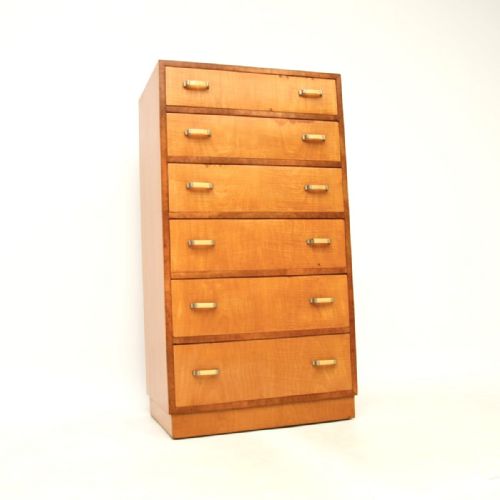
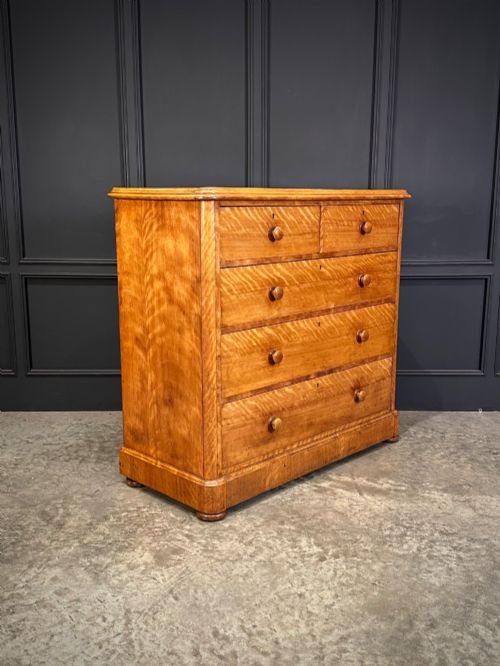
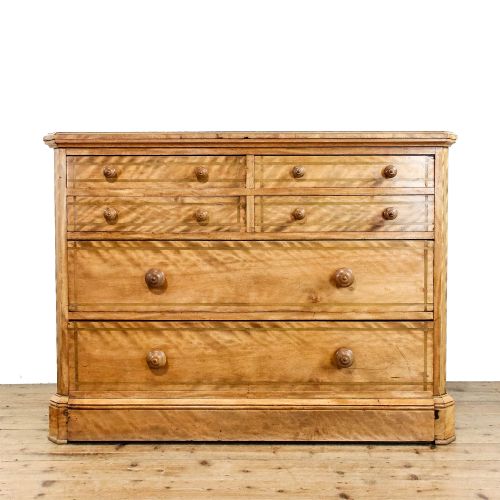
Blond wood dressers encompass chest of drawers and dressing table forms primarily originating from 19th century Sweden, the Victorian era, and the 1930s Art Deco period. Buyers seeking these items encounter numerous pieces executed in pale timbers, often characterised by regional Scandinavian design or British Victorian proportions.
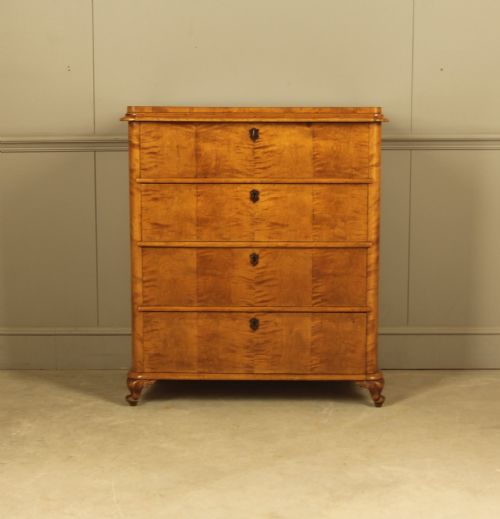
The selection ranges from simple Scandinavian country pieces to sophisticated Swedish Biedermeier and Swedish Empire Revival designs. Alongside standard chests of drawers, listings feature dressing tables and cabinets on chests employing similar pale timber aesthetics.
Materials and construction
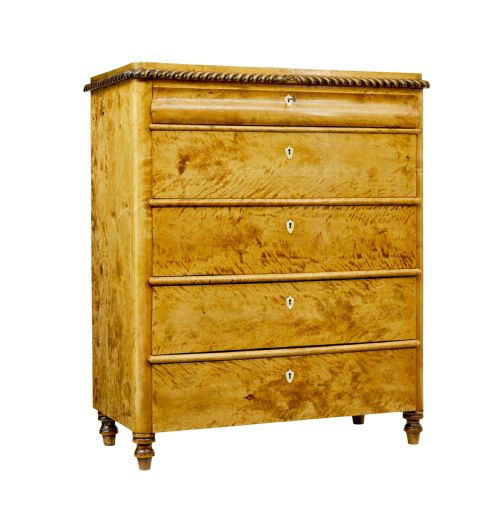
Construction relies heavily on birch, flame birch, masur birch, and satinwood, supported by secondary timbers like pine and accented with brass or metal hardware. Cabinetmakers utilised figured veneers and solid timbers to highlight the natural blond grain patterns of the wood.
Surface treatments vary from polished natural timber finishes to simulated hand-painted birch and inlaid details. Structural elements integrate traditional joinery suited to the period, from mid 19th century carcass construction to 1930s modernist cabinetry.
One clever Swedish maker painted pine to look like birch, proving imitation is the sincerest form of Scandinavian cabinetry.
Assessing craftsmanship and finish
Quality separates pieces through the selection of timber veneers, such as highly figured flame birch or masur birch versus plain surfaces. The skill in matching grain patterns across drawer fronts and the precision of inlaid work distinguish superior examples.
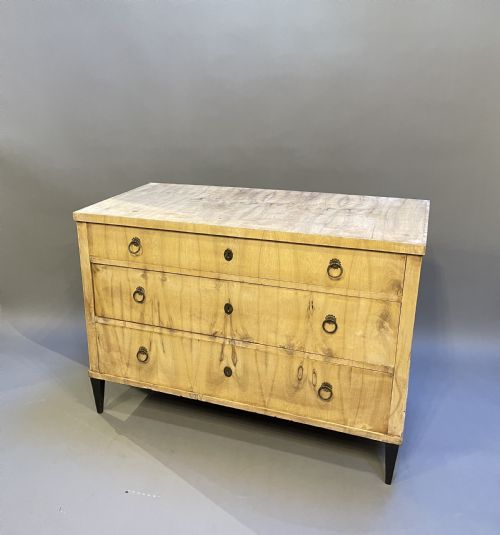
The sophistication of the stylistic execution also defines the tier of a piece, distinguishing robust Scandinavian country work from finely carved Biedermeier or neoclassical Empire Revival forms. Hardware choices, from simple brass pulls to integrated metal mounts, further reflect the original tier of production.
Gemla Fabrikers
The Blond Wood Dressers Glossary
- Flame birch
- A timber veneer displaying a rippled, flame-like grain pattern. This figure is prized for its decorative movement across drawer fronts.
- Biedermeier
- A Central European style emphasising utilitarian comfort and clean lines. Pieces in this style utilise pale woods without excessive ornamentation.
- Caddy top
- A raised, stepped lid configuration found on specific chest of drawers forms. It adds architectural definition to the top surface.
- Masur birch
- A characteristic Scandinavian birch variety featuring natural dark swirls and dashes within the pale grain. It provides a highly textured surface appearance.
- Commode
- A European term for a set of drawers or cabinet. These pieces often feature decorative hardware and substantial proportions.
Blond Wood Dressers: Frequently Asked Questions
What is a blond wood dresser?
A blond wood dresser is a storage piece, typically a chest of drawers or dressing table, constructed from pale timbers like birch, satinwood, or pine. These items span 19th century Scandinavian workshops, Victorian England, and 1930s modernist design.
Buyers choose them to brighten interiors while introducing historical character and practical drawer space. The category covers diverse regional styles from simple country pieces to polished Biedermeier forms.
How do I date a birch chest?
Dating relies on observing construction methods, hardware, and stylistic indicators present in the piece. Mid 19th century Swedish examples often display clean neoclassical lines, whereas 1930s items reflect Art Deco or modernist influences.
Timber selection also assists context, as specific figures like masur birch align strongly with 19th century Scandinavian production. Comparing overall proportions and secondary woods helps confirm the likely period.
Where were these dressers made?
The pieces originate primarily from Sweden, wider Scandinavia, and Britain during the 19th and early 20th centuries. Swedish workshops produced a significant portion of the birch and flame birch furniture.
Victorian examples reflect British cabinetmaking traditions using satinwood. Continental European production also contributes commode forms from the mid 19th century.
How do I style a pale wood chest?
Pale wood chests integrate easily into contemporary and traditional interiors due to their neutral tones. They function effectively as bedroom storage or as statement display surfaces in living spaces.
Their reflective timber grain pairs well with minimalist decor or contrasting darker furniture. The natural warmth of birch and satinwood complements both bold wall colours and muted palettes.