


Mid 19th Century Commode
These mid 19th century commode pieces offer substantial storage and rich timber grain, bringing practical elegance to any bedroom or hallway.
Mid 19th Century Commode
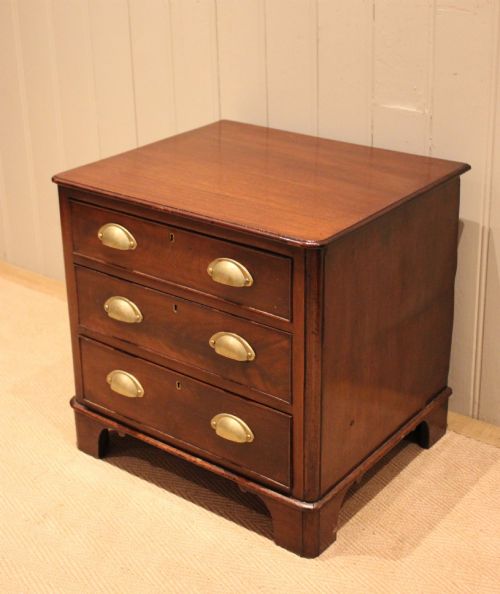
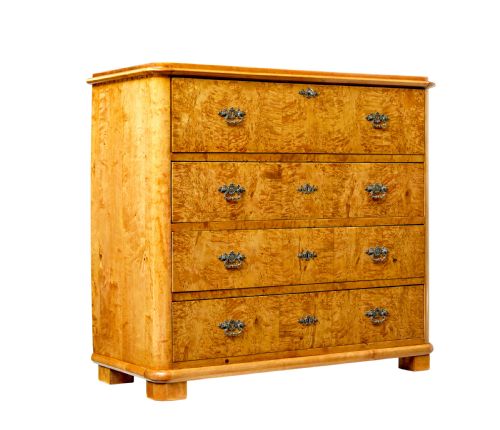
A mid 19th century commode typically takes the form of a sturdy chest of drawers, often constructed with multiple straight drawers or a fall-front secretaire section for writing. These items emerge from the Victorian era and continental European workshops, spanning French, Swedish, and broader Scandinavian regional designs.
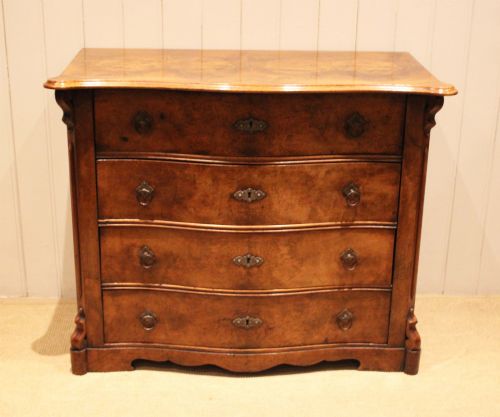
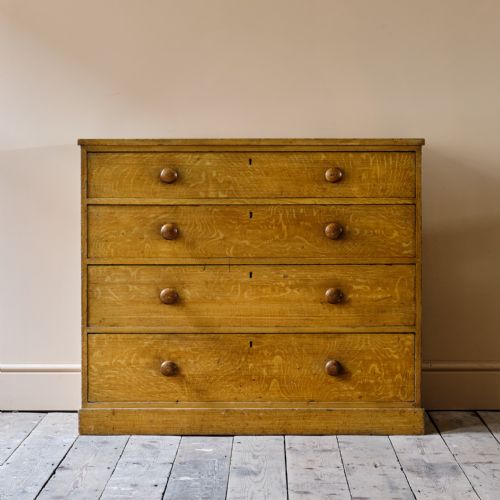
Buyers frequently encounter variations ranging from grand mahogany and burr walnut models to painted pine country pieces and compact miniature furniture. The proportions vary from large four-height storage units down to small low chests and bedside commodes suited for intimate spaces.
Materials and construction
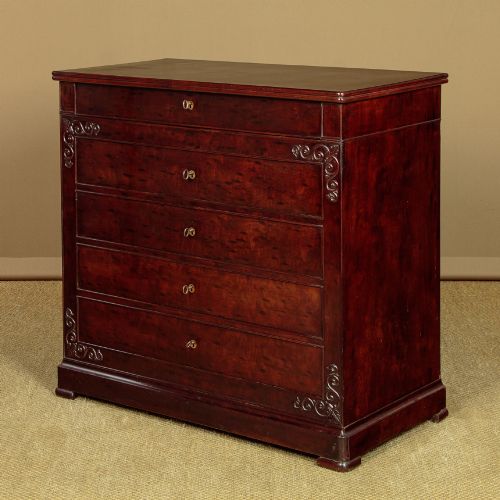
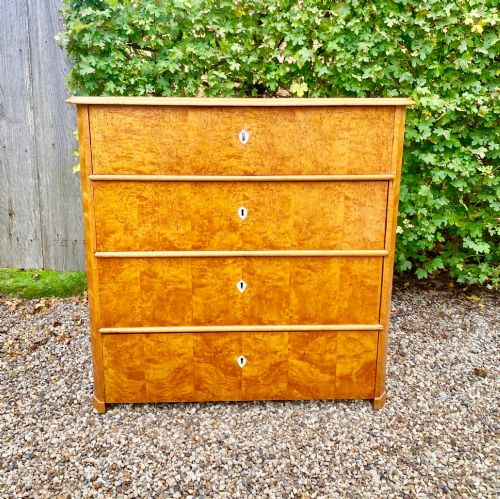
Cabinetmakers of this period relied heavily on dense primary timbers such as mahogany, walnut, and birch, often selecting figured veneers like burr walnut and flame mahogany for visible drawer fronts. Secondary woods like pine appear in carcases and drawer linings, while regional pieces utilise native elm or feature hand-applied paint and japanning.
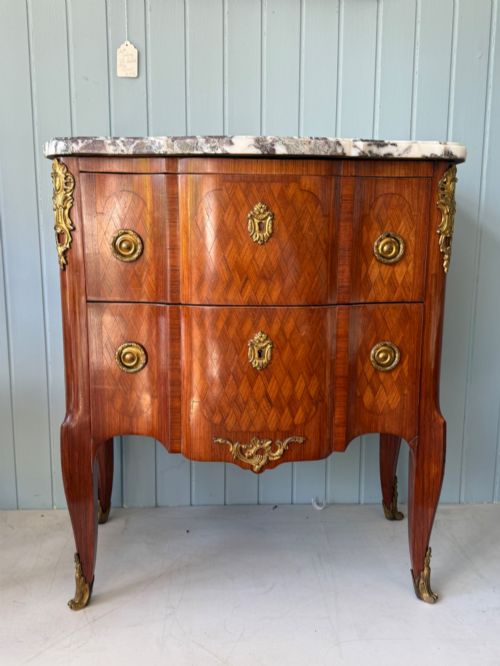
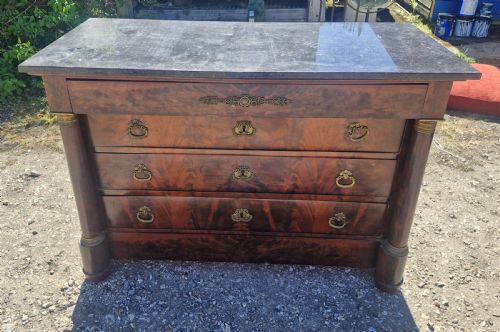
Surfaces frequently incorporate contrasting elements such as cool marble tops on French examples, inlaid detailing on Scandinavian pieces, and cast brass hardware. Joinery follows traditional dovetail construction for drawers, ensuring structural longevity alongside decorative appeal.
Several miniature chests appear here, built either as apprentice masterworks or as salesman samples for travelling traders.
Assessing quality and craftsmanship
The distinction between standard examples and finer items rests upon the selection of timber figure and the precision of the cabinetmaker's veneer work. Highly figured burr walnut, matched flame mahogany, and intricate marquetry inlay elevate a piece beyond basic utility.
Original surface finishes, integrated marble slabs, and intact period hardware also determine the standing of a commode. Pieces retaining their untouched patination and original painted or polished skins command greater appreciation than heavily restored equivalents.
The Mid 19th Century Commode Glossary
- Burr walnut
- A figured wood veneer derived from the abnormal growth or burl of a walnut tree, prized for its swirling grain patterns. It creates a highly decorative surface on drawer fronts.
- Secretaire
- A cabinet or chest incorporating a fitted writing drawer with a drop-front desk surface. These compartments often reveal small internal pigeonholes and subsidiary drawers.
- Japanning
- A European imitation of East Asian lacquerwork, applied as a glossy, decorative finish. It frequently depicts oriental scenes in gold on a dark background.
- Patina
- The deep surface sheen and mellowing developed by wood over decades of handling, polish, and exposure to light. A good patina indicates genuine age and careful maintenance.
- Galleried back
- A raised wooden or brass rail running along the rear edge of a top surface to prevent items from sliding off. This feature appears on select mid-century chests.
Mid 19th Century Commode: Frequently Asked Questions
What is a mid 19th century commode?
A mid 19th century commode is a chest of drawers or storage cabinet produced roughly between eighteen-fifty and eighteen-sixty. These pieces reflect Victorian and continental European styles, functioning primarily for domestic storage.
They appear in diverse regional woods, from French mahogany with marble tops to painted Swedish pine and burr walnut.
Where were these commodes made?
These pieces originate from British workshops as well as continental European centres, notably France and Sweden. Each region applied distinct aesthetic preferences to the construction.
French models often feature marble tops and mahogany, while Swedish makers favoured birch, elm, and painted finishes.
How do I care for a antique wooden commode?
Maintain wooden surfaces by dusting with a dry cloth and occasionally applying a traditional beeswax polish to nourish the timber. Avoid placing the chest near direct heat sources or strong sunlight.
Marble tops require simple wiping with a damp cloth and mild soap to prevent staining from liquids.
What is a secretaire chest of drawers?
A secretaire chest contains a specialised upper drawer that pulls out and drops down to reveal a writing desk. This fitted interior includes small compartments for stationery and letters.
It combines the practical storage of a standard chest with the workspace of a compact bureau.
How do I distinguish French and Swedish styles?
French commodes frequently pair rich mahogany with polished marble slabs and subtle curves reflecting revival styles. Swedish chests often showcase pale birch or elm timbers, clean geometric lines, and occasional inlay.
Paint finishes also characterise many Scandinavian country pieces from this era.