



Satin Birch Chest
A satin birch chest brings a luminous, pale timber grain to a room, offering practical storage through nineteenth-century drawers and cabinets.
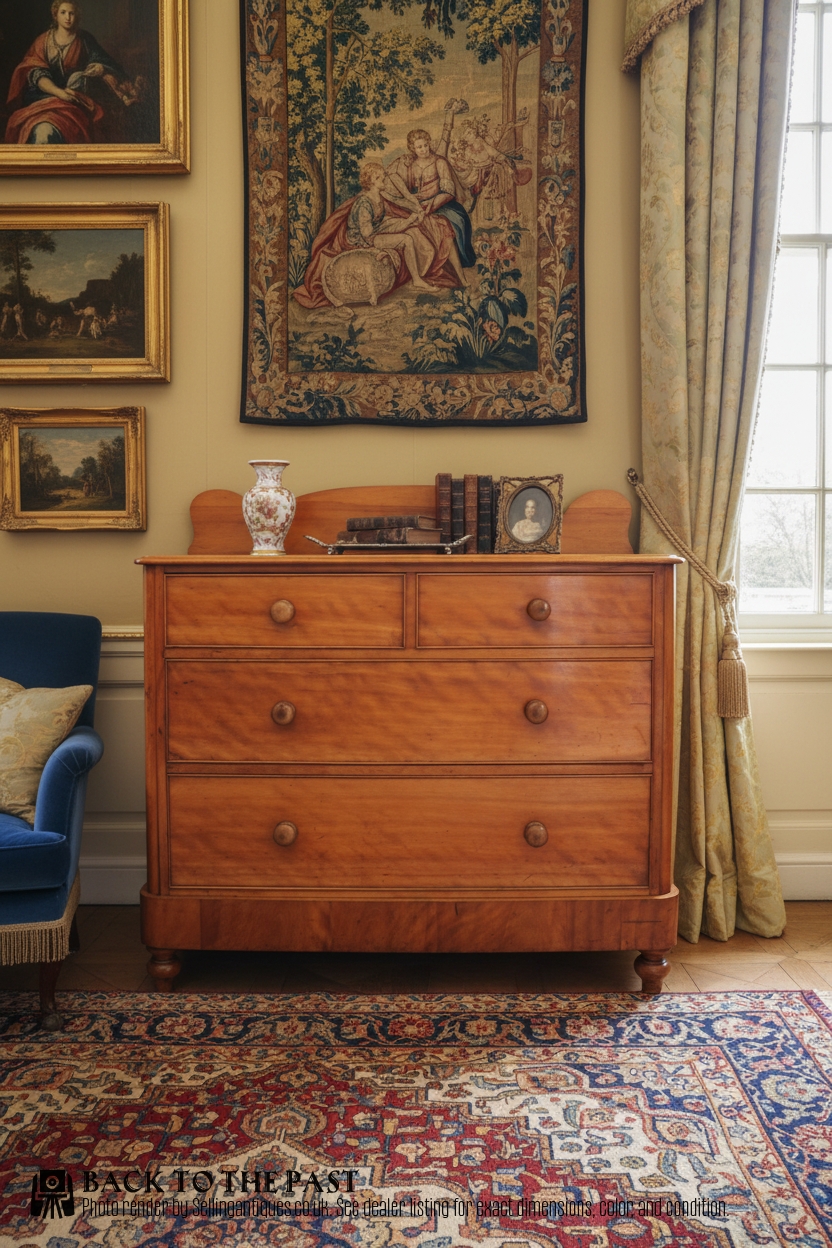
Satin Birch Chest
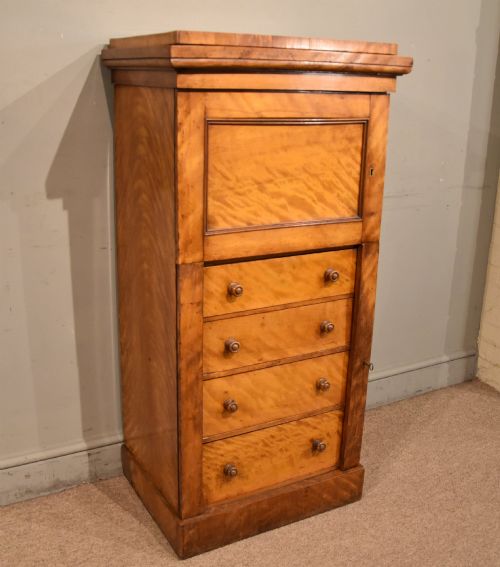
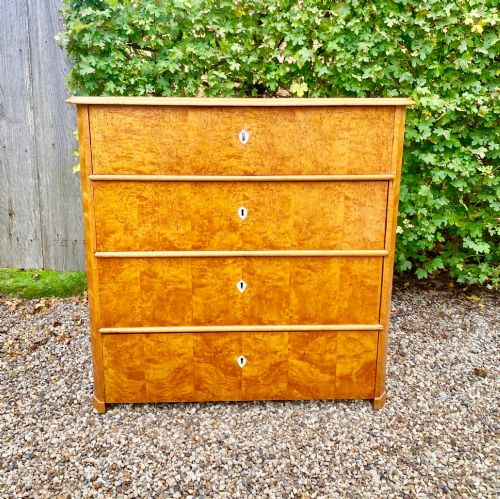
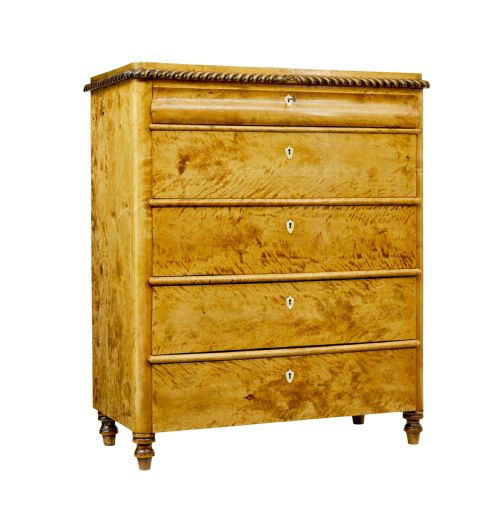
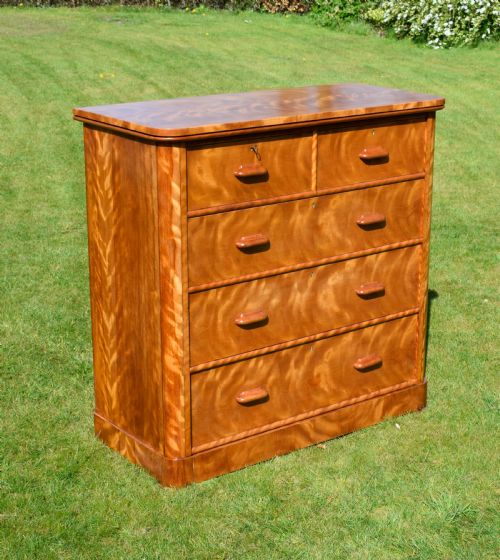
A satin birch chest primarily takes the form of nineteenth-century drawer chests, dressing chests, and bedside tables fashioned in British and Scandinavian workshops. Pieces range from straightforward Victorian chamber furniture to grander Swedish Biedermeier secretaires and Empire revival designs.
British makers such as Gillows and Holland & Sons produced substantial pieces alongside unmarked domestic utility drawers. Meanwhile, Scandinavian makers focused on clean, architectural lines that highlighted the pale, figured grain of the timber.
Materials and construction
Craftsmen built these pieces using solid pine or birch carcases faced with figured satin birch veneers, occasionally combining the timber with walnut, mahogany, or ebonised wood details. Drawer linings often utilised secondary woods, whilst hardware relied on brass drawer pulls and escutcheons.
Surface finishing involved French polishing to bring out the chatoyant figure of the birch veneer. Stencilling, glass inserts, and carved elements appear on specific stylistic variants like Art Nouveau cabinets and Empire revival pieces.
Satin Birch Chest Retail Price Guide 2026
Typical asking prices for satin birch chest among the pieces listed under this phrase on Sellingantiques today, from the lower quarter to the upper quarter. They describe what is for sale here now, not the wider market.
The listings show nineteenth-century forms ranging from compact bedside tables and dressing chests to tall linen presses and collectors cabinets.
What separates the best pieces
Quality rests principally in the selection and matching of the veneer, where book-matched grain creates symmetrical patterns across the drawer fronts. Superior execution shows in the precision of the drawer dovetails and the retention of original brass hardware and surface patination.
The architectural ambition of the piece also dictates standing, moving from simple rectilinear chamber furniture up to fitted secretaire interiors, carved pediments, and integrated cupboard tops.
Holland and Sons·Gillows of Lancaster·Heal and Son
The Satin Birch Chest Glossary
- Satin birch
- A timber derived from the birch tree featuring a characteristic shimmering, chatoyant grain resembling satin. It was widely utilised by nineteenth-century cabinet makers for decorative veneer work.
- Wellington chest
- A tall, slender chest of drawers secured by a hinged locking stile on one side that fastens with a key. This form originated in the nineteenth century for efficient storage.
- Biedermeier
- A Central and Northern European style spanning the nineteenth century characterised by clean lines, restrained ornamentation, and an emphasis on the natural beauty of wood veneers.
- Secretaire
- A desk form incorporating a fitted writing drawer with a drop-front or sliding surface. It often conceals small pigeonholes and subsidiary drawers within.
- Linen press
- A tall piece of furniture featuring upper cupboard doors enclosing sliding trays for textiles, positioned above a base tier of wider drawers.
Satin Birch Chest: Frequently Asked Questions
How do I identify a satin birch chest?
Look closely at the timber surface for a pale, golden-yellow hue with a distinct shimmering quality that catches the light differently as you move. Nineteenth-century examples generally feature hand-cut dovetails on the drawer sides and secondary timbers like pine inside.
Check for veneer construction, as cabinet makers frequently applied thin sheets of figured birch over stable carcase woods. Comparing the colour and grain pattern to standard oak or mahogany helps confirm the distinct identity of the wood.
Where were these chests made?
These pieces originate primarily from nineteenth-century British workshops and Scandinavian design traditions, particularly Sweden. British cabinet makers produced formal Victorian chamber furniture, whilst Scandinavian makers favoured Biedermeier and Empire revival styles.
Regional preferences influenced the overall silhouette, with Swedish pieces often displaying dramatic architectural cornices and figured veneers. British examples frequently aligned with London firms supplying domestic townhouses and country estates.
How should I care for a satin birch surface?
Maintain the French polished finish by dusting regularly with a soft, dry cloth and avoiding silicone-based polishes that degrade the historic surface. Keep the timber away from direct sunlight and strong heat sources to prevent the veneers from drying out or splitting.
Apply a microcrystalline wax occasionally to nourish the polish and protect the wood from atmospheric moisture. Handle brass hardware gently and lift rather than drag the chest when repositioning it in a room.
What is the difference between Victorian and Biedermeier styles?
Victorian chests often incorporate heavier proportions, carved details, and functional additions like candle scones or dressing table mirrors. They reflect a period of diverse revivalist tastes within British domestic interiors.
Biedermeier pieces focus on minimalist geometry, smooth columns, and uninterrupted expanses of figured veneer without excessive ornamentation. This continental aesthetic prioritises warmth of tone and structural clarity over applied decoration.