


Sarcophagus Tea Chest
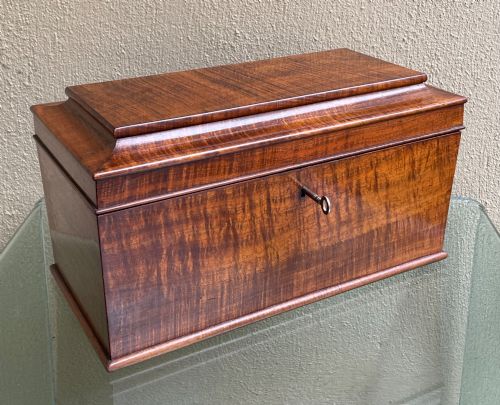
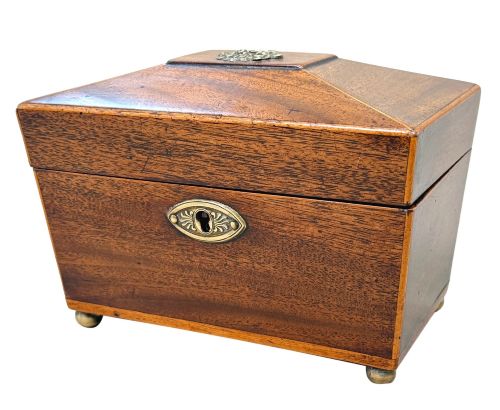
A sarcophagus tea chest is a substantial lidded box designed to store loose leaf tea, embodying the classical architectural lines of a burial monument.
Sarcophagus Tea Chest
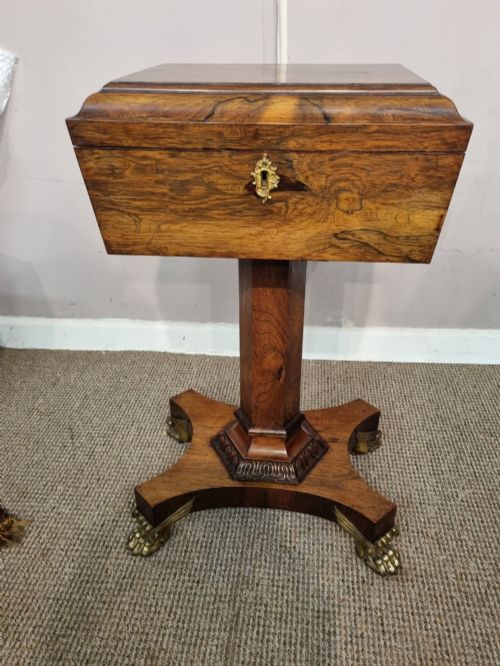
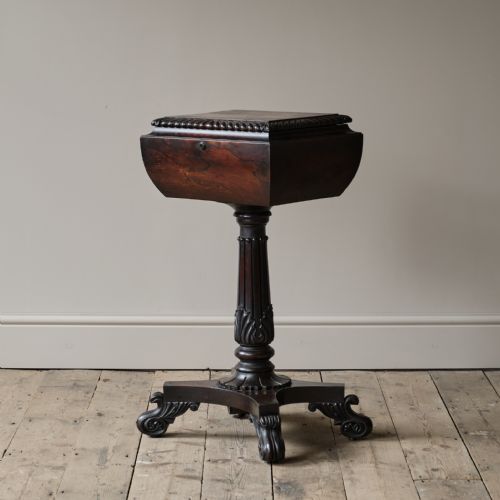
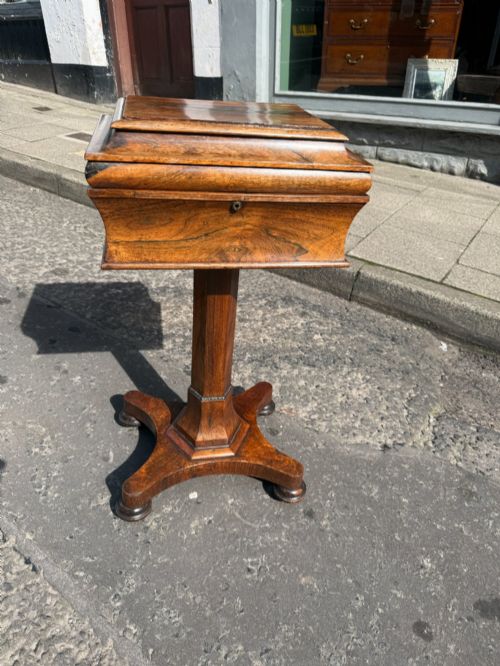
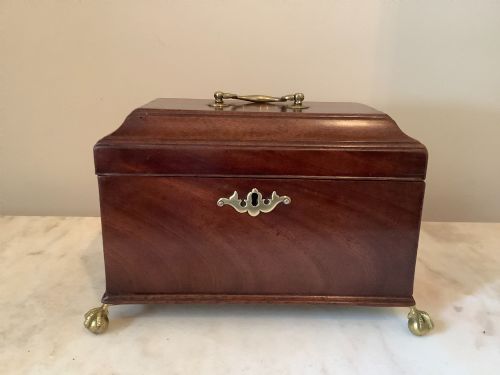
A sarcophagus tea chest is a distinctive form of antique container designed primarily during the Georgian, Regency, and Victorian periods to store precious loose leaf tea. These pieces typically present a domed or tapered rectangular body raised on feet, echoing the monumental stone tombs of antiquity.
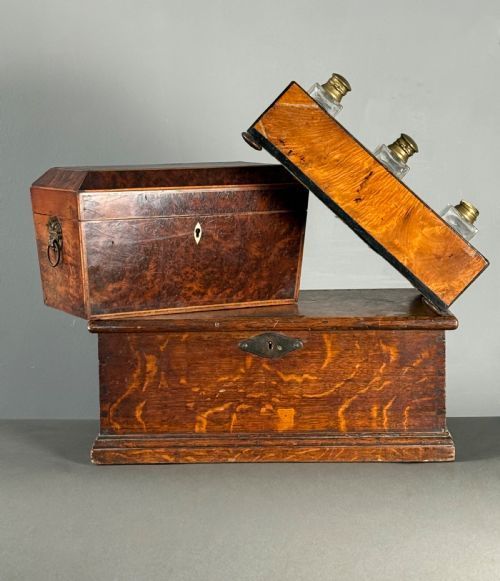
The versions most commonly met on this page date from the Regency and Georgian eras, fashioned in rich timbers with hinged lids that open to reveal internal compartments. Many incorporate fitted mixing bowls made of cut glass alongside lidded canisters for different tea varieties.
How they were made
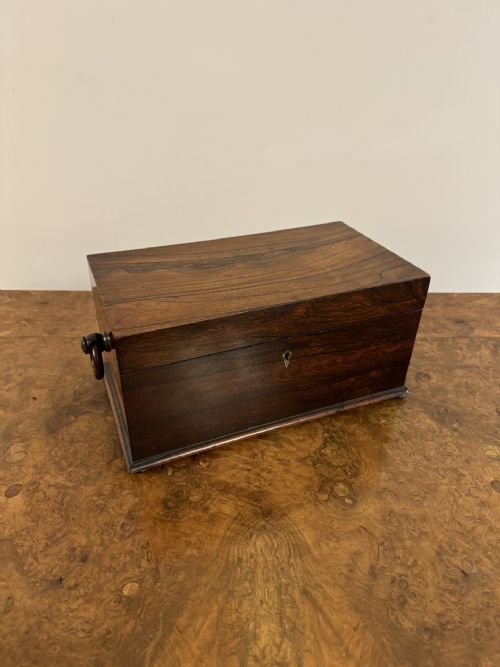
Cabinetmakers constructed these chests using solid framing timbers overlaid with decorative veneers such as rosewood, mahogany, flame mahogany, and burr walnut. Finer examples display meticulous brass inlay, boxwood stringing, or parquetry details set directly into the polished wooden surfaces.
Internal elements often feature secondary woods alongside bone, ivory, or mother-of-pearl escutcheons and secret drawers operated by concealed mechanisms. Heavy cast metal fittings, including lion mask ring handles and functional brass locks, were integrated to secure valuable contents.
Listings feature woods like rosewood, mahogany, burr walnut, and coromandel.
What varies in quality
The standard of a sarcophagus tea chest rests upon the choice of timber figure and the precision of its decorative execution. Superior examples exhibit carefully matched grain patterns, intricate parquetry, or crisp brass inlay that sits flush with the polished carcase.
Internal architecture further distinguishes the range, where fully fitted interiors featuring original cut glass mixing bowls and intact lidded canisters command greater regard. The integration of concealed drawers and functioning locks with matching keys demonstrates higher original craftsmanship.
Henry Hollamby
The Sarcophagus Tea Chest Glossary
- Sarcophagus form
- A container style featuring a stepped or domed lid and a tapered body resembling a classical stone coffin. This architectural silhouette gained immense popularity in elite drawing rooms during the early nineteenth century.
- Teapoy
- A pedestal table or large decorative chest equipped with internal compartments for storing loose leaf tea. These pieces often stand on central pillars with tripod or platform bases.
- Tunbridge Ware
- Small wooden items decorated with intricate mosaic patterns assembled from thousands of tiny dyed wood prisms. This specialised micro-mosaic technique was predominantly practiced in Kent during the nineteenth century.
- Parquetry
- Geometric wood-mosaic work used to create decorative patterns on flat surfaces. Artisans arrange contrasting timber veneers in repeating arrays like chequers or cubes.
- Escutcheon
- A protective plate surrounding a keyhole, frequently cast in brass or shaped from bone. These elements prevent the surrounding wood from sustaining damage during daily use.
Sarcophagus Tea Chest: Frequently Asked Questions
What is a sarcophagus tea chest?
A sarcophagus tea chest is a lidded container modeled after ancient tomb shapes, designed to store valuable loose leaf tea safely in the home.
These pieces belong to the Georgian, Regency, and Victorian periods, serving both a functional storage role and a decorative purpose in elite drawing rooms.
How were these chests used?
Households used these chests to store precious tea leaves under lock and key, as tea was a costly commodity traded from afar.
The host typically kept the key, opening the chest in the drawing room to measure out leaves into a mixing bowl before brewing.
How do I date a tea chest?
Dating relies upon examining the prevailing architectural styles, timber choices, and construction methods visible in the piece. Regency examples often feature brass inlay and rosewood veneers, whereas earlier Georgian pieces favour solid mahogany.
What goes inside the compartments?
The interior typically contains two or three lidded canisters for black and green teas, alongside a central space for a glass mixing bowl.
Many examples also incorporate secret drawers beneath the canisters for storing spoons, sugar nippers, or keys.