




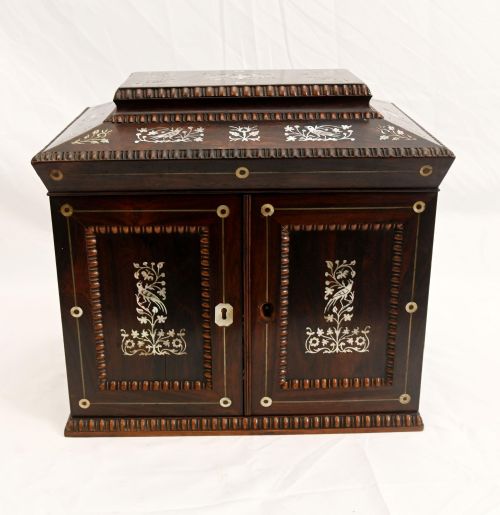


Inlaid Rosewood Chest
An inlaid rosewood chest combines dense, dark timber with precise contrasting lines, offering both storage and decorative impact.
Inlaid Rosewood Chest
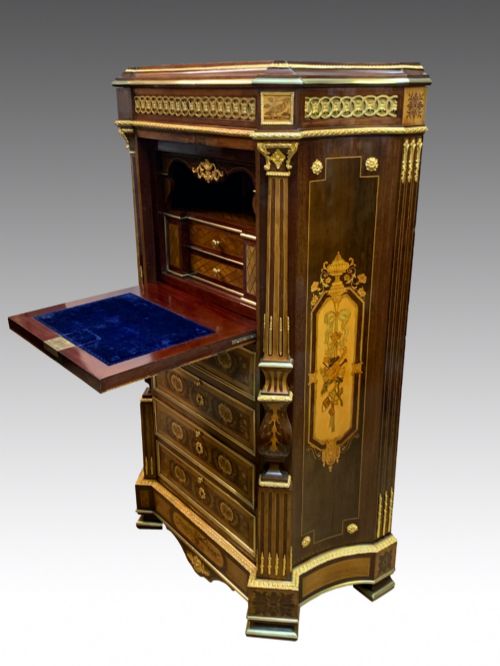
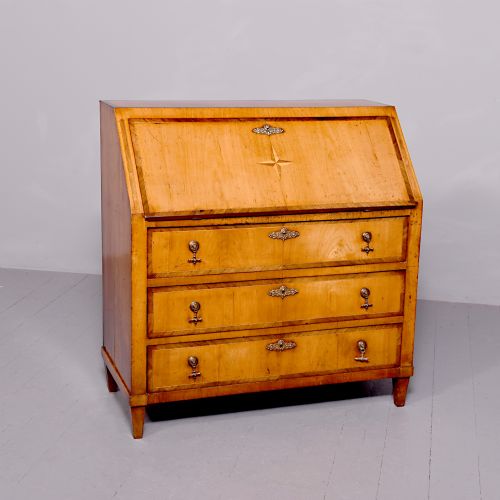
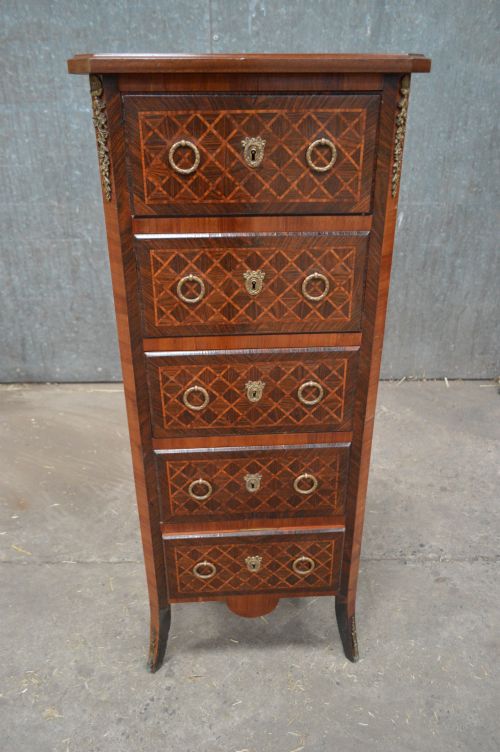
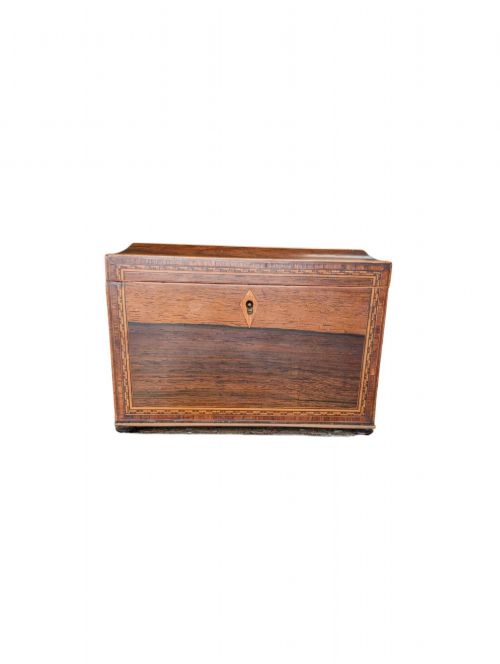
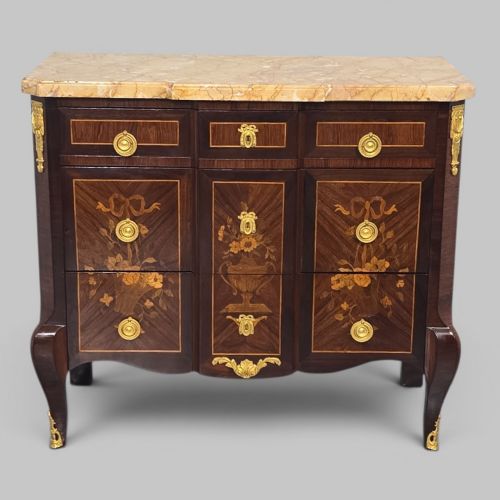
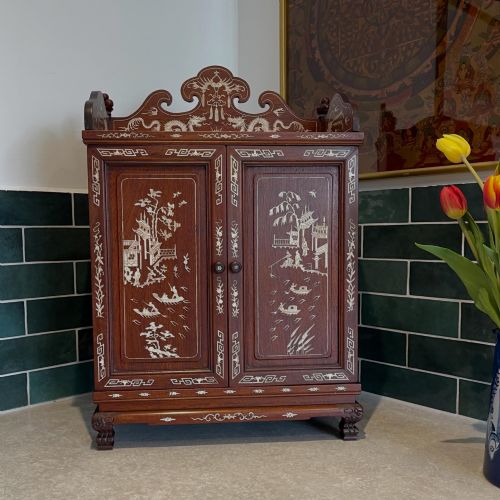
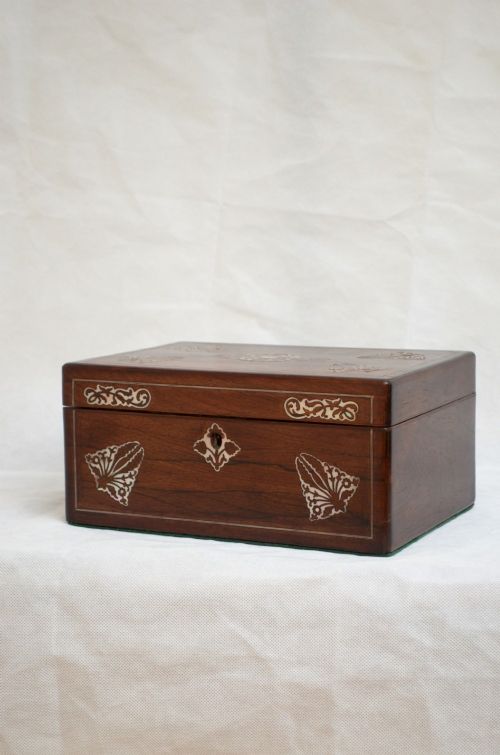
When you search for an inlaid rosewood chest, you encounter a range of forms spanning tea caddies, jewellery boxes, bedside cabinets, and commodes. The records show these pieces appearing across Georgian, Regency, and Victorian periods, often detailed with brass, boxwood, or mother of pearl.
Tabletop containers such as tea caddies and jewellery boxes dominate the smaller formats, while larger freestanding examples include commodes, Wellington chests, and bedside cabinets. French and English workshops both contributed significantly to this tradition, utilising marquetry and parquetry patterns.
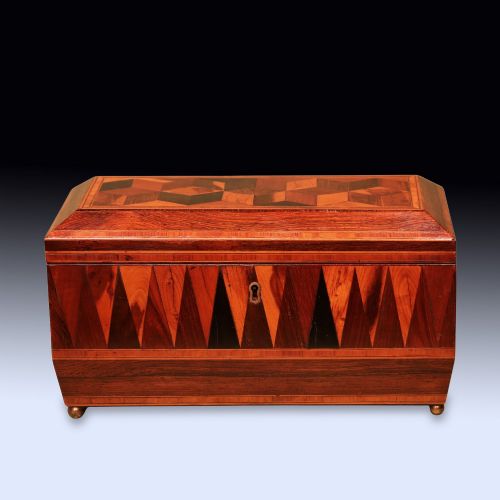
The most frequent iterations on this page are Regency tea caddies and Victorian bedside cabinets or boxes, demonstrating how cabinet makers applied contrasting wood veneers and metal stringing to domestic furniture over two centuries.

How they were made
Cabinet makers constructed these pieces using dense rosewood as a dark foundation, upon which they laid contrasting veneers of satinwood, boxwood, and walnut. Marquetry pictorial scenes and geometric parquetry patterns required immense patience, often combined with inlaid brass stringing to accentuate the structural lines.
Specialised regional techniques emerge clearly in the evidence, such as Tunbridge Ware mosaic work using tiny wood blocks to form intricate pictorial motifs. Other examples incorporate cast or chased ormolu mounts, mother of pearl plaques, and marble tops fitted to commodes and cabinets.
Inlaid Rosewood Chest Retail Price Guide 2026
Typical asking prices for inlaid rosewood chest among the pieces listed under this phrase on Sellingantiques today, from the lower quarter to the upper quarter. They describe what is for sale here now, not the wider market.
The furniture spans multiple eras, including Georgian, Regency, Victorian, and early twentieth century production.
What varies in quality
The distinction between ordinary and exceptional examples lies in the precision of the inlay work and the selection of the timber grain. Finer pieces display crisp, tight mitres in the brass or wood stringing without gaps, whereas lesser items show shrinkage and clumsy filler around the borders.
Internal fittings also separate the tiers of craftsmanship, with superior boxes retaining fitted trays, working locks with original keys, and refined silk or velvet linings. The depth of the rosewood's natural figure and the complexity of the parquetry geometry ultimately determine the standing of each piece.
Maison Krieger·Henry Hollamby·Edwards and Roberts·Arnold and Lewis
The Inlaid Rosewood Chest Glossary
- Marquetry
- The art of creating decorative patterns and pictures on furniture using thin veneers of various woods, metals, or shells. Craftsmen cut these elements precisely to fit together within a prepared ground.
- Parquetry
- A geometric mosaic of wood pieces used for adorning floors and cabinet surfaces. Squares, triangles, and diamonds form repeating patterns across the lid or drawer front.
- Sarcophagus
- A monumental coffin shape adapted during the Regency period for tea caddies and work boxes, featuring a steep-sided, domed lid resting on a plinth.
- Tunbridge Ware
- Woodworking characteristic of Kent involving thousands of tiny tinted wood blocks assembled to create mosaic pictures. These designs typically depict local castles, butterflies, or geometric borders.
- Stringing
- Inlay of a contrasting wood or metal cut into narrow strips and let into channels on the surface. It outlines panels, drawers, and borders to provide visual definition.
Inlaid Rosewood Chest: Frequently Asked Questions
What is a tea caddy?
A tea caddy is a small box originally designed to store dry tea leaves securely under lock and key. During the Georgian and Regency periods, tea was an expensive commodity, making these lidded containers both functional and decorative.
Most examples feature internal compartments or removable canisters for different tea varieties, often accompanied by a small mixing bowl. Cabinet makers lavished fine rosewood veneers and brass inlay on these pieces for the drawing room table.
How do I date a rosewood box?
Dating relies on examining the construction methods, hinges, escutcheons, and overall decorative style. Georgian and Regency pieces typically display sarcophagus forms with lion mask handles or delicate brass stringing.
Victorian iterations frequently incorporate mother of pearl plaques or Tunbridge Ware borders. Looking inside reveals whether the lining papers and compartmental trays are original to the period of manufacture.
What is Tunbridge Ware?
Tunbridge Ware is a specialised form of decorative woodwork originating from Kent during the nineteenth century. Artisans glued thousands of minuscule tinted wood blocks together to form mosaic pictures.
These mosaics decorate the lids of rosewood tea caddies, trinket boxes, and stamp boxes. Common motifs include local castles, floral sprays, and intricate geometric tessellations.
How do I care for rosewood?
Rosewood requires stable environmental conditions away from direct sunlight and strong heat sources. Sunlight can fade the rich dark brown and purple tones characteristic of the timber.
Occasional dusting with a soft, dry cloth maintains the finish without chemical polishes. Keeping ambient humidity moderate prevents the decorative inlays and wood veneers from lifting.