

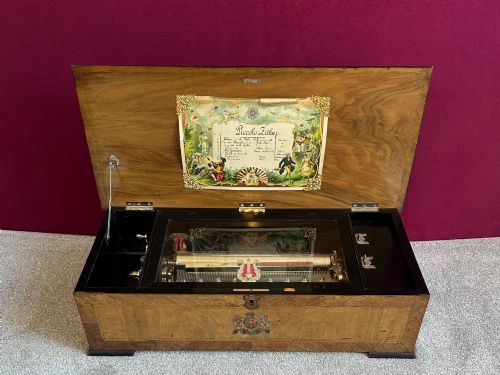


19th Century Musical Box
A 19th century musical box brings mechanical melody into a room, prized for intricate cylinders and pinned combs that play enduring tunes.
19th Century Musical Box
When you search for a 19th century musical box, you encounter mechanical sound machines housed in fitted wooden cases. These instruments span the Victorian era, with many examples dating from the decades between eighteen sixty and eighteen ninety.
The most common form on this page is the Swiss cylinder music box, often playing multiple airs. Alongside standard rectangular boxes, the selection includes variants with bells in view and even a musical chair.
Origins heavily lean toward Swiss workshops, while casing styles reflect Victorian taste. The core function remains the automated reproduction of popular melodies through precision engineering.
How they were made
Cases utilise timber such as rosewood, walnut, ebonised wood, and boxwood, frequently decorated with marquetry inlay. Interiors combine brass and steel components to construct the movement, cylinder, and tuned comb.
Mechanisms rely on pinned cylinders that pluck steel teeth, sometimes augmented by visible bells. Fine adjustment of these pins and combs dictates the precision of the musical output.
19th Century Musical Box Retail Price Guide 2026
Typical asking prices for 19th century musical box among the pieces listed under this phrase on Sellingantiques today, from the lower quarter to the upper quarter. They describe what is for sale here now, not the wider market.
Listings feature brass, steel, rosewood, walnut, and marquetry inlay across nineteenth-century Victorian and Swiss pieces.
What varies in quality
The sophistication of the movement separates standard output from superior items, particularly those with a greater number of airs or additional musical elements like bells. Makers such as Nicole Freres or Langdorff and Fils denote high-tier production.
Cabinetry execution also dictates standing, where intricate marquetry inlay upon rosewood or walnut elevates the visual presence of the box. Preservation of the original works and overall casework integrity complete the distinction between ordinary and exceptional examples.
Langdorff and Fils·Lochmanns·Nicole Freres·LeCoultre
The 19th Century Musical Box Glossary
- Cylinder
- The rotating brass barrel set with pins that pluck the steel comb. This component determines the specific tunes played by the mechanism.
- Comb
- The tuned steel plate with vibrating teeth that produce the notes. Each tooth is individually tuned to match the arranged score.
- Air
- A distinct musical tune or melody played by the cylinder. Boxes are often categorized by the total number of airs they can perform.
- Marquetry
- Decorative veneer work using various woods to create intricate patterns on the case exterior. This technique is frequently seen on Swiss walnut and rosewood boxes.
- Musik-automat
- An automated mechanical instrument capable of playing complex compositions. These larger apparatuses represent advanced nineteenth-century engineering.
19th Century Musical Box: Frequently Asked Questions
What is an air on a music box?
An air represents a single musical tune contained on the pinned cylinder. Multiple air models rotate through a programmed sequence of distinct melodies.
Changing tunes occurs automatically as the cylinder shifts laterally after completing each rotation.
Where were these music boxes made?
Most nineteenth-century musical boxes originate from specialised Swiss workshops and makers. Production centres focused heavily on precision metalwork and cabinetry.
Swiss mechanisms dominated the international market during the Victorian period.
How should I care for the case?
Keep the wooden case away from direct sunlight and sudden temperature changes to protect the delicate marquetry inlay and veneer. Dust the exterior gently with a dry, soft cloth.
Internal brass and steel components should remain undisturbed by amateur hands.